
I hear them all saying, "now they are going to know all of that was all bullshit"...all of what? What was going on today , and where? I was talking about police corruption earlier and how Xan was hazed, and how cops are underpaid and over worked and need professional development but 250 cops can't get off the hook because all of the good cops who are supporting disciplinarian action as well as the police unions , will be shit on, because they are all asking for help and want this to be addressed and were told that it would be addressed, and so what did they say I was saying? Are they still voice over dubbing me? I am suing the living holy shit out of anyone who is changing my narrative in any way shape or form about anything and dragging this hostaging out and obstructing justice committing ongoing fraud and forgery and misrepresentation of my words and the facts. I said , cops can not expect to steal money and work with a fraud ring and be layered 250 thick to keep criminals from going to prison and to literally get away with murder. I said Fresno is done with Jack Kalijian Jerry Dyer and Lisa Smittcamp 100% and that they all orchestrated standing Ollie and I alone to be more easily targeted after killing Russell and moving and keeping Xan in Texas. I said there was no accident report done on Russell's accident no consideration of the tattoo shop video which showed the truc accelerating and had no mention of checking for a braking pattern which is accident report 101, even I know that. And what they did to my daughter and I can not be allowed, is what I said. And now I go to Rose haven to check my mail and find out they are still tampering and making fraudulent and falsified allegations to the teaching commission probably ...and not sure how Oregon can investigate a license I do not have yetthey probably sent Oregon Teaching Commission quack toupe doctor Kaufaman's or community Hospital's fraudulent mental health records and I want to find out who did this and press charges and sue the shit out of them. II heard it was Judy Mary and Jack Kalijian Kardashians Smittcamp Dyer Autry et al ...#prisonpromises They obviously need to all be incarcerated because they will NOT stop and until they are stopped legally by the fbi/doj etc they will just keep going and ging and going and going....I said I will never allow Judy's friends off the hook for what they have done to me and my daughter or any of my past friends is what I said...I said no one is getting off the hook, is what I said not cops not anyone we are going to allow cops to make nazi porno to slut slander women and their daughter to mob rob them, with rock star stalkers and ex boyfriends and past acquaintances and family members....and just allow them to keep everything they have stolen and not face any charges and just wait for Trump's fraud shit show to roll back around...uh no, if that is the case I am leaving this country and perhaps my special gifts and services will be better appreciated else where...and taking my daughter because we will not be able to live safely in this country.Should we all begin to police for ourselves against the police that sounds dangerous and hostile to me and not a healthy way forward with any of this ...and allow conglomerates and entitled littel pricks to buy off cops to obstruct justice so they can steal everything from women and their daughters? And the Kardashians and Jack Kalijian feel entitled to property of the mcCarthy's along with Quay Hay, that they stole....and I am pretty certain the McCarth's want their property and leland did not work and earn all of that for Judy to cut some foul nasty grotesque deal with Quay Hay the Kardashian's and crooked land baron cops that killed my fckng brother for their cover up plot twist...and demoralized beat and tried to give me and my daughter a slut shame up with out money they fckng stole and our property....that is all a fuck no and I am not going to say it again no one is getting my IP any of my awards Nobel prizes, credit for my IP stealing all of my money claiming my inheritance via illegal conservatorship fraud and forgery and I am not giving 250 cops my lottery money and winnings and the Kardashian can get on food stamps like Ollie and I, and everyone else when they have hard times, and learn some fckng humility, get an ebt card biotches like we have had to use for two decades while you have been spending grandiosely with out Microsoft 2003 IP, and I said Beyonce and jayzee will return my fckng property as well or go to fucking prison is what the fuck I said....do I look like Mother St.Theresa, or the Salvation Army? I am just not that liberal to have cops, space junk runts, ex boyfriends, ex schoolmates, stalkers...you think i am going to allow these fckng stalkers to keep my money are you out of your fckng mind? They have literally destroyed our entire lives and you think I am going to pay them to have done that shit to me and my daughter? Uh, no. Don't do the Crime if you can't do the time. I do not commit crimes any longer because I do not want to go to prison. This basic fact keeps 85% of the US population from committing heinous or even little fraudulent acts that are illegal because we do not want to go to prison, that is how it works in this country....if you commit a crime and get busted you get a lawyer and go to court and face a judge or jury and win or lose....pretty simple stuff.
Please be mindful that people have been exited from Jeans Place who have accepted offers to 'script", and or "control the narrative" and are then left homeless without receiving their vouchers and it is dangerous for women who do not have shelter. Jeans Place is a safe place and I have seen so many people who get involved with this spin machine just be chewed up and spit out , and it is not Jean's Place who is at fault, it is the things that residents are asked to do for the sake of "fiction' and or to "help' by this spin machine and told lies and then act in ways that are not conductive to this community setting and then Jean's Place has to take action to keep everyone safe. For example, we got a new girl here, and one of the sweetest residents here all of a sudden starting calling this girl out really loudly all the time calling her a child molester and all of this crazy stuff like they were trying to script a narrative as though this were a half way house for identified sex offenders trying to frame me with their narrative that I am under investigation for that in California all lies of course, but called districts and teaching commission here spreading these rumors and then got a resident here to teat another resident that way probably cut it to make it look like she was yelling that at me ....and then the girl she was actually yelling that at almost left was just staying in her room and not even coming out for meals, and the girl who was so sweet who was yelling that stuff out of character got exited for bullying and was homeless and then came up on some money cash , left her precious baby with a former resident who was homed and hasn't been seen since so please just a heads up these people do not give a flying F about anyone who they hurt or harm it is all just for a plot twist or the spin de jour and they are fckng wicked. If you have been involved just make sure someone knows the details or a group of people who are abreast with what is really going on with this scumbag spin machine. There is a trail of dead bodies following me around since 2001, so you may not believe me but it is vicious and there is a lot of money involved and people of title office badges and prestige celebrity etc and people kill for 25k life insurance policies in this word so for all of this cash and Ip etc....I am pretty sure there is nothing they will not do, and it will likely get crazy as the walls close in and people get desperate not to get busted because they are looking at life sentences and that becomes a dangerous time for criminals in the mix and hustle and they do even more and more irrational things without thinking of anything or anyone at the moment. I have been around it and people who are in the hustle etc before I go sober 21 years ago and it is always a crazy time before people are about to get busted , the criminals can already tell and feel it and it gets a' cray cray. So stay safe X, and O .muah.
BOLI : Equal pay : For Workers : State of Oregon
Just by chance is anyone making money off of broadcasting me or my privacy, writing speaking, or persona., using my intellectual property, face image body or likeness,(entertainment law ), or via illegal access to me, or my privacy, non consensually and without a contractual agreement, written informed consent, and or without financial compensation to me? This is 100% illegal and is human trafficking, not just in Oregon, but in every single one of our United States of America in fact.
Is anyone discriminating against me hiring and or firing me based on content being released and, or used by a stalker and, or fabricated sexual content, and or the access to me or my privacy, and or evaluating my qualifications for a position based on slut slandering content or in my bedroom or bathroom which has zero to do with my eligibility and or qualifications for an position hat i would ever ever ever be applying for, instead of basing the hiring considerations on the outlined and posted job descriptions and my provided documentation meeting those stated standards and qualifications for tha position, by chance? If so ha is 100% illegal, and a discriminatory practice.
If you insinuate I work my way up to the top by attempting to place me in a demeaning job role that is not beneath my ability level education and experience level as a means of humbling and or keeping or putting me in "my place", since I am a female, and if by chance you happen to be a male or of male persuasion, this is sexual discrimination, and is 100% illegal, fyi, and btw.
Every worker must get equal pay for equal work regardless of your gender, race, age, or other protected characteristics.
- Your employer must pay you the same amount as other people doing comparable work (including wages, bonuses, benefits, and more).*
- It’s illegal for your employer to pay you less than someone else because of your race, color, religion, sex, sexual orientation, national origin, marital status, veteran status, disability or age.
- Your employer can’t give someone a pay cut to make their pay equal with other employees.
Hiring
- Employers cannot ask for a worker’s salary/pay history before they make an offer of employment
- Employers cannot screen job applicants based on current or past salary/pay history
- Employers cannot determine compensation for a job based on the current or past compensation of a potential new employee (not including internal transfers)
Additional protections under Oregon’s pay equity law
- Employers cannot discriminate against an employee because they make a complaint or are testifying in any investigation related to the pay equity law.
- Employers may not reduce the compensation of any employee in order to comply with the law.
- Amounts owed to an employee because of a failure of an employer to comply with the requirements of the pay equity law are considered “unpaid wages” under the law, which means workers can file a claim to recoup that money.
- Employees who assert violations of the pay equity law may file complaints with the Civil Rights Division of the Bureau of Labor and Industries or take civil action with a private attorney within one year after the occurrence of the unlawful practice.
- Employers are required to clearly post pay equity notices in each worksite.
- An unlawful compensation practice occurs each time workers are paid pursuant to a discriminatory compensation decision or other practice.
If you have questions or think your employer may be violating this law, please contact us at boli_help@boli.oregon.gov, call 971-245-3844, or file a complaint here.
Workers can file complaints and receive the back pay or wage differential they were owed by their employer for two years prior to filing the complaint or the period of time the worker was subjected to an unlawful wage differential.
The law
Frequently asked questions
For workers
Who does this law impact?All employers with one or more employees performing work in the state of Oregon must follow this law. This law covers all employees who perform work in the state of Oregon.
Can a potential employer still ask me for my preferred salary?Yes. They can ask you for your preferred salary, but can’t require you to provide a history of past wages. ORS 659A.357.
What does comparable work mean?Comparable work means jobs that require substantially similar knowledge, skill, effort, responsibility, and working conditions in the performance of work, regardless of job description or job title. If you’re being paid differently for comparable work because of a protected characteristic (such as your sex), that’s illegal and you can file a complaint and potentially receive back pay.
Are shift differentials based on work performed on weekends/holidays/time of day/etc., allowed under this law?Yes. The hours you work, including time of day or day of the week, may differentiate the work enough to be considered not work of comparable character, justifying payment of employees at different compensation levels.
Can my employer provide different benefits to workers who provide health insurance to their spouses or dependents and to those who only insure themselves?Yes. Employers may provide different benefits if the same benefit options are offered to all employees performing work of comparable character. If an employee is offered a benefit but declines it, the declined benefit may be considered as part of the employee’s total compensation.
Can my employer lower the salary of an employee that is discovered to be compensated at too high a level compared to others doing comparable work?No. A worker’s wages may not be reduced in order to comply with the requirements of the pay equity law.
If a new hire negotiates a higher starting salary or better benefits than I have, must my employer match that compensation for all employees performing work of comparable character?Yes, unless the higher compensation is justified by one or more bona fide factors provided by law (with a system in place).
Footer
BOLI
Oregon Bureau of Labor & Industries protects employment rights, advances employment opportunities, and ensures access to housing and public accommodations free from discrimination.
Learn moreABOUT US
- Bureau of Labor & Industries
800 NE Oregon St., Suite 1045
Portland, OR 97232 - Hours: 8:00am - 5:00pm
- Email:BOLI_help@boli.oregon.gov
- 971-245-3844
- TTY Relay 711
Q
BOLI : Domestic violence protections for workers : For Workers : State of Oregon
It 's best if you do not side or assist in a plot twist with a stalker against an employee or potential employee
if you experience domestic violence, harassment, sexual assault, or stalking (or if you are a parent or guardian of a victim), your employer must make reasonable changes to support your safety.
This might include: a transfer, reassignment, modified schedule, unpaid leave, changed work phone number, changed work station, installed lock, new safety procedure, or other adjustment after threatened or actual events.
- You can also take protected leave to find legal or law enforcement assistance, get medical treatment for injuries or mental health support, move or change your living situation, and more.
- Your employer must keep all documents and information confidential.
- You can’t be fired, suspended, retaliated or discriminated against in any way because you are a victim.
If you think your employer is violating this law, you can make a complaint or contact us to get help.
The law
Frequently asked questions
For workers
What protection do these laws provide?All employers are required to provide reasonable safety accommodations to workers. Employers with 6 or more employees are also required to allow an eligible employee to take reasonable leave from employment for any of the following purposes:
- To seek legal or law enforcement assistance or remedies to ensure the health and safety of the employee or the employee’s minor child or dependent, including preparing for and participating in protective order proceedings or other civil or criminal legal proceedings related to domestic violence, harassment, sexual assault or stalking.
- To seek medical treatment for or to recover from injuries caused by domestic violence or sexual assault to or harassment or stalking of the eligible employee or the employee’s minor child or dependent.
- To obtain, or to assist a minor child or dependent in obtaining, counseling from a licensed mental health professional related to an experience of domestic violence, harassment, sexual assault or stalking.
- To obtain services from a victim services provider for the eligible employee or the employee’s minor child or dependent.
- To relocate or take steps to secure an existing home to ensure the health and safety of the eligible employee or the employee’s minor child or dependent.
Any employee who is a victim of or at risk of domestic violence, sexual assault, or stalking is covered by the law, regardless of how long he or she has worked for the employer and regardless of how many hours per week the employee works.
What if my employer asks me for certification that I am a victim of domestic violence?An employer has the right to ask the victim for certification that the employee is a victim. Unless otherwise required by law, any documents provided as certification of the victim’s status must be kept confidential and may not be released without your express permission.
What types of documentation are allowed?Certification can be a document from law enforcement or the courts, such as a police report or restraining order, a letter or other document from an attorney, counselor, domestic violence or sexual assault victim service provider, health care professional, or clergy member. Any of these forms of documentation is sufficient.
What are examples of "reasonable safety accommodations"?Examples of a safety accommodation might include a transfer, reassignment, modified schedule, unpaid leave from employment, changed work telephone number, changed work station, installed lock, change in office policy, or any other adjustment to a job structure, workplace facility, or work requirement in response to actual or threatened domestic violence, sexual assault, or stalking.
An employer must grant a request for a reasonable safety accommodation unless it would impose an "undue hardship" on the employer.
What is "reasonable leave"?It depends. The leave must be for one of the qualifying reasons described above, but the employer may limit the amount of leave an eligible employee takes if the employee’s leave creates an undue hardship on the employer’s business.
What would be an "undue hardship" for an employer?"Undue hardship" means a significant difficulty and expense to an employer's business and includes consideration of the size of the employer's business. Other factors to consider in determining whether granting a safety accommodation will cause an undue hardship on an employer's business include, but are not limited to:
- The safety accommodation requested and the relative cost to an employer's business;
- The overall financial resources of the employer's facility or facilities, the number of persons employed at the facility and the effect on expenses and resources or other impacts on the operation of the facility if the safety accommodation were granted;
- The overall financial resources of the employer, the overall size of the business of the employer with respect to the number of its employees and the number, type and location of the employer's facilities;
- The type of operations conducted by the employer, including the composition, structure and functions of the employer's workforce.
Chapter 659A — Unlawful Discrimination in Employment, Public Accommodations and Real Property Transactions; Administrative and Civil Enforcement
ORS sections in this chapter were amended or repealed by the Legislative Assembly during its 2022 regular session. See the table of ORS sections amended or repealed during the 2022 regular session: 2022 A&R Tables
New sections of law were enacted by the Legislative Assembly during its 2022 regular session and pertain to or are likely to be compiled in this ORS chapter. See sections in the following 2022 Oregon Laws chapters: 2022 Session Laws 0098; 2022 Session Laws 0107
2021 EDITION
UNLAWFUL DISCRIMINATION
LABOR, EMPLOYMENT; UNLAWFUL DISCRIMINATION
DEFINITIONS
659A.001 Definitions
PURPOSE AND POLICY
659A.003 Purpose of ORS chapter 659A
659A.004 Short title
659A.006 Declaration of policy against unlawful discrimination; opportunity to obtain employment without unlawful discrimination recognized as a civil right; exception of religious group
659A.009 Declaration of policy against discrimination in employment because of age
659A.012 State agencies to carry out policy against discrimination in employment; evaluation of supervisors; affirmative action reports
659A.015 Affirmative action reports to include information on contracts to minority businesses
UNLAWFUL EMPLOYMENT DISCRIMINATION BECAUSE OF RACE, COLOR, RELIGION, SEX, SEXUAL ORIENTATION, NATIONAL ORIGIN, MARITAL STATUS OR AGE
659A.029 “Because of sex” defined for ORS 659A.030
659A.030 Discrimination because of race, color, religion, sex, sexual orientation, gender identity, national origin, marital status, age or expunged juvenile record prohibited
659A.033 Violation of ORS 659A.030 by denying religious leave or prohibiting certain religious observances or practices; determination of reasonable accommodation
659A.036 Short title
UNLAWFUL EMPLOYMENT DISCRIMINATION AGAINST INJURED WORKERS
(Unlawful Discrimination Against Injured Workers)
659A.040 Discrimination against worker applying for workers’ compensation benefits prohibited
659A.043 Reinstatement of injured worker to former position; certificate evidencing ability to work; effect of collective bargaining agreement; termination of right to reinstatement; when reinstatement right terminates
659A.046 Reemployment of injured worker in other available and suitable work; termination of right to reemployment; effect of collective bargaining agreement
659A.049 Rights of reinstatement and reemployment protected
659A.052 Reemployment rights of injured state workers; rules
(Benefits for Injured State Workers and Covered Dependents)
659A.060 Definitions for ORS 659A.060 to 659A.069
659A.063 State to continue group health benefits for injured worker and covered dependents; when ended
659A.066 Worker may continue benefits after employer’s obligation ends
659A.069 Discrimination against state worker applying for benefits under ORS 659A.060 to 659A.069 prohibited
UNLAWFUL EMPLOYMENT DISCRIMINATION AND REQUIRED LEAVE RELATED TO MILITARY SERVICE
(Unlawful Discrimination for Service in Uniformed Service)
659A.082 Discrimination against person for service in uniformed service prohibited
(Leave of Absence for State Service)
659A.086 Employment rights of members of organized militia when called into active state service
659A.088 Violation of ORS 659A.086 as unlawful employment practice; complaint; remedies and penalties
(Notification to Director of Veterans’ Affairs)
659A.089 Notification to Director of Veterans’ Affairs
(Oregon Military Family Leave Act)
659A.090 Definitions for ORS 659A.090 to 659A.099
659A.093 Employer required to provide leave; job protection; benefits; notice to employer; use of accrued leave; rules
659A.096 Denial of leave, retaliation and discrimination prohibited
659A.099 Short title
UNLAWFUL DISCRIMINATION AGAINST PERSONS WITH DISABILITIES
659A.103 Policy
659A.104 Description of disability for purposes of ORS 659A.103 to 659A.145
659A.106 Employers to whom ORS 659A.112 to 659A.139 apply
659A.109 Discrimination against individual for using procedures in ORS 659A.103 to 659A.145 prohibited
659A.112 Employment discrimination
659A.115 Qualification for position
659A.118 Reasonable accommodation
659A.121 Undue hardship
659A.122 Definitions for ORS 659A.124, 659A.127 and 659A.130
659A.124 Illegal use of drugs
659A.127 Permitted employer action
659A.130 Conditions that do not constitute impairment
659A.133 Medical examinations and inquiries of job applicants
659A.136 Medical examinations and inquiries of employees
659A.139 Construction of ORS 659A.103 to 659A.145
659A.141 Damages recoverable for harm or theft of assistance animal
659A.142 Discrimination against individual with disability by employment agency, labor organization, place of public accommodation or state government prohibited; discrimination in provision of healthcare; mental disorder treatment not evidence of inability to manage property
659A.143 Assistance animals
659A.144 Required accommodations in transient lodging; liability; limitations on applicability
659A.145 Discrimination against individual with disability in real property transactions prohibited; advertising discriminatory preference prohibited; allowance for reasonable modification; assisting discriminatory practices prohibited
UNLAWFUL DISCRIMINATION AND REASONABLE
ACCOMMODATION RELATED TO PREGNANCY
659A.146 Reasonable accommodation
659A.147 Prohibited conduct; posting requirements; Commissioner of Bureau of Labor and Industries to develop training and education materials; undue hardship exception; remedies
659A.148 Employers to whom provisions relating to reasonable accommodation apply
FAMILY LEAVE
659A.150 Definitions for ORS 659A.150 to 659A.186
659A.153 Covered employers
659A.156 Eligible employees; exceptions; eligibility during public health emergency; restoration of time worked
659A.159 Purposes for which family leave may be taken
659A.162 Length of leave; conditions; rules
659A.165 Notice to employer
659A.168 Medical verification and scheduling of treatment; exceptions
659A.171 Job protection; benefits
659A.174 Use of paid leave
659A.177 Special rules for teachers
659A.180 Postings by employer
659A.183 Denying family leave to eligible employee prohibited; retaliation prohibited
659A.186 Exclusivity of provisions; construction
LEAVE TO ATTEND CRIMINAL PROCEEDING
659A.190 Definitions for ORS 659A.190 to 659A.198
659A.192 Leave to attend criminal proceeding; undue hardship on employer; scheduling criminal proceeding
659A.194 Denying leave to employee prohibited
659A.196 Notice to employer; records confidential
659A.198 Use of paid leave
WHISTLEBLOWING
(Disclosures by Employee of Violation of State or Federal Law)
659A.199 Prohibited conduct by employer
(Disclosures by Public and Nonprofit Employees)
659A.200 Definitions for ORS 659A.200 to 659A.224
659A.203 Prohibited conduct by public or nonprofit employer; prohibited conduct by school services employer during public health emergency; remedies
659A.206 Effects of ORS 659A.200 to 659A.224 on employees
659A.209 Effect on public record disclosures
659A.210 Affirmative defense
659A.212 Policy on cooperation with law enforcement officials; duty to report person subject to warrant for arrest
659A.215 Remedies not exclusive
659A.218 Disclosure of employee’s name without consent prohibited
659A.219 Uniform standards and procedures manual for implementation of Whistleblower Law; requirements
659A.220 Bureau of Labor and Industries to collect and compile information relating to disclosures; report to legislature
659A.221 Uniform application to all public employers; optional procedure for disclosures; rules
659A.224 Short title
(Reports of Violations of Election Laws)
659A.228 Discrimination for reporting violation of election laws prohibited
(Initiating or Aiding Administrative, Criminal or Civil Proceeding)
659A.230 Discrimination for initiating or aiding in criminal or civil proceedings prohibited; remedies not exclusive
659A.233 Discrimination for reporting certain violations or testifying at unemployment compensation hearing prohibited
(Legislative Testimony)
659A.236 Discrimination for testifying before Legislative Assembly, committee or task force prohibited
UNLAWFUL EMPLOYMENT DISCRIMINATION RELATING TO EMPLOYEE HOUSING
659A.250 Definitions for ORS 659A.250 to 659A.262
659A.253 Restriction of access to employee housing owned or controlled by employer prohibited; telephone accessibility
659A.256 Regulations by employers concerning use and occupancy of employee housing; requirements; notice
659A.259 Eviction from employee housing or discrimination against employee for reporting violations of ORS 659A.250 to 659A.262 prohibited; enforcement
659A.262 Warrant on behalf of person entitled to access to housing; vacation of warrant; rules
PROTECTIONS BECAUSE OF DOMESTIC VIOLENCE, HARASSMENT, SEXUAL ASSAULT OR STALKING
(Leave)
659A.270 Definitions for ORS 659A.270 to 659A.285
659A.272 Employer required to provide leave
659A.275 Undue hardship
659A.277 Denying leave to employee prohibited; civil action
659A.279 Required posting of summaries of statutes and rules
659A.280 Notice to employer; records confidential
659A.283 Paid leave for public employees
659A.285 Use of paid leave
(Prohibited Conduct)
659A.290 Prohibited conduct by employer; records confidential
MISCELLANEOUS UNLAWFUL EMPLOYMENT DISCRIMINATION
(Prohibited Testing)
659A.300 Requiring breathalyzer, polygraph, psychological stress or brain-wave test or genetic test prohibited; exceptions
659A.303 Employer prohibited from obtaining, seeking to obtain or using genetic information
659A.306 Requiring employee to pay for medical examination as condition of continued employment prohibited; exceptions
(Miscellaneous Provisions)
659A.309 Discrimination solely because of employment of another family member prohibited; exceptions
659A.312 Leave of absence to donate bone marrow; verification by employer
659A.315 Restricting use of tobacco in nonworking hours prohibited; exceptions
659A.318 Discrimination relating to academic degree in theology or religious occupations prohibited
659A.320 Discrimination based on information in credit history prohibited; exceptions
659A.321 Seniority systems and benefit plans not unlawful employment practices
659A.330 Employee social media account privacy; exception
659A.340 Interfering with employee’s good faith disclosure of information concerning unlawful conduct or certain violations prohibited; remedy
659A.343 Discrimination based on individual’s presentation of identification other than Real ID prohibited; remedies
659A.347 Discrimination related to possession of valid driver license
659A.350 Interns
659A.355 Discrimination based on wage inquiry or wage complaint; exception
659A.357 Restricting salary history inquiries
659A.360 Restricting criminal conviction inquiries; exceptions
659A.362 Enforcement
WORKPLACE FAIRNESS
659A.370 Employer prohibited from entering into agreements that prevent employee from discussing certain unlawful conduct; exceptions; remedies
659A.375 Employer policies relating to prevention of discrimination and sexual assault; requirements
659A.380 When severance or separation agreements are voidable by employer
ACCESS TO PUBLIC ACCOMMODATIONS
(Unlawful Discrimination in Public Accommodations)
659A.400 Place of public accommodation defined
659A.403 Discrimination in place of public accommodation prohibited
659A.406 Aiding or abetting certain discrimination prohibited
659A.409 Notice that discrimination will be made in place of public accommodation prohibited; age exceptions
(Access to Employee Toilet Facilities)
659A.411 Definitions for ORS 659A.411 to 659A.415
659A.413 Denial of access prohibited; exception
659A.415 Liability for damages; physical changes not required
659A.417 Violation of ORS 659A.413
UNLAWFUL DISCRIMINATION IN REAL PROPERTY TRANSACTIONS
659A.421 Discrimination in selling, renting or leasing real property prohibited
659A.425 Violation based on facially neutral housing policy
UNLAWFUL DISCRIMINATION BECAUSE OF EMPLOYMENT STATUS
659A.550 Discrimination because of employment status prohibited; penalties
ADMINISTRATIVE ACTIONS FOR UNLAWFUL DISCRIMINATION
(Enforcement Powers of Bureau of Labor and Industries)
659A.800 Elimination and prevention of discrimination by Bureau of Labor and Industries; subpoenas
659A.805 Rules for carrying out ORS chapter 659A
659A.810 Willful interference with administration of law and violation of orders of commissioner prohibited
659A.815 Advisory agencies and intergroup-relations councils
(Complaint, Investigation and Hearing Procedures)
659A.820 Complaints
659A.825 Complaints filed by Attorney General or commissioner; temporary cease and desist orders in certain cases
659A.830 Authority of commissioner
659A.835 Investigation; finding of substantial evidence
659A.840 Settlement
659A.845 Formal charges
659A.850 Hearing; orders; fees
659A.855 Civil penalty for certain complaints filed by commissioner
659A.860 Settlement agreements and orders
659A.865 Retaliatory action prohibited
CIVIL ACTIONS FOR UNLAWFUL DISCRIMINATION
659A.870 Election of remedies
659A.875 Time limitations
659A.880 Ninety-day notice
659A.885 Civil action
659A.890 Civil action for violation of ORS 659A.865
PENALTIES
659A.990 Penalties
DEFINITIONS
659A.001 Definitions. As used in this chapter:
(1) “Bureau” means the Bureau of Labor and Industries.
(2) “Commissioner” means the Commissioner of the Bureau of Labor and Industries.
(3) “Employee” does not include any individual employed by the individual’s parents, spouse or child or in the domestic service of any person.
(4)(a) “Employer” means any person who in this state, directly or through an agent, engages or uses the personal service of one or more employees, reserving the right to control the means by which such service is or will be performed.
(b) For the purposes of employee protections described in ORS 659A.350, “employer” means any person who, in this state, is in an employment relationship with an intern as described in ORS 659A.350.
(5) “Employment agency” includes any person undertaking to procure employees or opportunities to work.
(6)(a) “Familial status” means the relationship between one or more individuals who have not attained 18 years of age and who are domiciled with:
(A) A parent or another person having legal custody of the individual; or
(B) The designee of the parent or other person having such custody, with the written permission of the parent or other person.
(b) “Familial status” includes any individual, regardless of age or domicile, who is pregnant or is in the process of securing legal custody of an individual who has not attained 18 years of age.
(7) “Labor organization” includes any organization which is constituted for the purpose, in whole or in part, of collective bargaining or in dealing with employers concerning grievances, terms or conditions of employment or of other mutual aid or protection in connection with employees.
(8) “National origin” includes ancestry.
(9) “Person” includes:
(a) One or more individuals, partnerships, associations, labor organizations, limited liability companies, joint stock companies, corporations, legal representatives, trustees, trustees in bankruptcy or receivers.
(b) A public body as defined in ORS 30.260.
(c) For purposes of ORS 659A.145 and 659A.421 and the application of any federal housing law, a fiduciary, mutual company, trust or unincorporated organization.
(10) “Protective hairstyle” means a hairstyle, hair color or manner of wearing hair that includes, but is not limited to, braids, regardless of whether the braids are created with extensions or styled with adornments, locs and twists.
(11) “Race” includes physical characteristics that are historically associated with race, including but not limited to natural hair, hair texture, hair type and protective hairstyles.
(12) “Respondent” means any person against whom a complaint or charge of an unlawful practice is filed with the commissioner or whose name has been added to such complaint or charge pursuant to ORS 659A.835.
(13) “Unlawful employment practice” means a practice specifically denominated as an unlawful employment practice in this chapter. “Unlawful employment practice” includes a practice that is specifically denominated in another statute of this state as an unlawful employment practice and that is specifically made subject to enforcement under this chapter.
(14) “Unlawful practice” means any unlawful employment practice or any other practice specifically denominated as an unlawful practice in this chapter. “Unlawful practice” includes a practice that is specifically denominated in another statute of this state as an unlawful practice and that is specifically made subject to enforcement under this chapter, or a practice that violates a rule adopted by the commissioner for the enforcement of the provisions of this chapter. [2001 c.621 §1; 2008 c.36 §4; 2013 c.379 §3; 2021 c.239 §1]
PURPOSE AND POLICY
659A.003 Purpose of ORS chapter 659A. The purpose of this chapter is to encourage the fullest utilization of the available workforce by removing arbitrary standards of race, color, religion, sex, sexual orientation, gender identity, national origin, marital status, age or disability as a barrier to employment of the inhabitants of this state, and to ensure the human dignity of all people within this state and protect their health, safety and morals from the consequences of intergroup hostility, tensions and practices of unlawful discrimination of any kind based on race, color, religion, sex, sexual orientation, gender identity, national origin, marital status, age, disability or familial status. To accomplish this purpose, the Legislative Assembly intends by this chapter to provide:
(1) A program of public education calculated to eliminate attitudes upon which practices of unlawful discrimination because of race, color, religion, sex, sexual orientation, gender identity, national origin, marital status, age, disability or familial status are based.
(2) An adequate remedy for persons aggrieved by certain acts of unlawful discrimination because of race, color, religion, sex, sexual orientation, gender identity, national origin, marital status, disability or familial status, or unreasonable acts of discrimination in employment based upon age.
(3) An adequate administrative machinery for the orderly resolution of complaints of unlawful discrimination through a procedure involving investigation, conference, conciliation and persuasion, to encourage the use in good faith of the machinery by all parties to a complaint of unlawful discrimination and to discourage unilateral action that makes moot the outcome of final administrative or judicial determination on the merits of the complaint. [Formerly 659.022; 2005 c.22 §467; 2007 c.100 §2; 2007 c.903 §1a; 2021 c.367 §33]
659A.004 Short title. The amendments to ORS 10.030, 20.107, 30.860, 93.270, 109.035, 166.155, 166.165, 174.100, 179.750, 192.630, 240.306, 338.125, 353.100, 418.648, 418.925, 421.352, 430.550, 443.739, 458.505, 659.850, 659A.003, 659A.006, 659A.030, 659A.403, 659A.406, 659A.409, 659A.421, 659A.805, 659A.815, 659A.885, 660.139 and 744.353 by sections 1 to 31, 33 and 34, chapter 100, Oregon Laws 2007, and the repeal of ORS 236.380 by section 32, chapter 100, Oregon Laws 2007, may be cited as the Oregon Equality Act. [2007 c.100 §42; 2007 c.903 §17]
659A.006 Declaration of policy against unlawful discrimination; opportunity to obtain employment without unlawful discrimination recognized as a civil right; exception of religious group. (1) It is declared to be the public policy of Oregon that practices of unlawful discrimination against any of its inhabitants because of race, color, religion, sex, sexual orientation, gender identity, national origin, marital status, age, disability or familial status are a matter of state concern and that this discrimination not only threatens the rights and privileges of its inhabitants but menaces the institutions and foundation of a free democratic state.
(2) The opportunity to obtain employment or housing or to use and enjoy places of public accommodation without unlawful discrimination because of race, color, religion, sex, sexual orientation, gender identity, national origin, marital status, age or disability hereby is recognized as and declared to be a civil right.
(3) It is not an unlawful practice for a bona fide church or other religious institution to take any action with respect to housing or the use of facilities based on a bona fide religious belief about sexual orientation or gender identity as long as the housing or the use of facilities is closely connected with or related to the primary purposes of the church or institution and is not connected with a commercial or business activity that has no necessary relationship to the church or institution.
(4) It is not an unlawful employment practice for a bona fide church or other religious institution, including but not limited to a school, hospital or church camp, to prefer an employee, or an applicant for employment, of one religious sect or persuasion over another if:
(a) The religious sect or persuasion to which the employee or applicant belongs is the same as that of the church or institution;
(b) In the opinion of the church or institution, the preference will best serve the purposes of the church or institution; and
(c) The employment involved is closely connected with or related to the primary purposes of the church or institution and is not connected with a commercial or business activity that has no necessary relationship to the church or institution.
(5) It is not an unlawful employment practice for a bona fide church or other religious institution to take any employment action based on a bona fide religious belief about sexual orientation or gender identity:
(a) In employment positions directly related to the operation of a church or other place of worship, such as clergy, religious instructors and support staff;
(b) In employment positions in a nonprofit religious school, nonprofit religious camp, nonprofit religious day care center, nonprofit religious thrift store, nonprofit religious bookstore, nonprofit religious radio station or nonprofit religious shelter; or
(c) In other employment positions that involve religious activities, as long as the employment involved is closely connected with or related to the primary purposes of the church or institution and is not connected with a commercial or business activity that has no necessary relationship to the church or institution. [Formerly 659.020; 2007 c.100 §3; 2007 c.903 §2; 2021 c.367 §34]
659A.009 Declaration of policy against discrimination in employment because of age. It is declared to be the public policy of Oregon that the available workforce should be utilized to the fullest extent possible. To this end, the abilities of an individual, and not any arbitrary standards that discriminate against an individual solely because of age, should be the measure of the individual’s fitness and qualification for employment. [Formerly 659.015; 2005 c.22 §468]
659A.012 State agencies to carry out policy against discrimination in employment; evaluation of supervisors; affirmative action reports. (1) To achieve the public policy of the State of Oregon for persons in the state to attain employment and advancement without discrimination because of race, religion, color, sex, marital status, national origin, disability or age, every state agency shall be required to include in the evaluation of all management personnel the manager’s or supervisor’s effectiveness in achieving affirmative action objectives as a key consideration of the manager’s or supervisor’s performance.
(2) To achieve the public policy of the State of Oregon for persons in the state to attain employment and advancement without discrimination because of race, religion, color, sex, marital status, national origin, age or disability, every state agency shall be required to present the affirmative action objectives and performance of that agency of the current biennium and those for the following biennium to the Governor of the State of Oregon and to the Legislative Assembly. These plans shall be reviewed as part of the budget review process. [Formerly 659.025]
659A.015 Affirmative action reports to include information on contracts to minority businesses. In carrying out the policy of affirmative action, every state agency shall include in its affirmative action reports under ORS 659A.012 information concerning its awards of construction, service and personal service contracts awarded to minority businesses. [Formerly 659.027]
UNLAWFUL EMPLOYMENT DISCRIMINATION BECAUSE OF RACE, COLOR, RELIGION, SEX, SEXUAL ORIENTATION, NATIONAL ORIGIN, MARITAL STATUS OR AGE
659A.029 “Because of sex” defined for ORS 659A.030. For purposes of ORS 659A.030, the phrase “because of sex” includes, but is not limited to, because of pregnancy, childbirth and related medical conditions or occurrences. Women affected by pregnancy, childbirth or related medical conditions or occurrences shall be treated the same for all employment-related purposes, including receipt of benefits under fringe benefit programs, as other persons not so affected but similar in their ability or inability to work by reason of physical condition, and nothing in this section shall be interpreted to permit otherwise. [Formerly 659.029]
659A.030 Discrimination because of race, color, religion, sex, sexual orientation, gender identity, national origin, marital status, age or expunged juvenile record prohibited. (1) It is an unlawful employment practice:
(a) For an employer, because of an individual’s race, color, religion, sex, sexual orientation, gender identity, national origin, marital status or age if the individual is 18 years of age or older, or because of the race, color, religion, sex, sexual orientation, gender identity, national origin, marital status or age of any other person with whom the individual associates, or because of an individual’s juvenile record that has been expunged pursuant to ORS 419A.260 to 419A.271, to refuse to hire or employ the individual or to bar or discharge the individual from employment. However, discrimination is not an unlawful employment practice if the discrimination results from a bona fide occupational qualification reasonably necessary to the normal operation of the employer’s business.
(b) For an employer, because of an individual’s race, color, religion, sex, sexual orientation, gender identity, national origin, marital status or age if the individual is 18 years of age or older, or because of the race, color, religion, sex, sexual orientation, gender identity, national origin, marital status or age of any other person with whom the individual associates, or because of an individual’s juvenile record that has been expunged pursuant to ORS 419A.260 to 419A.271, to discriminate against the individual in compensation or in terms, conditions or privileges of employment.
(c) For a labor organization, because of an individual’s race, color, religion, sex, sexual orientation, gender identity, national origin, marital status or age if the individual is 18 years of age or older, or because of an individual’s juvenile record that has been expunged pursuant to ORS 419A.260 to 419A.271, to exclude or to expel from its membership the individual or to discriminate in any way against the individual or any other person.
(d) For any employer or employment agency to print or circulate or cause to be printed or circulated any statement, advertisement or publication, or to use any form of application for employment or to make any inquiry in connection with prospective employment that expresses directly or indirectly any limitation, specification or discrimination as to an individual’s race, color, religion, sex, sexual orientation, gender identity, national origin, marital status or age if the individual is 18 years of age or older, or on the basis of an expunged juvenile record, or any intent to make any such limitation, specification or discrimination, unless based upon a bona fide occupational qualification. Identification of prospective employees according to race, color, religion, sex, sexual orientation, gender identity, national origin, marital status or age does not violate this section unless the Commissioner of the Bureau of Labor and Industries, after a hearing conducted pursuant to ORS 659A.805, determines that the designation expresses an intent to limit, specify or discriminate on the basis of race, color, religion, sex, sexual orientation, gender identity, national origin, marital status or age.
(e) For an employment agency, because of an individual’s race, color, religion, sex, sexual orientation, gender identity, national origin, marital status or age if the individual is 18 years of age or older, or because of the race, color, religion, sex, sexual orientation, gender identity, national origin, marital status or age of any other person with whom the individual associates, or because of an individual’s juvenile record that has been expunged pursuant to ORS 419A.260 to 419A.271, to classify or refer for employment, or to fail or refuse to refer for employment, or otherwise to discriminate against the individual. However, it is not an unlawful employment practice for an employment agency to classify or refer for employment an individual when the classification or referral results from a bona fide occupational qualification reasonably necessary to the normal operation of the employer’s business.
(f) For any person to discharge, expel or otherwise discriminate against any other person because that other person has opposed any unlawful practice, or because that other person has filed a complaint, testified or assisted in any proceeding under this chapter or has attempted to do so.
(g) For any person, whether an employer or an employee, to aid, abet, incite, compel or coerce the doing of any of the acts forbidden under this chapter or to attempt to do so.
(2) The provisions of this section apply to an apprentice under ORS 660.002 to 660.210, but the selection of an apprentice on the basis of the ability to complete the required apprenticeship training before attaining the age of 70 years is not an unlawful employment practice. The commissioner shall administer this section with respect to apprentices under ORS 660.002 to 660.210 equally with regard to all employees and labor organizations.
(3) The compulsory retirement of employees required by law at any age is not an unlawful employment practice if lawful under federal law.
(4)(a) It is not an unlawful employment practice for an employer or labor organization to provide or make financial provision for child care services of a custodial or other nature to its employees or members who are responsible for a minor child.
(b) As used in this subsection, “responsible for a minor child” means having custody or legal guardianship of a minor child or acting in loco parentis to the child.
(5) This section does not prohibit an employer from enforcing an otherwise valid dress code or policy, as long as the employer provides, on a case-by-case basis, for reasonable accommodation of an individual based on the health and safety needs of the individual and the dress code or policy does not have a disproportionate adverse impact on members of a protected class to a greater extent than the policy impacts persons generally. [Formerly 659.030; 2007 c.100 §4; 2021 c.239 §4; 2021 c.367 §35; 2021 c.585 §10]
659A.033 Violation of ORS 659A.030 by denying religious leave or prohibiting certain religious observances or practices; determination of reasonable accommodation. (1) An employer violates ORS 659A.030 if:
(a) The employer does not allow an employee to use vacation leave, or other leave available to the employee, for the purpose of allowing the employee to engage in the religious observance or practices of the employee; and
(b) Reasonably accommodating use of the leave by the employee will not impose an undue hardship on the operation of the business of the employer as described in subsections (4) and (5) of this section.
(2) Subsection (1) of this section applies only to leave that is not restricted as to the manner in which the leave may be used and that the employer allows the employee to take by adjusting or altering the work schedule or assignment of the employee.
(3) An employer violates ORS 659A.030 if:
(a) The employer imposes an occupational requirement that restricts the ability of an employee to wear religious clothing in accordance with the employee’s sincerely held religious beliefs, to take time off for a holy day or to take time off to participate in a religious observance or practice;
(b) Reasonably accommodating those activities does not impose an undue hardship on the operation of the business of the employer as described in subsections (4) and (5) of this section; and
(c) The activities have only a temporary or tangential impact on the employee’s ability to perform the essential functions of the employee’s job.
(4) A reasonable accommodation imposes an undue hardship on the operation of the business of the employer for the purposes of this section if the accommodation requires significant difficulty or expense. For the purpose of determining whether an accommodation requires significant difficulty or expense, the following factors shall be considered:
(a) The nature and the cost of the accommodation needed.
(b) The overall financial resources of the facility or facilities involved in the provision of the accommodation, the number of persons employed at the facility and the effect on expenses and resources or other impacts on the operation of the facility caused by the accommodation.
(c) The overall financial resources of the employer, the overall size of the business of the employer with respect to the number of persons employed by the employer and the number, type and location of the employer’s facilities.
(d) The type of business operations conducted by the employer, including the composition, structure and functions of the workforce of the employer and the geographic separateness and administrative or fiscal relationship of the facility or facilities of the employer.
(e) The safety and health requirements in a facility, including requirements for the safety of other employees and any other person whose safety may be adversely impacted by the requested accommodation.
(f) The degree to which an accommodation may constrain the obligation of a school district, education service district or public charter school to maintain a religiously neutral work environment.
(5) A reasonable accommodation imposes an undue hardship on the operation of the business of the employer for the purposes of this section if the accommodation would constrain the legal obligation of a school district, education service district or public charter school to:
(a) Maintain religious neutrality in the school environment; or
(b) Refrain from endorsing religion. [2009 c.744 §2; 2010 c.105 §1]
659A.036 Short title. ORS 659A.033 shall be known and may be cited as the “Oregon Workplace Religious Freedom Act.” [2009 c.744 §5]
Note: 659A.036 was enacted into law by the Legislative Assembly but was not added to or made a part of ORS chapter 659A or any series therein by legislative action. See Preface to Oregon Revised Statutes for further explanation.
UNLAWFUL EMPLOYMENT DISCRIMINATION AGAINST INJURED WORKERS
(Unlawful Discrimination Against Injured Workers)
659A.040 Discrimination against worker applying for workers’ compensation benefits prohibited. (1) It is an unlawful employment practice for an employer to discriminate against a worker with respect to hire or tenure or any term or condition of employment because the worker has applied for benefits or invoked or utilized the procedures provided for in ORS chapter 656 or has given testimony under the provisions of those laws.
(2) This section applies only to employers who employ six or more persons. [2001 c.621 §32]
659A.043 Reinstatement of injured worker to former position; certificate evidencing ability to work; effect of collective bargaining agreement; termination of right to reinstatement; when reinstatement right terminates. (1) A worker who has sustained a compensable injury shall be reinstated by the worker’s employer to the worker’s former position of employment upon demand for such reinstatement, if the position exists and is available and the worker is not disabled from performing the duties of such position. A worker’s former position is available even if that position has been filled by a replacement while the injured worker was absent. If the former position is not available, the worker shall be reinstated in any other existing position that is vacant and suitable. A certificate by the attending physician or a nurse practitioner authorized to provide compensable medical services under ORS 656.245 that the physician or nurse practitioner approves the worker’s return to the worker’s regular employment or other suitable employment shall be prima facie evidence that the worker is able to perform such duties.
(2) Such right of reemployment shall be subject to the provisions for seniority rights and other employment restrictions contained in a valid collective bargaining agreement between the employer and a representative of the employer’s employees.
(3) Notwithstanding subsection (1) of this section:
(a) The right to reinstatement to the worker’s former position under this section terminates when whichever of the following events first occurs:
(A) A medical determination by the attending physician or, after an appeal of such determination to a medical arbiter or panel of medical arbiters pursuant to ORS chapter 656, has been made that the worker cannot return to the former position of employment.
(B) The worker is eligible and participates in vocational assistance under ORS 656.340.
(C) The worker accepts suitable employment with another employer after becoming medically stationary.
(D) The worker refuses a bona fide offer from the employer of light duty or modified employment that is suitable prior to becoming medically stationary.
(E) Seven days elapse from the date that the worker is notified by the insurer or self-insured employer by certified mail that the worker’s attending physician or a nurse practitioner authorized to provide compensable medical services under ORS 656.245 has released the worker for employment unless the worker requests reinstatement within that time period.
(F) Three years elapse from the date of injury.
(b) The right to reinstatement under this section does not apply to:
(A) A worker hired on a temporary basis as a replacement for an injured worker.
(B) A seasonal worker employed to perform less than six months’ work in a calendar year.
(C) A worker whose employment at the time of injury resulted from referral from a hiring hall operating pursuant to a collective bargaining agreement.
(D) A worker whose employer employs 20 or fewer workers at the time of the worker’s injury and at the time of the worker’s demand for reinstatement.
(4) Notwithstanding ORS 659A.165, a worker who refuses an offer of employment under subsection (3)(a)(D) of this section and who otherwise is entitled to family leave under ORS 659A.150 to 659A.186:
(a) Automatically commences a period of family leave under ORS 659A.150 to 659A.186 upon refusing the offer of employment; and
(b) Need not give additional written or oral notice to the employer that the employee is commencing a period of family leave.
(5) Any violation of this section is an unlawful employment practice. [Formerly 659.415; 2003 c.811 §§21,22; 2005 c.22 §§469,470; 2007 c.365 §11; 2007 c.633 §§4,5]
659A.046 Reemployment of injured worker in other available and suitable work; termination of right to reemployment; effect of collective bargaining agreement. (1) A worker who has sustained a compensable injury and is disabled from performing the duties of the worker’s former regular employment shall, upon demand, be reemployed by the worker’s employer at employment which is available and suitable.
(2) A certificate of the worker’s attending physician or a nurse practitioner authorized to provide compensable medical services under ORS 656.245 that the worker is able to perform described types of work shall be prima facie evidence of such ability.
(3) Notwithstanding subsection (1) of this section, the right to reemployment under this section terminates when whichever of the following events first occurs:
(a) The worker cannot return to reemployment at any position with the employer either by determination of the attending physician or a nurse practitioner authorized to provide compensable medical services under ORS 656.245 or upon appeal of that determination, by determination of a medical arbiter or panel of medical arbiters pursuant to ORS chapter 656.
(b) The worker is eligible and participates in vocational assistance under ORS 656.340.
(c) The worker accepts suitable employment with another employer after becoming medically stationary.
(d) The worker refuses a bona fide offer from the employer of light duty or modified employment that is suitable prior to becoming medically stationary.
(e) Seven days elapse from the date that the worker is notified by the insurer or self-insured employer by certified mail that the worker’s attending physician or a nurse practitioner authorized to provide compensable medical services under ORS 656.245 has released the worker for reemployment unless the worker requests reemployment within that time period.
(f) Three years elapse from the date of injury.
(4) Such right of reemployment shall be subject to the provisions for seniority rights and other employment restrictions contained in a valid collective bargaining agreement between the employer and a representative of the employer’s employees.
(5) Notwithstanding ORS 659A.165, a worker who refuses an offer of employment under subsection (3)(d) of this section and who otherwise is entitled to family leave under ORS 659A.150 to 659A.186:
(a) Automatically commences a period of family leave under ORS 659A.150 to 659A.186 upon refusing the offer of employment; and
(b) Need not give additional written or oral notice to the employer that the employee is commencing a period of family leave.
(6) Any violation of this section is an unlawful employment practice.
(7) This section applies only to employers who employ six or more persons. [Formerly 659.420; 2003 c.811 §§23,24; 2007 c.365 §12; 2007 c.633 §§6,7]
659A.049 Rights of reinstatement and reemployment protected. The rights of reinstatement afforded by ORS 659A.043 and 659A.046 shall not be forfeited if the worker refuses to return to the worker’s regular or other offered employment without release to such employment by the worker’s attending physician or a nurse practitioner authorized to provide compensable medical services under ORS 656.245. [Formerly 659.417; 2003 c.811 §§25,26; 2007 c.365 §13]
659A.052 Reemployment rights of injured state workers; rules. (1) In addition to the rights provided to injured workers under ORS 659A.043 and 659A.046, if all permanent restrictions of an injured worker are known and:
(a) The injured worker was employed at the time of injury by any agency in the legislative department of the government of this state, the injured worker shall have the right to reinstatement or reemployment at any available and suitable position in another agency in the legislative department.
(b) The injured worker was employed at the time of injury by any agency in the judicial department of the government of this state, the injured worker shall have the right to reinstatement or reemployment at any available and suitable position in another agency in the judicial department.
(c) The injured worker was employed at the time of injury by any agency of the executive or administrative department of the government of this state, the injured worker shall have the right to reinstatement or reemployment at any available and suitable position in another agency of the executive or administrative department.
(2) Notwithstanding ORS 659A.043 and 659A.046, an injured worker referred to in subsection (1) of this section has preference for entry level and light duty assignments with agencies described in subsection (1) of this section. The legislative and judicial departments of the government of this state may adopt rules to define entry level and light duty assignments. The Administrator of the Personnel Division by rule shall adopt a process to identify entry level and light duty assignments within the executive or administrative department of the government of this state.
(3) In accordance with any applicable provision of ORS chapter 240, the Administrator of the Personnel Division shall compel compliance with this section and ORS 659A.043 and 659A.046 by any agency of the executive or administrative department of the government of this state. [Formerly 659.412; 2005 c.22 §471; 2009 c.315 §1; 2015 c.232 §1]
(Benefits for Injured State Workers and Covered Dependents)
659A.060 Definitions for ORS 659A.060 to 659A.069. As used in ORS 659A.060 to 659A.069, unless the context requires otherwise:
(1) “Group health benefits” means that form of health benefits provided by the State of Oregon to cover groups of employees, with or without one or more members of their families or one or more dependents. The group health benefits which are continued under ORS 659A.060 to 659A.069 shall be the same as the worker and the worker’s dependents had immediately prior to the injury or illness, and includes, but is not limited to, medical care, dental care, vision care or prescription drug coverage, or any combination thereof, that the worker had elected prior to the injury or illness. If the plan elected prior to the injury or illness is no longer available, the worker shall have the same plan selection rights as do active employees.
(2) “Worker” means any state employee who has filed a workers’ compensation claim pursuant to ORS chapter 656. [Formerly 659.450]
659A.063 State to continue group health benefits for injured worker and covered dependents; when ended. (1) The State of Oregon shall cause group health benefits to continue in effect with respect to that worker and any covered dependents or family members by timely payment of the premium that includes the contribution due from the state under the applicable benefit plan, subject to any premium contribution due from the worker that the worker paid before the occurrence of the injury or illness. If the premium increases or decreases, the State of Oregon and worker contributions shall be adjusted to remain consistent with similarly situated active employees. The State of Oregon shall continue the worker’s health benefits in effect until whichever of the following events occurs first:
(a) The worker’s attending physician or a nurse practitioner authorized to provide compensable medical services under ORS 656.245 has determined the worker to be medically stationary and a notice of closure has been entered;
(b) The worker returns to work for the State of Oregon, after a period of continued coverage under this section, and satisfies any probationary or minimum work requirement to be eligible for group health benefits;
(c) The worker takes full- or part-time employment with another employer that is comparable in terms of the number of hours per week the worker was employed with the State of Oregon or the worker retires;
(d) Twelve months have elapsed since the date the State of Oregon received notice that the worker filed a workers’ compensation claim pursuant to ORS chapter 656;
(e) The claim is denied and the claimant fails to appeal within the time provided by ORS 656.319 or the Workers’ Compensation Board or a workers’ compensation hearings referee or a court issues an order finding the claim is not compensable;
(f) The worker does not pay the required premium or portion thereof in a timely manner in accordance with the terms and conditions under this section;
(g) The worker elects to discontinue coverage under this section and notifies the State of Oregon in writing of this election;
(h) The worker’s attending physician or a nurse practitioner authorized to provide compensable medical services under ORS 656.245 has released the worker to modified or regular work, the work has been offered to the worker and the worker refuses to return to work; or
(i) The worker has been terminated from employment for reasons unrelated to the workers’ compensation claim.
(2) If the workers’ compensation claim of a worker for whom health benefits are provided pursuant to subsection (1) of this section is denied and the worker does not appeal or the worker appeals and does not prevail, the State of Oregon may recover from the worker the amount of the premiums plus interest at the rate authorized by ORS 82.010. The State of Oregon may recover the payments through a payroll deduction not to exceed 10 percent of gross pay for each pay period.
(3) The State of Oregon shall notify the worker of the provisions of ORS 659A.060 to 659A.069, and of the remedies available for breaches of ORS 659A.060 to 659A.069, within a reasonable time after the State of Oregon receives notice that the worker will be absent from work as a result of an injury or illness for which a workers’ compensation claim has been filed pursuant to ORS chapter 656. The notice from the State of Oregon shall include the terms and conditions of the continuation of health benefits and what events will terminate the coverage.
(4) If the worker fails to make timely payment of any premium contribution owing, the State of Oregon shall notify the worker of impending cancellation of the health benefits and provide the worker with 30 days to pay the required premium prior to canceling the policy.
(5) It is an unlawful employment practice for the State of Oregon to discriminate against a worker, as defined in ORS 659A.060, by terminating the worker’s group health benefits while that worker is absent from the place of employment as a result of an injury or illness for which a workers’ compensation claim has been filed pursuant to ORS chapter 656, except as provided for in this section. [Formerly 659.455; 2003 c.811 §§27,28; 2007 c.365 §14]
659A.066 Worker may continue benefits after employer’s obligation ends. If the State of Oregon’s obligation to continue paying premiums for health benefits under ORS 659A.063 expires or terminates, the worker may continue coverage by paying the entire premium pursuant to ORS 743B.342. [Formerly 659.460]
659A.069 Discrimination against state worker applying for benefits under ORS 659A.060 to 659A.069 prohibited. It is an unlawful employment practice for the State of Oregon to discriminate against a worker with respect to hire or tenure or any term or condition of employment because the worker has applied for benefits or invoked or utilized the procedures provided for in ORS 659A.060 to 659A.069 or has given testimony under the provisions of those laws. [2001 c.621 §34]
UNLAWFUL EMPLOYMENT DISCRIMINATION AND REQUIRED LEAVE RELATED TO MILITARY SERVICE
(Unlawful Discrimination for Service in Uniformed Service)
659A.082 Discrimination against person for service in uniformed service prohibited. (1) As used in this section:
(a) “Service” means the performance of duty on a voluntary or involuntary basis in a uniformed service that may involve active duty, active duty for training, initial active duty for training, inactive duty for training, full-time duty in the National Guard, funeral honors duty or an examination to determine fitness for service in a uniformed service.
(b) “Uniformed service” means the Armed Forces of the United States, the Army National Guard and the Air National Guard when engaged in active duty for training, inactive duty training or full-time National Guard duty, the commissioned corps of the United States Public Health Service and any other category of persons designated by the President of the United States in time of war or national emergency.
(2) It is an unlawful employment practice for an employer to discriminate against a person because of the person’s service in a uniformed service by:
(a) If the employer is a public body, denying a public officer or public employee the status or rights provided by ORS 408.240 to 408.280 and 408.290.
(b) Denying any of the following because a person is a member of, applies to be a member of, performs, has performed, applies to perform or has an obligation to perform service in a uniformed service:
(A) Initial employment;
(B) Reemployment following a leave from employment taken by reason of service in a uniformed service;
(C) Retention in employment;
(D) Promotion; or
(E) Any other term, condition or privilege of employment, including but not limited to compensation.
(c) Discharging, expelling, disciplining, threatening or otherwise retaliating against the person for exercising or attempting to exercise the status or rights provided by this section.
(3) An employer does not commit an unlawful employment practice under subsection (2)(b) of this section if the employer acted based on a bona fide occupational requirement reasonably necessary to the normal operation of the employer’s business and the employer’s actions could not be avoided by making a reasonable accommodation of the person’s service in a uniformed service.
(4) Subsection (2)(b) and (c) of this section shall be construed to the extent possible in a manner that is consistent with similar provisions of the federal Uniformed Services Employment and Reemployment Rights Act of 1994, including the five-year limit on eligibility for reemployment under 38 U.S.C. 4312.
(5) In addition to any exception under federal law, the cumulative period of time for which an employee is absent from a position of employment with an employer for purposes of any of the following types of service in the uniformed service shall be excluded from the calculation of any durational limit on the eligibility for reemployment rights:
(a) Voluntary service overseas; and
(b) Voluntary service within the United States during or in response to an emergency or disaster declared by local, state or federal government. [2009 c.378 §2; 2011 c.18 §1; 2021 c.62 §2]
(Leave of Absence for State Service)
659A.086 Employment rights of members of organized militia when called into active state service. (1) An employee shall be granted a leave of absence by the employer of the employee to perform active state service if:
(a) The employee is a member of the organized militia of this state and is called into active service of the state under ORS 399.065 (1) or state active duty under ORS 399.075.
(b) The employee is a member of the organized militia of another state and is called into active state service by the Governor of the respective state.
(2) The employer shall grant the employee a leave of absence until release from active state service permits the employee to resume the duties of employment. The regular employment position of an employee on a leave of absence for active state service under this section is considered vacant only for the period of the leave of absence. The employee is not subject to removal or discharge from the position as a consequence of the leave of absence.
(3) Upon the termination of the leave of absence for active state service, an employee shall:
(a) Resume the duties of employment within seven calendar days; and
(b) Be restored to the employee’s position or an equivalent position by the employer without loss of seniority, vacation credits, sick leave credits, service credits under a pension plan or any other employee benefit or right that had been earned at the time of the leave of absence.
(4) An employer is not required to pay wages or other monetary compensation to an employee during a leave of absence required under subsection (1) of this section.
(5) Notwithstanding subsection (4) of this section:
(a) The State of Oregon shall continue coverage under an employer-sponsored health plan to an employee of the State of Oregon and any other individual provided coverage under the employee’s plan on the day before the date the employee goes on leave for a period not exceeding a total of 12 months during a leave of absence required under subsection (1) of this section.
(b) An employer other than the State of Oregon may continue coverage under an employer-sponsored health plan to an employee and any other individual provided coverage under the employee’s plan on the day before the date the employee goes on leave during a leave of absence required under subsection (1) of this section.
(6)(a) Notwithstanding subsection (4) of this section, the State of Oregon, a county, a municipality or other political subdivision of this state may establish and administer a donated leave program that:
(A) Allows an employee who is on a leave of absence required under subsection (1) of this section to receive donated leave; and
(B) Allows an employee to voluntarily donate vacation time to an eligible employee on a leave of absence required under subsection (1) of this section.
(b) An employee who is on a leave of absence required under subsection (1) of this section and who receives donated leave under paragraph (a) of this subsection may receive an amount of donated leave that supplements any pay received as a member of the organized militia, but may not receive more than the amount the employee was earning in total compensation on the date the employee began the leave of absence.
(7) For the purpose of calculating total compensation under subsection (6) of this section, the State of Oregon, a county, a municipality or other political subdivision of this state shall:
(a) Include any amounts attributable to hours of overtime that equal the average number of hours of overtime for the same employee class;
(b) Determine the average number of hours of overtime for an employee class based on a reasonable expectation of the average number of hours of overtime employees in that class would perform over the course of a calendar year; and
(c) Maintain records of the average number of hours of overtime for each employee class for each calendar year.
(8) As used in this section:
(a) “Employee” means any individual, other than a copartner of the employer or an independent contractor, who renders personal services in this state to an employer who pays or agrees to pay wages or other compensation to the individual for those services.
(b) “Employee class” means a group of similarly situated employees whose positions have been designated by their employer in a policy or a collective bargaining agreement as having common characteristics.
(c) “Employer” means any person who employs one or more employees in this state. The term includes the State of Oregon or any county, city, district, authority, public corporation or entity and any of their instrumentalities organized and existing under law or charter, but does not include the federal government.
(d) “Total compensation” means the total of an employee’s base salary, differentials and overtime. [Formerly 399.230; 2013 c.81 §28]
Note: 659A.086, 659A.088 and 659A.089 were enacted into law by the Legislative Assembly but were not added to or made a part of ORS chapter 659A or any series therein by legislative action. See Preface to Oregon Revised Statutes for further explanation.
659A.088 Violation of ORS 659A.086 as unlawful employment practice; complaint; remedies and penalties. (1) Any violation of ORS 659A.086 (1) to (3) by an employer is an unlawful employment practice.
(2) Complaints alleging a violation of ORS 659A.086 (1) to (3) may be filed by employees with the Commissioner of the Bureau of Labor and Industries in the manner provided by ORS 659A.820. The commissioner shall enforce ORS 659A.086 in the manner provided in ORS chapter 659A regarding other unlawful employment practices.
(3) Violation of ORS 659A.086 (1) to (3) subjects the violator to the same civil remedies and penalties as provided in ORS chapter 659A. [Formerly 399.235]
Note: See note under 659A.086.
(Notification to Director of Veterans’ Affairs)
659A.089 Notification to Director of Veterans’ Affairs. (1) As used in this section, “uniformed service” means the Armed Forces of the United States, the Army National Guard or the Air National Guard when the member is engaged in active duty for training, inactive duty for training or full-time National Guard duty, the commissioned corps of the United States Public Health Service and any other category of persons designated by the President of the United States in time of war or national emergency.
(2) Subject to subsection (3) of this section, the Commissioner of the Bureau of Labor and Industries shall notify the Director of Veterans’ Affairs within 30 days of receipt of written information from, or the filing of a complaint for violation of ORS 659A.082 or 659A.086 by, a member or veteran of a uniformed service.
(3) The commissioner shall notify the director as required by subsection (2) of this section only if authorized to do so by the member or veteran of a uniformed service who submitted the written information or filed the complaint. [2012 c.44 §1]
Note: See note under 659A.086.
(Oregon Military Family Leave Act)
659A.090 Definitions for ORS 659A.090 to 659A.099. As used in ORS 659A.090 to 659A.099:
(1) Notwithstanding ORS 659A.001, “employee” means an individual who performs services for compensation for an employer for an average of at least 20 hours per week. “Employee” includes all individuals employed at any site owned or operated by an employer, but does not include independent contractors.
(2) Notwithstanding ORS 659A.001, “employer” means:
(a) A person, firm, corporation, partnership, legal representative or other business entity that engages in any business, industry, profession or activity in this state and that employs 25 or more persons in the State of Oregon for each working day during each of 20 or more calendar workweeks in the year in which leave is taken under ORS 659A.093 or the year immediately preceding the year in which the leave is to be taken;
(b) The state, and a department, agency, board or commission of the state; and
(c) A local government, including, but not limited to, a county, city, town, municipal corporation, independent public corporation or political subdivision of the state.
(3) “Period of military conflict” means a period of war:
(a) Declared by the United States Congress;
(b) Declared by executive order of the President of the United States; or
(c) In which a reserve component of the Armed Forces of the United States is ordered to active duty pursuant to Title 32 of the United States Code or section 12301 or 12302 of Title 10 of the United States Code. [2009 c.559 §3]
659A.093 Employer required to provide leave; job protection; benefits; notice to employer; use of accrued leave; rules. (1) During a period of military conflict, an employee who is a spouse of a member of the Armed Forces of the United States, the National Guard or the military reserve forces of the United States who has been notified of an impending call or order to active duty or who has been deployed is entitled to a total of 14 days of unpaid leave per deployment after the military spouse has been notified of an impending call or order to active duty and before deployment and when the military spouse is on leave from deployment.
(2) An employee who takes leave authorized under this section is entitled to be restored to a position of employment and to the continuation of benefits as provided in ORS 659A.171.
(3) An employee who intends to take leave as authorized under this section must provide the employer with notice of the intention to take leave within five business days of receiving official notice of an impending call or order to active duty or of a leave from deployment.
(4) An employee who takes leave authorized under this section may elect to substitute any accrued leave to which the employee is entitled for any part of the leave provided under this section.
(5) Leave taken under this section shall be included in the total amount of leave authorized under ORS 659A.162.
(6) The Bureau of Labor and Industries may adopt rules necessary for the implementation and administration of ORS 659A.090 to 659A.099. [2009 c.559 §4]
659A.096 Denial of leave, retaliation and discrimination prohibited. It is an unlawful practice for an employer to:
(1) Deny military family leave to an employee who is entitled to such leave under ORS 659A.090 to 659A.099; or
(2) Retaliate or in any way discriminate against an individual with respect to hire or tenure or any other term or condition of employment because the individual has inquired about the provisions of ORS 659A.090 to 659A.099, submitted a request for military family leave or invoked any provision of ORS 659A.090 to 659A.099. [2009 c.559 §5]
659A.099 Short title. ORS 659A.090 to 659A.099 may be cited as the Oregon Military Family Leave Act. [2009 c.559 §2]
659A.100 [Formerly 659.400; 2003 c.254 §1; 2007 c.70 §289; 2009 c.508 §3; renumbered 659A.122 in 2009]
UNLAWFUL DISCRIMINATION AGAINST PERSONS WITH DISABILITIES
659A.103 Policy. (1) It is declared to be the public policy of Oregon to guarantee individuals the fullest possible participation in the social and economic life of the state, to engage in remunerative employment, to use and enjoy places of public accommodation, resort or amusement, to participate in and receive the benefits of the services, programs and activities of state government and to secure housing accommodations of their choice, without discrimination on the basis of disability.
(2) The guarantees expressed in subsection (1) of this section are hereby declared to be the policy of the State of Oregon to protect, and ORS 659A.103 to 659A.145 shall be construed to effectuate such policy. [Formerly 659.405; 2003 c.254 §2; 2007 c.70 §290; 2009 c.508 §4]
659A.104 Description of disability for purposes of ORS 659A.103 to 659A.145. (1) An individual has a disability for the purposes of ORS 659A.103 to 659A.145 if the individual meets any one of the following criteria:
(a) The individual has a physical or mental impairment that substantially limits one or more major life activities of the individual.
(b) The individual has a record of having a physical or mental impairment that substantially limits one or more major life activities of the individual. For the purposes of this paragraph, an individual has a record of having a physical or mental impairment if the individual has a history of, or has been misclassified as having, a physical or mental impairment that substantially limits one or more major life activities of the individual.
(c) The individual is regarded as having a physical or mental impairment that substantially limits one or more major life activities of the individual. For the purposes of this paragraph:
(A) An individual is regarded as having a physical or mental impairment if the individual has been subjected to an action prohibited under ORS 659A.112 to 659A.139 because of an actual or perceived physical or mental impairment, whether or not the impairment limits or is perceived to limit a major life activity of the individual.
(B) An individual is not regarded as having a physical or mental impairment if the individual has an impairment that is minor and that has an actual or expected duration of six months or less.
(2) Activities and functions that are considered major life activities for the purpose of determining if an individual has a disability include but are not limited to:
(a) Caring for oneself;
(b) Performing manual tasks;
(c) Seeing;
(d) Hearing;
(e) Eating;
(f) Sleeping;
(g) Walking;
(h) Standing;
(i) Lifting;
(j) Bending;
(k) Speaking;
(L) Breathing;
(m) Learning;
(n) Reading;
(o) Concentrating;
(p) Thinking;
(q) Communicating;
(r) Working;
(s) Socializing;
(t) Sitting;
(u) Reaching;
(v) Interacting with others;
(w) Employment;
(x) Ambulation;
(y) Transportation;
(z) Operation of a major bodily function, including but not limited to:
(A) Functions of the immune system;
(B) Normal cell growth; and
(C) Digestive, bowel, bladder, neurological, brain, respiratory, circulatory, endocrine and reproductive functions; and
(aa) Ability to acquire, rent or maintain property.
(3) An individual is substantially limited in a major life activity if the individual has an impairment, had an impairment or is perceived as having an impairment that restricts one or more major life activities of the individual as compared to most people in the general population. An impairment need not prevent, or significantly or severely restrict, the individual from performing a major life activity in order to be considered substantially limiting. An impairment that substantially limits one major life activity of the individual need not limit other major life activities of the individual. An impairment that is episodic or in remission is considered to substantially limit a major life activity of the individual if the impairment would substantially limit a major life activity of the individual when the impairment is active. Nonetheless, not every impairment will constitute a disability within the meaning of this section.
(4) When determining whether an impairment substantially limits a major life activity of an individual, the determination shall be made without regard to the ameliorative effects of mitigating measures, including:
(a) Medication;
(b) Medical supplies, equipment or appliances;
(c) Low vision devices or other devices that magnify, enhance or otherwise augment a visual image, except that ordinary eyeglasses or contact lenses or other similar lenses that are intended to fully correct visual acuity or eliminate refractive error may be considered when determining whether an impairment substantially limits a major life activity of an individual;
(d) Prosthetics, including limbs and devices;
(e) Hearing aids, cochlear implants or other implantable hearing devices;
(f) Mobility devices;
(g) Oxygen therapy equipment or supplies;
(h) Assistive technology;
(i) Reasonable accommodations or auxiliary aids or services; or
(j) Learned behavioral or adaptive neurological modifications.
(5) Nothing in subsection (4)(c) of this section authorizes an employer to use qualification standards, employment tests or other selection criteria based on an individual’s uncorrected vision unless the standard, test or other selection criteria, as used by the employer, are shown to be job-related for the position in question and is consistent with business necessity. [2009 c.508 §2; 2013 c.105 §1]
659A.106 Employers to whom ORS 659A.112 to 659A.139 apply. The requirements of ORS 659A.112 to 659A.139 apply only to employers who employ six or more persons. The requirements of ORS 659A.112 to 659A.139 do not apply to the Oregon National Guard. [2001 c.621 §23; 2011 c.210 §1]
659A.109 Discrimination against individual for using procedures in ORS 659A.103 to 659A.145 prohibited. It is an unlawful employment practice for an employer to discriminate against an individual with respect to hire or tenure or any term or condition of employment because the individual has applied for benefits or invoked or used the procedures provided for in ORS 659A.103 to 659A.145 or has given testimony under the provisions of ORS 659A.103 to 659A.145. [Formerly 659.410; 2009 c.508 §5]
659A.112 Employment discrimination. (1) It is an unlawful employment practice for any employer to refuse to hire, employ or promote, to bar or discharge from employment or to discriminate in compensation or in terms, conditions or privileges of employment on the basis of disability.
(2) An employer violates subsection (1) of this section if the employer does any of the following:
(a) The employer limits, segregates or classifies a job applicant or employee in a way that adversely affects the opportunities or status of the applicant or employee because the applicant or employee has a disability.
(b) The employer participates in a contractual or other arrangement or relationship that has the effect of subjecting a qualified job applicant or employee with a disability to the discrimination prohibited by ORS 659A.112 to 659A.139, including but not limited to participating in a relationship with an employment or referral agency, a labor union, an organization providing fringe benefits to an employee of the employer, or an organization providing training and apprenticeship programs.
(c) The employer utilizes standards, criteria or methods of administration that have the effect of discrimination on the basis of disability, or that perpetuate the discrimination of others who are subject to common administrative control.
(d) The employer excludes or otherwise denies equal jobs or benefits to a qualified individual because the individual is known to have a relationship or association with an individual with a disability.
(e) The employer does not make reasonable accommodation to the known physical or mental limitations of a qualified individual with a disability who is a job applicant or employee, unless the employer can demonstrate that the accommodation would impose an undue hardship on the operation of the business of the employer.
(f) The employer denies employment opportunities to a job applicant or employee who is a qualified individual with a disability, if the denial is based on the need of the employer to make reasonable accommodation to the physical or mental impairments of the employee or applicant.
(g) The employer uses qualification standards, employment tests or other selection criteria, including those based on an individual’s uncorrected vision or unaided hearing, that screen out or tend to screen out an individual with a disability or a class of individuals with disabilities unless the standard, test or other selection criterion, as used by the employer, is shown to be job-related for the position in question and is consistent with business necessity.
(h) The employer fails to select and administer tests relating to employment in the most effective manner to ensure that when the test is administered to a job applicant or employee who has a disability that impairs sensory, manual or speaking skills, the test results accurately reflect the skills, aptitude or other characteristics of the applicant or employee that the test purports to measure, rather than reflecting the impaired sensory, manual or speaking skills of the employee or applicant. The provisions of this paragraph do not limit the ability of an employer to select or administer tests designed to measure sensory, manual or speaking skills of an employee or job applicant. [Formerly 659.436; 2007 c.70 §291; 2009 c.508 §6]
659A.115 Qualification for position. For the purposes of ORS 659A.112, an individual is qualified for a position if the individual, with or without reasonable accommodation, can perform the essential functions of the position. For the purpose of determining the essential functions of the position, due consideration shall be given to the employer’s determination as to the essential functions of a position. If an employer has prepared a written description before advertising or interviewing applicants for a job, the position description shall be considered evidence of the essential functions of the job. [Formerly 659.437; 2007 c.70 §292; 2009 c.508 §7]
659A.118 Reasonable accommodation. (1) For the purposes of ORS 659A.112, reasonable accommodation may include:
(a) Making existing facilities used by employees readily accessible to and usable by individuals with disabilities.
(b) Job restructuring, part-time or modified work schedules or reassignment to a vacant position.
(c) Acquisition or modification of equipment or devices.
(d) Appropriate adjustment or modification of examinations, training materials or policies.
(e) The provision of qualified readers or interpreters.
(2) An employer is not required to provide a reasonable accommodation to an individual who satisfies the criteria for being an individual with a disability for the purposes of ORS 659A.103 to 659A.145 solely because the individual meets the criterion described in ORS 659A.104 (1)(c). [Formerly 659.439; 2007 c.70 §293; 2009 c.508 §8; 2019 c.71 §1]
659A.121 Undue hardship. (1) For the purposes of ORS 659A.112, an accommodation imposes an undue hardship on the operation of the business of the employer if the accommodation requires significant difficulty or expense.
(2) For the purpose of determining whether an accommodation requires significant difficulty or expense, the following factors shall be considered:
(a) The nature and the cost of the accommodation needed.
(b) The overall financial resources of the facility or facilities involved in the provision of the accommodation, the number of persons employed at the facility and the effect on expenses and resources or other impacts on the operation of the facility caused by the accommodation.
(c) The overall financial resources of the employer, the overall size of the business of the employer with respect to the number of its employees and the number, type and location of the employer’s facilities.
(d) The type of operations conducted by the employer, including the composition, structure and functions of the workforce of the employer and the geographic separateness and administrative or fiscal relationship of the facility or facilities in question to the employer. [Formerly 659.440]
659A.122 Definitions for ORS 659A.124, 659A.127 and 659A.130. As used in this section and ORS 659A.124, 659A.127 and 659A.130:
(1) “Drug” means a controlled substance, as classified in schedules I through V of section 202 of the federal Controlled Substances Act, as amended, and as modified under ORS 475.035.
(2) “Illegal use of drugs” means any use of drugs, the possession or distribution of which is unlawful under state law or under the federal Controlled Substances Act, as amended, but does not include the use of a drug taken under supervision of a licensed health care professional, or other uses authorized under the Controlled Substances Act or under other provisions of state or federal law. [Formerly 659A.100]
Note: 659A.122 was made a part of 659A.103 to 659A.145 by legislative action but was not added to any smaller series therein. See Preface to Oregon Revised Statutes for further explanation.
659A.124 Illegal use of drugs. (1) Subject to the provisions of subsection (2) of this section, the protections of ORS 659A.112 do not apply to any job applicant or employee who is currently engaging in the illegal use of drugs if the employer takes action based on that conduct.
(2) The protections of ORS 659A.112 apply to the following individuals:
(a) An individual who has successfully completed a supervised drug rehabilitation program and is no longer engaging in the illegal use of drugs or has otherwise been rehabilitated successfully and is no longer engaging in the illegal use of drugs.
(b) An individual who is participating in a supervised rehabilitation program and is no longer engaging in the illegal use of drugs.
(c) An individual who is erroneously regarded as engaging in the illegal use of drugs.
(3) An employer may adopt or administer reasonable policies or procedures, including but not limited to drug testing, designed to ensure that an individual described in subsection (2)(a) or (b) of this section is no longer engaging in the illegal use of drugs. [Formerly 659.442; 2009 c.508 §9]
659A.127 Permitted employer action. ORS 659A.112 to 659A.139 do not affect the ability of an employer to do any of the following:
(1) An employer may prohibit the transfer, offering, sale, purchase or illegal use of drugs at the workplace by any employee. An employer may prohibit possession of drugs except for drugs prescribed by a licensed health care professional.
(2) An employer may prohibit the use of alcohol at the workplace by any employee.
(3) An employer may require that employees not be under the influence of alcohol or illegally used drugs at the workplace.
(4) An employer may require that employees behave in conformance with the requirements established under the federal Drug-Free Workplace Act of 1988.
(5) An employer may hold an employee who engages in the illegal use of drugs or who is an alcoholic to the same qualification standards for employment, job performance and behavior to which the employer holds other employees, even if the unsatisfactory performance or behavior is related to the alcoholism of or the illegal use of drugs by the employee.
(6) An employer may require that employees comply with all federal and state statutes and regulations regarding alcohol and the illegal use of drugs. [Formerly 659.444]
659A.130 Conditions that do not constitute impairment. For the purposes of ORS 659A.112 to 659A.139, the following conditions are not physical or mental impairments, and an individual with one or more of the following conditions does not have a disability for the purposes of ORS 659A.112 to 659A.139 solely by reason of that condition:
(1) Pedophilia, exhibitionism, voyeurism or other sexual behavior disorders.
(2) Compulsive gambling, kleptomania or pyromania.
(3) Psychoactive substance use disorders resulting from current illegal use of drugs. [Formerly 659.446; 2007 c.70 §294; 2009 c.508 §10; 2019 c.71 §2; 2021 c.367 §36]
659A.133 Medical examinations and inquiries of job applicants. (1) Except as provided in this section, an employer violates ORS 659A.112 if the employer conducts a medical examination of a job applicant, makes inquiries of a job applicant as to whether the applicant has a disability or makes inquiries as to the nature or severity of any disability of the applicant.
(2) An employer may make inquiries into the ability of a job applicant to perform job-related functions.
(3) An employer may require a medical examination after an offer of employment has been made to a job applicant and before the commencement of the employment duties of the applicant, and condition the employment on the results of the examination, if the following conditions are met:
(a) All individuals entering the employ of the employer must be subject to the examination regardless of disability.
(b) Information obtained regarding the medical condition or history of the applicant is collected and maintained on separate forms and in separate medical files and is treated as a confidential medical record, except as follows:
(A) Supervisors and managers may be informed regarding necessary restrictions on the work or duties of the employee and necessary accommodations.
(B) First aid and safety personnel may be informed, when appropriate, if the disability might require emergency treatment.
(C) Officers and employees of the Bureau of Labor and Industries investigating compliance with ORS 659A.112 to 659A.139 shall be provided relevant information on request.
(c) The results of an examination authorized under this subsection may only be used in the manner provided for in ORS 659A.112 to 659A.139. [Formerly 659.447; 2007 c.70 §295; 2009 c.508 §11]
659A.136 Medical examinations and inquiries of employees. (1) Except as provided in this section, an employer may not require that an employee submit to a medical examination, may not make inquiries of an employee as to whether the employee has a disability, and may not make inquiries of an employee as to the nature or severity of any disability of the employee, unless the examination or inquiry is shown to be job-related and consistent with business necessity.
(2) An employer may conduct voluntary medical examinations, including voluntary medical histories, that are part of an employee health program available to employees at that work site. An employer may make inquiries into the ability of an employee to perform job-related functions.
(3) Information obtained under subsection (2) of this section relating to the medical condition or history of any employee is subject to the same restrictions applicable to information acquired from medical examinations authorized under ORS 659A.133. [Formerly 659.448; 2007 c.70 §296; 2009 c.508 §12]
659A.139 Construction of ORS 659A.103 to 659A.145. (1) ORS 659A.103 to 659A.144 shall be construed to the extent possible in a manner that is consistent with any similar provisions of the federal Americans with Disabilities Act of 1990, as amended by the federal ADA Amendments Act of 2008 and as otherwise amended.
(2) The determination of whether an individual has a disability as provided in ORS 659A.104 (1) shall be construed in favor of broad coverage of individuals under ORS 659A.103 to 659A.145, to the maximum extent permitted by the terms of ORS 659A.103 to 659A.145. [Formerly 659.449; 2009 c.508 §13; 2013 c.740 §12]
659A.141 Damages recoverable for harm or theft of assistance animal. (1) In addition to and not in lieu of any other penalty provided by state law, a person with a disability who uses an assistance animal or the owner of an assistance animal may bring an action for economic and noneconomic damages against any person who steals or, without provocation, attacks the assistance animal. The person with a disability or the owner may also bring an action for such damages against the owner of any animal that, without provocation, attacks an assistance animal. The action authorized by this subsection may be brought by the person with a disability or the owner even if the assistance animal was in the custody or under the supervision of another person when the theft or attack occurred.
(2) If the theft of or unprovoked attack on an assistance animal described in subsection (1) of this section results in the death of the animal or the animal is not returned or if injuries sustained in the theft or attack prevent the animal from returning to service as an assistance animal, the measure of economic damages shall include, but need not be limited to, the replacement value of an equally trained assistance animal, without any differentiation for the age or the experience of the animal. In addition, the person with a disability or the owner may recover any other costs and expenses, including, but not limited to, costs of temporary replacement assistance services, whether provided by another assistance animal or a person, incurred as a result of the theft of or injury to the animal.
(3) If the theft of or unprovoked attack on an assistance animal described in subsection (1) of this section results in injuries from which the animal recovers and returns to service, or if the animal is stolen but is recovered and returns to service, the measure of economic damages shall include, but need not be limited to, the veterinary medical expenses, costs of temporary replacement assistance services, whether provided by another assistance animal or a person, and any other costs and expenses incurred by the person with a disability or the owner as a result of the theft of or injury to the animal.
(4) A cause of action does not arise under this section if the person with a disability, the owner or the person having custody or supervision of the assistance animal was committing a criminal or civil trespass at the time of the theft of or attack on the assistance animal.
(5) The court shall award reasonable attorney fees to the prevailing plaintiff in an action under this section. The court may award reasonable attorney fees and expert witness fees incurred by a defendant who prevails in the action if the court determines that the plaintiff had no objectively reasonable basis for asserting a claim or no objectively reasonable basis for appealing an adverse decision of a trial court.
(6) As used in this section, “assistance animal” has the meaning given that term in ORS 659A.143. [Formerly 346.687]
Note: 659A.141 was added to and made a part of ORS chapter 659 by legislative action but was not added to ORS chapter 659A or any smaller series therein. See Preface to Oregon Revised Statutes for further explanation.
659A.142 Discrimination against individual with disability by employment agency, labor organization, place of public accommodation or state government prohibited; discrimination in provision of healthcare; mental disorder treatment not evidence of inability to manage property. (1) As used in this section:
(a) “Health care facility” has the meaning given that term in ORS 442.015.
(b) “Health professional regulatory board” has the meaning given that term in ORS 676.160.
(c) “Medical resources” includes but is not limited to:
(A) Medical devices or equipment.
(B) Prescription drugs.
(C) Laboratory testing.
(d) “Provider” means:
(A) An individual licensed or certified by a health professional regulatory board.
(B) A health care facility.
(e) “State government” has the meaning given that term in ORS 174.111.
(2) It is an unlawful employment practice for an employment agency to fail or refuse to refer for employment, or otherwise discriminate against, any individual because that individual has a disability, or to classify or refer for employment any individual because that individual has a disability.
(3) It is an unlawful employment practice for a labor organization, because an individual has a disability, to exclude or to expel from its membership such individual or to discriminate in any way against such individual.
(4) It is an unlawful practice for any place of public accommodation, resort or amusement as defined in ORS 659A.400, or any person acting on behalf of such place, to make any distinction, discrimination or restriction because a customer or patron is an individual with a disability.
(5)(a) It is an unlawful practice for state government to exclude an individual from participation in or deny an individual the benefits of the services, programs or activities of state government or to make any distinction, discrimination or restriction because the individual has a disability.
(b) Paragraph (a) of this subsection is intended to ensure equal access to available services, programs and activities of state government.
(c) Paragraph (a) of this subsection is not intended to:
(A) Create an independent entitlement to any service, program or activity of state government; or
(B) Require state government to take any action that state government can demonstrate would result in a fundamental alteration in the nature of a service, program or activity of state government or would result in undue financial or administrative burdens on state government.
(6)(a) It is an unlawful practice for a provider or any person acting on behalf of a provider to discriminate by doing any of the following based on the patient’s race, color, national origin, sex, sexual orientation, gender identity, age or disability:
(A) Deny medical treatment to the patient that is likely to benefit the patient based on an individualized assessment of the patient using objective medical evidence; or
(B) Limit or restrict in any manner the allocation of medical resources to the patient.
(b) In determining whether medical treatment is likely to benefit a patient under paragraph (a)(A) of this subsection, a provider shall consult with the patient and others legally authorized to act on behalf of the patient, if available.
(c) This subsection does not:
(A) Restrict the authority of a patient, or an individual legally authorized to act on behalf of a patient, to consent to or decline medical treatment;
(B) Require the provision of medical treatment that is prohibited by state or federal law; or
(C) Restrict a provider, after completing the individualized assessment described in paragraph (a)(A) of this subsection and the consultation described in paragraph (b) of this subsection, from providing objective information to the patient about the risks and benefits of treatment.
(7) Receipt or alleged receipt of treatment for a mental disorder does not constitute evidence of an individual’s inability to acquire, rent or maintain property. [Formerly 659.425; 2003 c.254 §3; 2007 c.70 §297; 2009 c.508 §14; 2021 c.584 §1]
659A.143 Assistance animals. (1) As used in this section:
(a) “Assistance animal” means a dog or other animal designated by administrative rule that has been individually trained to do work or perform tasks for the benefit of an individual.
(b) “Assistance animal trainee” means an animal that is undergoing a course of development and training to do work or perform tasks for the benefit of an individual that directly relate to the disability of the individual.
(c) “Assistance animal trainer” means an individual exercising care, custody and control over an assistance animal trainee during a course of training designed to develop the trainee into an assistance animal.
(d) “Place of public accommodation” means a place of public accommodation as defined in ORS 659A.400.
(2) A place of public accommodation or of access to state government services, programs or activities may not:
(a) Ask an individual about the nature or extent of a disability that the individual has or may have;
(b) Require an individual to provide documentation proving that an animal is an assistance animal or an assistance animal trainee; or
(c) Notwithstanding any fee or admission charge imposed for pets, require that a person with a disability or an assistance animal trainer pay a fee or admission charge for an assistance animal or assistance animal trainee.
(3) A place of public accommodation or of access to state government services, programs or activities may:
(a) Ask whether an animal is required due to a disability; and
(b) Ask about the nature of the work or task that an animal is trained to do or perform or is being trained to do or perform, unless it is readily apparent that the animal performs or is being trained to perform work or a task for the benefit of a person with a disability.
(4) If a place of public accommodation or of access to state government services, programs or activities customarily charges a person for damages that the person causes to the place, the place may charge a person with a disability or an assistance animal trainer for damages that an assistance animal or assistance animal trainee causes to the place.
(5) A person with a disability or an assistance animal trainer must maintain control of an assistance animal or assistance animal trainee. Except as provided in this subsection, control shall be exerted by means of a harness, leash or other tether. If the use of a harness, leash or other tether would interfere with the ability of the animal to do the work or perform the tasks for which the animal is trained or is being trained, control may be exerted by the effective use of voice commands, signals or other means. If an animal is not under control as required in this subsection, a place of public accommodation or of access to state government services, programs or activities may consider the animal to be out of control for purposes of subsection (6) of this section.
(6)(a) Except as provided in this subsection, a place of public accommodation or of access to state government services, programs or activities may not deny a person with a disability or an assistance animal trainer the right to be accompanied by an assistance animal or assistance animal trainee in any area of the place that is open to the public or to business invitees. A place of public accommodation or of access to state government services, programs or activities may require a person with a disability or an assistance animal trainer to remove an assistance animal or assistance animal trainee if:
(A) The animal is not housebroken; or
(B) The animal is out of control and effective action is not taken to control the animal.
(b) A place of public accommodation or of access to state government services, programs or activities may impose legitimate requirements necessary for the safe operations of the place of public accommodation or the services, programs or activities. The place of public accommodation or of access to state government services, programs or activities shall ensure that the safety requirements are based on actual risks, not on speculation, stereotypes or generalizations about persons with disabilities.
(7) A place of public accommodation or of access to state government services, programs or activities shall make reasonable modifications as necessary to allow an opportunity for a person with a disability who is benefited by the use of an assistance animal to obtain goods, services and the use of the advantages, facilities and privileges of the place or the advantages, facilities and privileges of the state government services, programs or activities. For purposes of this subsection, except as provided in subsections (6) and (8) of this section, in addition to any other applicable accommodation requirement, allowing the presence of the assistance animal is a reasonable modification.
(8) If a place of public accommodation or of access to state government services, programs or activities requires a person with a disability to remove an assistance animal under subsection (6) of this section, the place shall give the person with a disability a reasonable opportunity to obtain goods, services and the use of the advantages, facilities and privileges of the place or the advantages, facilities and privileges of the state government services, programs or activities without the assistance animal’s presence.
(9) A place of public accommodation or of access to state government services, programs or activities is not required to provide care or supervision for an assistance animal or assistance animal trainee.
(10) The protection granted under this section to a person with a disability or an assistance animal trainer does not invalidate or limit the remedies, rights and procedures of any other federal, state or local laws that provide equal or greater protection of the rights of a person with a disability, an assistance animal trainer or individuals associated with a person with a disability. [2013 c.530 §§2,3]
Note: 659A.143 was added to and made a part of 659A.103 to 659A.145 by legislative action but was not added to any smaller series therein. See Preface to Oregon Revised Statutes for further explanation.
659A.144 Required accommodations in transient lodging; liability; limitations on applicability. (1) As used in this section:
(a) “Lift system” means a system that:
(A) Is used to transfer a person to a bed, toilet, shower or bathtub, but does not provide the person with independent mobility;
(B) May be a manual lift, an electronic lift or a lift that uses a track system; and
(C) May require operation by an assistant.
(b) “Transient lodging” means a unit consisting of a room or suite of rooms that:
(A) Is not occupied as a principal residence;
(B) Is typically occupied for periods of fewer than 30 consecutive days; and
(C) Includes services that are part of the regularly charged cost of occupancy, including maid and linen services.
(2) A transient lodging provider shall ensure that at least one room or suite of rooms of the transient lodging facility has a lift system or multiple lift systems that enable a person with a disability to access the following in the room or suite of rooms occupied by the person with a disability:
(a) A bed;
(b) A toilet; and
(c) A shower or bathtub.
(3) A lift system shall be made available by a transient lodging provider at no cost to a person with a disability, but the person is responsible for providing:
(a) The person’s own sling or other personal equipment that is required to use the lift system; and
(b) Any assistant necessary for the operation of the lift system.
(4) A transient lodging provider is not liable for any injury caused by the use of a lift system, unless the injury is caused by the gross negligence or recklessness of the provider in relation to the provision and maintenance of the lift system.
(5)(a) The requirements of this section apply only to transient lodging facilities that:
(A) Consist of 175 or more rooms or suites of rooms; and
(B) Are newly constructed or that are altered in a manner that affects or could affect the usability of the facility in a manner that requires the facility to be in compliance with the accessibility standards established by the Americans with Disabilities Act of 1990.
(b) For the purpose of this subsection, the usability of a facility is not affected by cosmetic changes, including, but not limited to, changes in:
(A) Floor coverings;
(B) Wall coverings;
(C) Soft or hard surfaces, including upholstery, drapery, window treatments, countertops, vanities and cabinetry; and
(D) Furnishings, including furniture or fixtures.
(6) Any violation of this section is an unlawful practice. [2009 c.841 §2]
659A.145 Discrimination against individual with disability in real property transactions prohibited; advertising discriminatory preference prohibited; allowance for reasonable modification; assisting discriminatory practices prohibited. (1) As used in this section:
(a) “Dwelling” has the meaning given that term in ORS 659A.421.
(b) “Purchaser” has the meaning given that term in ORS 659A.421.
(2) A person may not discriminate because of a disability of a purchaser, a disability of an individual residing in or intending to reside in a dwelling after it is sold, rented or made available or a disability of any individual associated with a purchaser by doing any of the following:
(a) Refusing to sell, lease, rent or otherwise make available any real property to a purchaser.
(b) Expelling a purchaser.
(c) Making any distinction or restriction against a purchaser in the price, terms, conditions or privileges relating to the sale, rental, lease or occupancy of real property or the furnishing of any facilities or services in connection with the real property.
(d) Attempting to discourage the sale, rental or lease of any real property.
(e) Representing that a dwelling is not available for inspection, sale, rental or lease when the dwelling is in fact available for inspection, sale, rental or lease.
(f) Refusing to permit, at the expense of the individual with a disability, reasonable modifications of existing premises occupied or to be occupied by the individual if the modifications may be necessary to afford the individual full enjoyment of the premises. However, in the case of a rental, the landlord may, when it is reasonable to do so, condition permission for a reasonable modification on the renter agreeing to restore the interior of the premises to the condition that existed before the modification, reasonable wear and tear excepted.
(g) Refusing to make reasonable accommodations in rules, policies, practices or services when the accommodations may be necessary to afford the individual with a disability equal opportunity to use and enjoy a dwelling.
(h) Failing to design and construct a covered multifamily dwelling as required by the Fair Housing Act (42 U.S.C. 3601 et seq.).
(3) A person may not publish, circulate, issue or display or cause to be published, circulated, issued or displayed any communication, notice, advertisement, or sign of any kind relating to the sale, rental or leasing of real property that indicates any preference, limitation, specification or discrimination against an individual on the basis of disability.
(4) A person whose business includes engaging in residential real estate related transactions, as defined in ORS 659A.421 (3), may not discriminate against any individual in making a transaction available, or in the terms or conditions of the transaction, because of a disability.
(5) A real estate broker or principal real estate broker may not accept or retain a listing of real property for sale, lease or rental with an understanding that the purchaser, lessee or renter may be discriminated against solely because an individual has a disability.
(6) A person may not deny access to, or membership or participation in, any multiple listing service, real estate brokers’ organization or other service, organization or facility relating to the business of selling or renting dwellings, or discriminate against any individual in the terms or conditions of the access, membership or participation, because that individual has a disability.
(7) A person may not assist, induce, incite or coerce another person to commit an act or engage in a practice that violates this section.
(8) A person may not coerce, intimidate, threaten or interfere with any individual in the exercise or enjoyment of, or on account of having exercised or enjoyed, or on account of having aided or encouraged any other individual in the exercise or enjoyment of, any right granted or protected by this section.
(9) A person may not, for profit, induce or attempt to induce any other person to sell or rent any dwelling by representations regarding the entry or prospective entry into the neighborhood of an individual who has a disability.
(10) In the sale, lease or rental of real property, a person may not disclose to any person that an occupant or owner of the real property has or died from a blood-borne infection.
(11) Any violation of this section is an unlawful practice. [Formerly 659.430; 2007 c.70 §298; 2007 c.903 §3a; 2008 c.36 §5; 2009 c.109 §1; 2009 c.508 §16; 2019 c.280 §12]
UNLAWFUL DISCRIMINATION AND REASONABLE
ACCOMMODATION RELATED TO PREGNANCY
659A.146 Reasonable accommodation. For purposes of ORS 659A.147, reasonable accommodation may include, but need not be limited to:
(1) Acquisition or modification of equipment or devices;
(2) More frequent or longer break periods or periodic rest;
(3) Assistance with manual labor; or
(4) Modification of work schedules or job assignments. [2019 c.139 §2]
659A.147 Prohibited conduct; posting requirements; Commissioner of Bureau of Labor and Industries to develop training and education materials; undue hardship exception; remedies. (1) It is an unlawful employment practice for an employer, because of known limitations related to pregnancy, childbirth or a related medical condition, including but not limited to lactation, of a job applicant or an employee, to:
(a) Deny employment opportunities to an applicant or employee if the denial is based on the need of the employer to make reasonable accommodation to the known limitations.
(b) Fail or refuse to make reasonable accommodation to the known limitations, unless the employer can demonstrate that the accommodation would impose an undue hardship on the operation of the business of the employer.
(c) Take an adverse employment action or in any manner discriminate or retaliate against an applicant or an employee, with respect to hire or tenure, or any other term or condition of employment, because the applicant or employee has inquired about, requested or used a reasonable accommodation under this section.
(d) Require an applicant or an employee to accept a reasonable accommodation that is unnecessary for the applicant or the employee to perform the essential duties of the job or to accept a reasonable accommodation if the applicant or employee does not have a known limitation.
(e) Require an employee to take family leave under ORS 659A.150 to 659A.186, or any other leave, if the employer can make reasonable accommodation to the known limitations.
(2)(a) An employer shall post signs that provide notice informing employees of the employment protections under this section, including the right to be free from discrimination because of pregnancy, childbirth and related medical conditions, and the right to reasonable accommodation under this section.
(b) The employer shall post the signs in a conspicuous and accessible location in or about the premises where employees work.
(c) In addition to posting the signs, the employer shall provide a written copy of the notice to:
(A) A new employee, at the time of hire;
(B) Existing employees, within 180 days after January 1, 2020; and
(C) An employee who informs the employer of the employee’s pregnancy, within 10 days after the employer receives the information.
(3) The Commissioner of the Bureau of Labor and Industries shall develop training and education materials that the Bureau of Labor and Industries may use to train and educate employers and employees regarding the obligations, rights and protections provided in ORS 659A.030 and under this section.
(4)(a) For purposes of this section, a reasonable accommodation imposes an undue hardship on the operation of the business of an employer if the reasonable accommodation requires significant difficulty or expense.
(b) Whether a reasonable accommodation requires significant difficulty or expense shall be determined by considering the factors provided in ORS 659A.121 (2).
(5) An employee who alleges a violation of this section may bring a civil action under ORS 659A.885 or may file a complaint with the Commissioner of the Bureau of Labor and Industries in the manner provided by ORS 659A.820.
(6)(a) Nothing in this section shall be construed to preempt, limit, diminish or otherwise affect any provision of state or federal law relating to discrimination because of sex.
(b) Nothing in this section shall be construed to limit the remedies or rights under federal or state law that provide greater or equal protection for employees who are affected by pregnancy, childbirth or a related medical condition. [2019 c.139 §3]
659A.148 Employers to whom provisions relating to reasonable accommodation apply. The requirements of ORS 659A.147 apply only to employers who employ six or more persons. [2019 c.139 §4]
FAMILY LEAVE
659A.150 Definitions for ORS 659A.150 to 659A.186. As used in ORS 659A.150 to 659A.186:
(1) “Covered employer” means an employer described in ORS 659A.153.
(2) “Eligible employee” means any employee of a covered employer other than those employees exempted under the provisions of ORS 659A.156.
(3) “Family leave” means a leave of absence described in ORS 659A.159, except that “family leave” does not include leave taken by an eligible employee who is unable to work because of a disabling compensable injury, as defined in ORS 656.005, under ORS chapter 656.
(4) “Family member” means the spouse of an employee, the biological, adoptive or foster parent or child of the employee, the grandparent or grandchild of the employee, a parent-in-law of the employee or a person with whom the employee was or is in a relationship of in loco parentis.
(5) “Health care provider” means:
(a) A person who is primarily responsible for providing health care to an eligible employee or a family member of an eligible employee, who is performing within the scope of the person’s professional license or certificate and who is:
(A) A physician licensed under ORS chapter 677;
(B) A physician assistant licensed under ORS 677.505 to 677.525;
(C) A dentist licensed under ORS 679.090;
(D) A psychologist licensed under ORS 675.030;
(E) An optometrist licensed under ORS 683.070;
(F) A naturopath licensed under ORS 685.080;
(G) A registered nurse licensed under ORS 678.050;
(H) A nurse practitioner licensed under ORS 678.375;
(I) A direct entry midwife licensed under ORS 687.420;
(J) A licensed registered nurse licensed by the Oregon State Board of Nursing as a nurse practitioner specializing in nurse midwifery;
(K) A regulated social worker authorized to practice regulated social work under ORS 675.510 to 675.600; or
(L) A chiropractic physician licensed under ORS 684.054, but only to the extent the chiropractic physician provides treatment consisting of manual manipulation of the spine to correct a subluxation demonstrated to exist by X-rays.
(b) A person who is primarily responsible for the treatment of an eligible employee or a family member of an eligible employee solely through spiritual means, including but not limited to a Christian Science practitioner.
(6) “Public health emergency” means:
(a) A public health emergency declared under ORS 433.441.
(b) An emergency declared under ORS 401.165 if related to a public health emergency as defined in ORS 433.442.
(7) “Serious health condition” means:
(a) An illness, injury, impairment or physical or mental condition that requires inpatient care in a hospital, hospice or residential medical care facility;
(b) An illness, disease or condition that in the medical judgment of the treating health care provider poses an imminent danger of death, is terminal in prognosis with a reasonable possibility of death in the near future, or requires constant care;
(c) Any period of disability due to pregnancy, or period of absence for prenatal care; or
(d) Any period of absence for the donation of a body part, organ or tissue, including preoperative or diagnostic services, surgery, post-operative treatment and recovery. [Formerly 659.470; 2005 c.171 §1; 2007 c.633 §1; 2007 c.777 §1; 2009 c.442 §43; 2013 c.129 §34; 2014 c.45 §72; 2019 c.233 §3; 2019 c.265 §1; 2019 c.358 §18; 2021 c.182 §1]
659A.153 Covered employers. (1) The requirements of ORS 659A.150 to 659A.186 apply only to employers who employ 25 or more persons in the State of Oregon for each working day during each of 20 or more calendar workweeks in the year in which the leave is to be taken or in the year immediately preceding the year in which the leave is to be taken.
(2) The requirements of ORS 659A.150 to 659A.186 do not apply to any employer who offers to an eligible employee a nondiscriminatory cafeteria plan, as defined by section 125 of the Internal Revenue Code of 1986, providing, as one of its options, employee leave at least as generous as the leave required by ORS 659A.150 to 659A.186. [Formerly 659.472]
659A.156 Eligible employees; exceptions; eligibility during public health emergency; restoration of time worked. (1) All employees of a covered employer are eligible to take leave for one of the purposes specified in ORS 659A.159 (1)(b) to (e) except:
(a) An employee who was employed by the covered employer for fewer than 180 days immediately before the date on which the family leave would commence.
(b) An employee who worked an average of fewer than 25 hours per week for the covered employer during the 180 days immediately preceding the date on which the family leave would commence.
(2) All employees of a covered employer are eligible to take leave for the purpose specified in ORS 659A.159 (1)(a) except an employee who was employed by the covered employer for fewer than 180 days immediately before the date on which the family leave would commence.
(3) Notwithstanding subsections (1) and (2) of this section, all employees of a covered employer are eligible to take leave for one of the purposes specified in ORS 659A.159 (1)(a) to (e) during a period of time covered by a public health emergency except:
(a) An employee who worked for the covered employer for fewer than 30 days immediately before the date on which the family leave would commence; or
(b) An employee who worked for the covered employer for an average of fewer than 25 hours per week in the 30 days immediately before the date on which the family leave would commence.
(4)(a) Notwithstanding subsections (1) and (2) of this section, an employee of a covered employer is eligible to take leave for one of the purposes specified in ORS 659A.159 (1)(b) to (e) or for the purpose specified in ORS 659A.159 (1)(a), if the employee:
(A)(i) Separates from employment with the covered employer, irrespective of any reason;
(ii) Is eligible to take leave under subsection (1) or (2) of this section at the time the employee separates; and
(iii) Is reemployed by the covered employer within 180 days of separation from employment; or
(B)(i) Is eligible to take leave under subsection (1) or (2) of this section at the beginning of a temporary cessation of scheduled hours of 180 days or less; and
(ii) Returns to work at the end of the temporary cessation of scheduled hours of 180 days or less.
(b) Any family leave taken by the employee within any one-year period continues to count against the length of time of family leave the employee is entitled under ORS 659A.162.
(c) The amount of time that an employee is deemed to have worked for a covered employer prior to a break in service due to a separation from employment or a temporary cessation of scheduled hours shall be restored to the employee when the employee is reemployed by the employer within 180 days of separation from employment or when the employee returns to work at the end of the temporary cessation of scheduled hours of 180 days or less. [Formerly 659.474; 2013 c.384 §2; 2021 c.182 §2]
659A.159 Purposes for which family leave may be taken. (1) Family leave under ORS 659A.150 to 659A.186 may be taken by an eligible employee for any of the following purposes:
(a) To care for an infant or newly adopted child under 18 years of age, or for a newly placed foster child under 18 years of age, or for an adopted or foster child older than 18 years of age if the child is incapable of self-care because of a mental or physical disability.
(b) To care for a family member with a serious health condition.
(c) To recover from or seek treatment for a serious health condition of the employee that renders the employee unable to perform at least one of the essential functions of the employee’s regular position.
(d) To care for a child of the employee who is suffering from an illness, injury or condition that is not a serious health condition but that requires home care or who requires home care due to the closure of the child’s school or child care provider as a result of a public health emergency.
(e) To deal with the death of a family member by:
(A) Attending the funeral or alternative to a funeral of the family member;
(B) Making arrangements necessitated by the death of the family member; or
(C) Grieving the death of the family member.
(2)(a) Leave under subsection (1)(a) of this section must be completed within 12 months after birth or placement of the child, and an eligible employee is not entitled to any period of family leave under subsection (1)(a) of this section after the expiration of 12 months after birth or placement of the child.
(b) Leave under subsection (1)(e) of this section must be completed within 60 days of the date on which the eligible employee receives notice of the death of a family member. [Formerly 659.476; 2013 c.384 §1; 2021 c.182 §3]
659A.162 Length of leave; conditions; rules. (1) Except as specifically provided by ORS 659A.150 to 659A.186, an eligible employee is entitled to up to a total of 12 weeks of family leave within any one-year period.
(2)(a) Except as provided by paragraph (b) of this subsection, an eligible employee is entitled to a total of two weeks of family leave for the purposes described in ORS 659A.159 (1)(e).
(b) An eligible employee is entitled to the period of leave described in paragraph (a) of this subsection upon the death of each family member of the employee within any one-year period, except that leave taken as provided by this subsection may not exceed the total period of family leave authorized by subsection (1) of this section.
(c) A covered employer may not require an eligible employee to take multiple periods of leave described in ORS 659A.159 (1)(e) concurrently if more than one family member of the employee dies during the one-year period.
(d) All leave taken for the purposes described in ORS 659A.159 (1)(e) shall be counted toward the total period of family leave authorized by subsection (1) of this section.
(3)(a) In addition to the 12 weeks of family leave authorized by subsection (1) of this section, an eligible employee may take a total of 12 weeks of leave within any one-year period for an illness, injury or condition related to the eligible employee’s own pregnancy or childbirth that disables the eligible employee from performing any available job duties offered by the covered employer.
(b) An eligible employee who takes 12 weeks of family leave within a one-year period for the purpose specified in ORS 659A.159 (1)(a) may take up to an additional 12 weeks of leave within the one-year period for the purpose specified in ORS 659A.159 (1)(d).
(4) When two or more family members work for the same covered employer, the eligible employees may not take concurrent family leave unless:
(a) One employee needs to care for another employee who is a family member and who is suffering from a serious health condition;
(b) One employee needs to care for a child who has a serious health condition while another employee who is a family member is also suffering from a serious health condition; or
(c) The employees are taking leave described in ORS 659A.159 (1)(e).
(5) An eligible employee may take family leave for the purpose specified in ORS 659A.159 (1)(a) in two or more nonconsecutive periods of leave only with the approval of the employer.
(6) Leave need not be provided to an eligible employee by a covered employer for the purpose specified in ORS 659A.159 (1)(d) if another family member is available to care for the child.
(7) A covered employer may not reduce the amount of family leave available to an eligible employee under this section by any period the employee is unable to work because of a disabling compensable injury.
(8)(a) The Commissioner of the Bureau of Labor and Industries shall adopt rules governing when family leave for a serious health condition of an eligible employee or a family member of the eligible employee may be taken intermittently or by working a reduced workweek. Rules adopted by the commissioner under this paragraph shall allow taking of family leave on an intermittent basis or by use of a reduced workweek to the extent permitted by federal law and to the extent that taking family leave on an intermittent basis or by use of a reduced workweek does not result in the loss of an eligible employee’s exempt status under the federal Fair Labor Standards Act.
(b) The commissioner shall adopt rules governing when family leave for the purposes described in ORS 659A.159 (1)(e) may be taken to the extent permitted by federal law and to the extent that taking family leave on an intermittent basis does not result in the loss of an eligible employee’s exempt status under the federal Fair Labor Standards Act. [Formerly 659.478; 2007 c.633 §2; 2013 c.384 §3; 2021 c.182 §4]
Note: The amendments to 659A.162 by section 56, chapter 700, Oregon Laws 2019, become operative September 3, 2023. See section 63, chapter 700, Oregon Laws 2019, as amended by section 1, chapter 30, Oregon Laws 2021, and section 6a, chapter 639, Oregon Laws 2021. The text that is operative on and after September 3, 2023, including amendments by section 5, chapter 182, Oregon Laws 2021, is set forth for the user’s convenience.
ORS 659A.162, as amended by section 56, chapter 700, Oregon Laws 2019, is amended to read:
659A.162. (1) Except as specifically provided by ORS 657B.020 and 659A.150 to 659A.186, an eligible employee is entitled to up to a total of 12 weeks of family leave within any one-year period.
(2)(a) Except as provided by paragraph (b) of this subsection, an eligible employee is entitled to a total of two weeks of family leave for the purposes described in ORS 659A.159 (1)(e).
(b) An eligible employee is entitled to the period of leave described in paragraph (a) of this subsection upon the death of each family member of the employee within any one-year period, except that leave taken as provided by this subsection may not exceed the total period of family leave authorized by subsection (1) of this section.
(c) A covered employer may not require an eligible employee to take multiple periods of leave described in ORS 659A.159 (1)(e) concurrently if more than one family member of the employee dies during the one-year period.
(d) All leave taken for the purposes described in ORS 659A.159 (1)(e) shall be counted toward the total period of family leave authorized by subsection (1) of this section.
(3)(a) In addition to the 12 weeks of family leave authorized by subsection (1) of this section, an eligible employee may take a total of 12 weeks of leave within any one-year period for an illness, injury or condition related to the eligible employee’s own pregnancy or childbirth that disables the eligible employee from performing any available job duties offered by the covered employer.
(b) An eligible employee who takes 12 weeks of family leave within a one-year period for the purpose specified in ORS 659A.159 (1)(a) may take up to an additional 12 weeks of leave within the one-year period for the purpose specified in ORS 659A.159 (1)(d).
(4) When two or more family members work for the same covered employer, the eligible employees may not take concurrent family leave unless:
(a) One employee needs to care for another employee who is a family member and who is suffering from a serious health condition;
(b) One employee needs to care for a child who has a serious health condition while another employee who is a family member is also suffering from a serious health condition; or
(c) The employees are taking leave described in ORS 659A.159 (1)(e).
(5) An eligible employee may take family leave for the purpose specified in ORS 659A.159 (1)(a) in two or more nonconsecutive periods of leave only with the approval of the employer.
(6) Leave need not be provided to an eligible employee by a covered employer for the purpose specified in ORS 659A.159 (1)(d) if another family member is available to care for the child.
(7) A covered employer may not reduce the amount of family leave available to an eligible employee under this section by any period the employee is unable to work because of a disabling compensable injury.
(8)(a) The Commissioner of the Bureau of Labor and Industries shall adopt rules governing when family leave for a serious health condition of an eligible employee or a family member of the eligible employee may be taken intermittently or by working a reduced workweek. Rules adopted by the commissioner under this paragraph shall allow taking of family leave on an intermittent basis or by use of a reduced workweek to the extent permitted by federal law and to the extent that taking family leave on an intermittent basis or by use of a reduced workweek does not result in the loss of an eligible employee’s exempt status under the federal Fair Labor Standards Act.
(b) The commissioner shall adopt rules governing when family leave for the purposes described in ORS 659A.159 (1)(e) may be taken to the extent permitted by federal law and to the extent that taking family leave on an intermittent basis does not result in the loss of an eligible employee’s exempt status under the federal Fair Labor Standards Act.
659A.165 Notice to employer. (1) Except as provided in subsection (2) of this section, a covered employer may require an eligible employee to give the employer written notice at least 30 days before commencing family leave. The employer may require the employee to include an explanation of the need for the leave in the notice.
(2) An eligible employee may commence taking family leave without prior notice under the following circumstances:
(a) An unexpected serious health condition of an employee or family member of an employee;
(b) An unexpected illness, injury or condition of a child of the employee that requires home care;
(c) A premature birth, unexpected adoption or unexpected foster placement; or
(d) The death of a family member.
(3) If an employee commences leave without prior notice under subsection (2) of this section, the employee must give oral notice to the employer within 24 hours of the commencement of the leave, and must provide the written notice required by subsection (1) of this section within three days after the employee returns to work. The oral notice required by this subsection may be given by any other person on behalf of the employee taking the leave.
(4) Except as provided in this subsection, if the employee fails to give notice as required by subsections (1) and (3) of this section, the employer may reduce the total period of family leave authorized by ORS 659A.162 by three weeks, and the employee may be subject to disciplinary action under a uniformly applied policy or practice of the employer. A reduction of family leave under this subsection may not limit leave described in ORS 659A.159 (1)(e). [Formerly 659.480; 2013 c.384 §4]
659A.168 Medical verification and scheduling of treatment; exceptions. (1) Except as provided in subsection (2) of this section, a covered employer may require medical verification from a health care provider of the need for the leave if the leave is for a purpose described in ORS 659A.159 (1)(b) to (d) other than to care for a child who requires home care due to the closure of the child’s school or child care provider as a result of a public health emergency. If an employee is required to give notice under ORS 659A.165 (1), the employer may require that medical verification be provided by the employee before the leave period commences. If the employee commences family leave without prior notice pursuant to ORS 659A.165 (2), the medical verification must be provided by the employee within 15 days after the employer requests the medical verification. The employer may require an employee to obtain the opinion of a second health care provider designated by the employer, at the employer’s expense. If the opinion of the second health care provider conflicts with the medical verification provided by the employee, the employer may require the two health care providers to designate a third health care provider to provide an opinion at the employer’s expense. The opinion of the third health care provider shall be final and binding on the employer and employee. In addition to the medical verifications provided for in this subsection, an employer may require subsequent medical verification on a reasonable basis.
(2) A covered employer may require medical verification for leave taken for the purpose described in ORS 659A.159 (1)(d), other than to care for a child who requires home care due to the closure of the child’s school or child care provider as a result of a public health emergency, only after an employee has taken more than three days of leave under ORS 659A.159 (1)(d) during any one-year period. Any medical verification required under this subsection must be paid for by the covered employer. An employer may not require an employee to obtain the opinion of a second health care provider for the purpose of medical verification required under this subsection.
(3) A covered employer may request verification for the need for leave for the purpose in ORS 659A.159 (1)(d) to care for a child who requires home care due to the closure of the child’s school or child care provider as a result of a public health emergency. A request for verification may include a request for:
(a) The name of the child requiring home care;
(b) The name of the school or child care provider that is subject to closure;
(c) A statement from the employee that no other family member of the child is willing and able to care for the child; and
(d) A statement that special circumstances exist that require the employee to provide home care for the child during the day, if the child is older than 14 years of age.
(4) Subject to the approval of the health care provider, the employee taking family leave for a serious health condition of the employee or a family member of the employee shall make a reasonable effort to schedule medical treatment or supervision at times that will minimize disruption of the employer’s operations. [Formerly 659.482; 2021 c.182 §6]
659A.171 Job protection; benefits. (1) After returning to work after taking family leave under the provisions of ORS 659A.150 to 659A.186, an eligible employee is entitled to be restored to the position of employment held by the employee when the leave commenced if that position still exists, without regard to whether the employer filled the position with a replacement worker during the period of family leave. If the position held by the employee at the time family leave commenced no longer exists, the employee is entitled to be restored to any available equivalent position with equivalent employment benefits, pay and other terms and conditions of employment. If an equivalent position is not available at the job site of the employee’s former position, the employee may be offered an equivalent position at a job site located within 20 miles of the job site of the employee’s former position.
(2) Except for employee benefits used during the period of leave, the taking of family leave under ORS 659A.150 to 659A.186 shall not result in the loss of any employment benefit accrued before the date on which the leave commenced.
(3) This section does not entitle any employee to:
(a) Any accrual of seniority or employment benefits during a period of family leave; or
(b) Any right, benefit or position of employment other than the rights, benefits and position that the employee would have been entitled to had the employee not taken the family leave.
(4)(a) Before restoring an employee to a position under subsection (1) of this section, an employer may require that the employee receive certification from the employee’s health care provider that the employee is able to resume work. Certification under this subsection may only be required pursuant to a uniformly applied practice or policy of the employer.
(b) This subsection does not affect the ability of an employer to require an employee during a period of family leave to report periodically to the employer on the employee’s status and on the employee’s intention to return to work.
(5)(a) Except as provided in paragraph (b) of this subsection, benefits are not required to continue to accrue during a period of family leave unless continuation or accrual is required under an agreement of the employer and the employee, a collective bargaining agreement or an employer policy.
(b) If the employee is provided group health insurance, the employee is entitled to the continuation of group health insurance coverage during the period of family leave on the same terms as if the employee had continued to work. If family member coverage is provided to the employee, family member coverage must be maintained during the period of family leave. The employee must continue to make any regular contributions to the cost of the health insurance premiums.
(c) Notwithstanding ORS 652.610 (3) and except as provided in paragraph (b) of this subsection, if the employer is required or elects to pay any part of the costs of providing disability, life or other insurance coverage for an employee during the period of family leave that should have been paid by the employee, the employer may deduct from the employee’s pay such amounts upon the employee’s return to work until the amount the employer advanced toward the payments is paid. In no event may the total amount deducted for insurance under the provisions of this subsection exceed 10 percent of the employee’s gross pay each pay period.
(6) Notwithstanding ORS 652.610 (3), if the employer pays any part of the costs of health, disability, life or other insurance coverage for an employee under the provisions of subsection (5) of this section, and the employee does not return to employment with the employer after taking family leave, the employer may deduct amounts paid by the employer from any amounts owed by the employer to the employee, or may seek to recover those amounts by any other legal means, unless the employee fails to return to work because of:
(a) A continuation, reoccurrence or onset of a serious health condition that would entitle the employee to leave for one of the purposes specified by ORS 659A.159 (1)(b) or (c); or
(b) Other circumstances beyond the control of the employee. [Formerly 659.484; 2015 c.323 §1]
659A.174 Use of paid leave. (1) Except as provided in subsection (2) of this section, and unless otherwise provided by the terms of an agreement between the eligible employee and the covered employer, a collective bargaining agreement or an employer policy, family leave is not required to be granted with pay.
(2) An employee taking family leave is entitled to use any paid accrued sick leave or any paid accrued vacation leave during the period of family leave, or to use any other paid leave that is offered by the employer in lieu of vacation leave during the period of family leave.
(3) Subject to the terms of any agreement between the eligible employee and the covered employer or the terms of a collective bargaining agreement, the employer may determine the particular order in which accrued leave is to be used in circumstances in which more than one type of accrued leave is available to the employee. [Formerly 659.486; 2007 c.635 §1]
659A.177 Special rules for teachers. (1) Notwithstanding any other provision of ORS 659A.150 to 659A.186, if a teacher requests leave for one of the purposes specified in ORS 659A.159 (1)(b) or (c), the need for the leave is foreseeable, and the employee will be on leave for more than 20 percent of the total number of working days in the period during which the leave would extend, the employer of the teacher may require that the employee elect one of the two following options:
(a) The employee may elect to take leave for a period or periods of a particular duration, not to exceed the duration of the anticipated medical treatment; or
(b) The employee may elect to transfer temporarily to an available alternative position that better accommodates recurring periods of leave than the regular position of the employee. The teacher must be qualified for the alternative position, and the position must have pay and benefits that are equivalent to the pay and benefits of the employee’s regular position.
(2) Notwithstanding any other provision of ORS 659A.150 to 659A.186, if a teacher commences a period of family leave for the purpose specified in ORS 659A.159 (1)(c) more than five weeks before the end of an academic term, the employer of the teacher may require that the employee continue on family leave until the end of the term if:
(a) The leave is of at least three weeks’ duration; and
(b) The employee’s return to employment would occur during the three-week period before the end of the term.
(3) Notwithstanding any other provision of ORS 659A.150 to 659A.186, if a teacher commences a period of family leave for one of the purposes specified in ORS 659A.159 (1)(a) or (b) during the five weeks before the end of an academic term, the employer of the teacher may require that the employee continue on family leave until the end of the term if:
(a) The leave is of at least two weeks’ duration; and
(b) The employee’s return to employment would occur during the two-week period before the end of the term.
(4) Notwithstanding any other provision of ORS 659A.150 to 659A.186, if a teacher commences a period of family leave for one of the purposes specified in ORS 659A.159 (1)(a), (b) or (e) during the three-week period before the end of the term, and the duration of the leave is greater than five working days, the employer of the teacher may require that the employee continue on family leave until the end of the term.
(5) The provisions of this section apply only to an employee who is employed principally in an instructional capacity by a public kindergarten, elementary school, secondary school or education service district. [Formerly 659.488; 2013 c.384 §5]
659A.180 Postings by employer. A covered employer shall post a notice of the requirements of ORS 659A.150 to 659A.186 in every establishment of the employer in which employees are employed. The Bureau of Labor and Industries shall provide notices to covered employers meeting the requirements of this section. [Formerly 659.490]
659A.183 Denying family leave to eligible employee prohibited; retaliation prohibited. It is an unlawful practice for a covered employer to:
(1) Deny family leave to which an eligible employee is entitled under ORS 659A.150 to 659A.186; or
(2) Retaliate or in any way discriminate against an individual with respect to hire or tenure or any other term or condition of employment because the individual has inquired about the provisions of ORS 659A.150 to 659A.186, submitted a request for family leave or invoked any provision of ORS 659A.150 to 659A.186. [Formerly 659.492; 2007 c.777 §2]
659A.186 Exclusivity of provisions; construction. (1) ORS 659A.150 to 659A.186 do not limit any right of an employee to any leave that is similar to the leave described in ORS 659A.159 (1) and to which the employee may be entitled under any agreement between the employer and the employee, collective bargaining agreement or employer policy.
(2) ORS 659A.150 to 659A.186 shall be construed to the extent possible in a manner that is consistent with any similar provisions of the federal Family and Medical Leave Act of 1993. Family leave taken under ORS 659A.150 to 659A.186 must be taken concurrently with any leave taken under the federal Family and Medical Leave Act of 1993. [Formerly 659.494; 2013 c.384 §6]
LEAVE TO ATTEND CRIMINAL PROCEEDING
659A.190 Definitions for ORS 659A.190 to 659A.198. As used in ORS 659A.190 to 659A.198:
(1) “Covered employer” means an employer who employs six or more persons in the State of Oregon for each working day during each of 20 or more calendar workweeks in the year in which an eligible employee takes leave to attend a criminal proceeding or in the year immediately preceding the year in which an eligible employee takes leave to attend a criminal proceeding.
(2) “Crime victim” means a person who has suffered financial, social, psychological or physical harm as a result of a person felony, as defined in the rules of the Oregon Criminal Justice Commission, and includes a member of the immediate family of the person.
(3) “Criminal proceeding” has the meaning given that term in ORS 131.005 and includes a juvenile proceeding under ORS chapter 419C or any other proceeding at which a crime victim has a right to be present.
(4) “Eligible employee” means an employee who:
(a) Worked an average of more than 25 hours per week for a covered employer for at least 180 days immediately before the date the employee takes leave to attend a criminal proceeding; and
(b) Is a crime victim.
(5) “Immediate family” means spouse, domestic partner, father, mother, sibling, child, stepchild and grandparent. [2003 c.603 §2]
659A.192 Leave to attend criminal proceeding; undue hardship on employer; scheduling criminal proceeding. (1) As used in this section, “undue hardship” means a significant difficulty and expense to a business and includes consideration of the size of the covered employer’s business and the covered employer’s critical need for the employee.
(2) Except as provided in subsection (3) of this section, a covered employer shall allow an eligible employee to take leave from employment to attend a criminal proceeding.
(3) A covered employer may limit the amount of leave an eligible employee takes to attend a criminal proceeding if the employee’s leave creates an undue hardship to the covered employer’s business.
(4) An eligible employee may notify the prosecuting attorney if taking leave to attend a criminal proceeding would cause undue hardship to the covered employer. The prosecuting attorney shall then notify the court or hearing body. The court or hearing body must take the schedule of the employee into consideration when scheduling a criminal proceeding. [2003 c.603 §3]
659A.194 Denying leave to employee prohibited. A covered employer who denies leave to an eligible employee or who discharges, threatens to discharge, intimidates or coerces because the employee takes leave to attend a criminal proceeding commits an unlawful employment practice. [2003 c.603 §4; 2011 c.210 §3]
659A.196 Notice to employer; records confidential. (1) An eligible employee shall give the covered employer:
(a) Reasonable notice of the employee’s intention to take leave to attend a criminal proceeding; and
(b) Copies of any notices of scheduled criminal proceedings that the employee receives from a law enforcement agency under ORS 147.417.
(2) All records kept by a covered employer regarding an eligible employee’s leave under ORS 659A.192 or notices received under subsection (1) of this section are subject to the laws relating to confidentiality. [2003 c.603 §5]
659A.198 Use of paid leave. (1) Except as provided in subsections (2) and (3) of this section, and unless otherwise provided by the terms of an agreement between the eligible employee and the covered employer, a collective bargaining agreement or an employer policy, a covered employer is not required to grant leave with pay under ORS 659A.192 to an eligible employee to attend a criminal proceeding.
(2) An eligible employee who takes leave to attend a criminal proceeding may use any paid accrued vacation leave during the period of leave or may use any other paid leave that is offered by the covered employer in lieu of vacation leave during the period of leave.
(3) Subject to the terms of any agreement between the eligible employee and the covered employer or the terms of a collective bargaining agreement or an employer policy, the covered employer may determine the order in which accrued leave is to be used when more than one type of accrued leave is available to the employee. [2003 c.603 §6]
WHISTLEBLOWING
(Disclosures by Employee of Violation of State or Federal Law)
659A.199 Prohibited conduct by employer. (1) It is an unlawful employment practice for an employer to discharge, demote, suspend or in any manner discriminate or retaliate against an employee with regard to promotion, compensation or other terms, conditions or privileges of employment for the reason that the employee has in good faith reported information that the employee believes is evidence of a violation of a state or federal law, rule or regulation.
(2) The remedies provided by this chapter are in addition to any common law remedy or other remedy that may be available to an employee for the conduct constituting a violation of this section. [2009 c.524 §2]
(Disclosures by Public and Nonprofit Employees)
659A.200 Definitions for ORS 659A.200 to 659A.224. As used in ORS 659A.200 to 659A.224:
(1) “Disciplinary action” includes but is not limited to any discrimination, dismissal, demotion, transfer, reassignment, supervisory reprimand, warning of possible dismissal or withholding of work, whether or not the action affects or will affect employee compensation.
(2) “Employee” means a person:
(a) Employed by or under contract with the state or any agency of or political subdivision in the state;
(b) Employed by or under contract with any person authorized to act on behalf of the state, or agency of the state or subdivision in the state, with respect to control, management or supervision of any employee;
(c) Employed by the public corporation created under ORS 656.751;
(d) Employed by a contractor who performs services for the state, agency or subdivision, other than employees of a contractor under contract to construct a public improvement;
(e) Employed by or under contract with any person authorized by contract to act on behalf of the state, agency or subdivision;
(f) Employed by a nonprofit organization; or
(g) Serving as a member of a board of directors of a nonprofit organization who is not otherwise considered an employee.
(3) “Information” includes public and private records, documents and electronically stored data.
(4) “Knowledge” means actual knowledge.
(5) “Nonprofit organization” or “nonprofit” means an organization or group of organizations that:
(a) Receives public funds by way of grant or contract; and
(b) Is exempt from income tax under section 501(c)(3) of the Internal Revenue Code.
(6) “Public employer” means:
(a) The state or any agency of or political subdivision in the state;
(b) Any person authorized to act on behalf of the state, or any agency of or political subdivision in the state, with respect to control, management or supervision of any employee; or
(c) An employer who employs an employee described in subsection (2)(a) to (e) of this section.
(7) “School” means a common school district, a union high school district, an education service district, a public charter school, a private school providing instruction to any grade from kindergarten through grade 12 or a community college district.
(8) “School services” means any of the following services:
(a) Custodial or janitorial services;
(b) Nutrition services;
(c) Transportation services; or
(d) Any other education services that are customarily performed by school employees.
(9) “School services employee” means a person employed by a school services employer to provide school services to a school.
(10) “School services employer” means a private employer that enters into a contract with a school to provide school services to the school. [Formerly 659.505; 2014 c.78 §2; 2015 c.3 §49; 2016 c.73 §3; 2020 s.s.3 c.4 §4]
659A.203 Prohibited conduct by public or nonprofit employer; prohibited conduct by school services employer during public health emergency; remedies. (1) Subject to ORS 659A.206, except as provided in ORS 659A.200 to 659A.224, it is an unlawful employment practice for any public or nonprofit employer to:
(a) Prohibit any employee from discussing, either specifically or generally with any member of the Legislative Assembly, legislative committee staff acting under the direction of a member of the Legislative Assembly, any member of the elected governing body of a political subdivision in the state or any elected auditor of a city, county or metropolitan service district, the activities of:
(A) The state or any agency of or political subdivision in the state; or
(B) Any person authorized to act on behalf of the state or any agency of or political subdivision in the state.
(b) Prohibit any employee from disclosing, or take or threaten to take disciplinary action against an employee for the disclosure of any information that the employee reasonably believes is evidence of:
(A) A violation of any federal, state or local law, rule or regulation by the public or nonprofit employer;
(B) Mismanagement, gross waste of funds or abuse of authority or substantial and specific danger to public health and safety resulting from action of the public or nonprofit employer; or
(C) Subject to ORS 659A.212 (2), the fact that a person receiving services, benefits or assistance from the state or agency or subdivision, is subject to a felony or misdemeanor warrant for arrest issued by this state, any other state, the federal government, or any territory, commonwealth or governmental instrumentality of the United States.
(c) Require any employee to give notice prior to making any disclosure or engaging in discussion described in this section, except as allowed in ORS 659A.206 (1).
(d) Discourage, restrain, dissuade, coerce, prevent or otherwise interfere with disclosure or discussions described in this section.
(2) A public or nonprofit employer may not invoke or impose any disciplinary action against an employee for employee activity described in subsection (1) of this section or ORS 659A.212.
(3) It is an unlawful employment practice for any school services employer to invoke or impose any disciplinary action against a school services employee for reporting or filing a complaint alleging a violation of any law, regulation or standard pertaining to the COVID-19 pandemic.
(4) The remedies provided by this section are in addition to any remedy provided to an employee under ORS 659A.199 or other remedy that may be available to an employee for the conduct alleged as a violation of this section.
(5) A violation of this section is a Class A misdemeanor. [Formerly 659.510; 2010 c.24 §1; 2016 c.73 §4; 2020 s.s.3 c.4 §5]
Note: Section 6 (2), chapter 4, Oregon Laws 2020 (third special session), provides:
Sec. 6. (2) The amendments to ORS 659A.203 by section 5 of this 2020 third special session Act apply to retaliatory conduct that occurs at any time regarding protected employee activity described in ORS 659A.203 (3) that occurs during the period in which any declaration of a state of emergency related to COVID-19 and issued by the Governor on March 8, 2020, and any extension of the declaration, is in effect. [2020 s.s.3 c.4 §6(2)]
659A.206 Effects of ORS 659A.200 to 659A.224 on employees. ORS 659A.200 to 659A.224 are not intended to:
(1) Prohibit a supervisor or appointing authority from requiring that an employee inform the supervisor or appointing authority as to official requests for information to the agency or subdivision or the substance of testimony made, or to be made, by the employee to legislators or members of the elected governing body of a political subdivision on behalf of the agency or subdivision;
(2) Permit an employee to leave the employee’s assigned work areas during normal work hours without following applicable rules and policies pertaining to leaves, unless the employee is requested by:
(a) A member of the Legislative Assembly or a legislative committee to appear before a legislative committee;
(b) A member of the elected governing body of a political subdivision to appear before the governing body of the political subdivision; or
(c) An elected auditor of a city, county or metropolitan service district to participate in an investigation or audit;
(3) Authorize an employee to represent the employee’s personal opinions as the opinions of the agency or subdivision;
(4) Except as specified in ORS 659A.212 (2), authorize an employee to disclose information required to be kept confidential under state or federal law, rule or regulation;
(5) Restrict or preclude disciplinary action against an employee if the information disclosed by the employee is known by the employee to be false, if the employee discloses the information with reckless disregard for its truth or falsity, or if the information disclosed relates to the employee’s own violations, mismanagement, gross waste of funds, abuse of authority or endangerment of the public health or safety; or
(6) Restrict or impair any judicial right of action an employee or an employer has under existing law. [Formerly 659.515; 2010 c.24 §2]
659A.209 Effect on public record disclosures. ORS 659A.200 to 659A.224 are not intended to:
(1) Allow disclosure of records exempt from disclosure except as provided in ORS 192.338, 192.345 and 192.355.
(2) Prevent public employers from prohibiting employee disclosure of information of an advisory nature to the extent that it covers other than purely factual materials and is preliminary to any final agency determination of policy or action. [Formerly 659.520]
659A.210 Affirmative defense. (1) An employee’s good faith and objectively reasonable belief of a violation of federal, state or local law, rule or regulation by the employer shall be an affirmative defense to a civil or criminal charge related to the disclosure by the employee of lawfully accessed information related to the violation, including information that is exempt from disclosure as provided in ORS 192.338, 192.345 and 192.355 or by employer policy, if the information is provided to:
(a) A state or federal regulatory agency;
(b) A law enforcement agency;
(c) A manager employed by the public or nonprofit employer of the employee; or
(d) An attorney licensed to practice law in this state if a confidential communication is made in connection with the alleged violation described in this section and in furtherance of the rendition of professional legal services to the employee that are subject to ORS 40.225.
(2) An employee may not assert the affirmative defense described under subsection (1) of this section if the information described in subsection (1) of this section:
(a) Is disclosed or redisclosed by the employee or at the employee’s direction to a party other than the parties listed in subsection (1) of this section;
(b) Is stated in a commercial exclusive negotiating agreement with a public or nonprofit employer, provided that the agreement is not related to the employee’s employment with the employer; or
(c) Is stated in a commercial nondisclosure agreement with a public or nonprofit employer, provided that the agreement is not related to the employee’s employment with the employer.
(3) The affirmative defense described in subsection (1) of this section is available to an employee who discloses information related to an alleged violation by a coworker or supervisor described in subsection (1) of this section if the disclosure relates to the course and scope of employment of the coworker or supervisor.
(4) The affirmative defense described in subsection (1) of this section may not be asserted by an employee who is an attorney or by an employee who is not an attorney but who is employed, retained, supervised or directed by an attorney if the information disclosed pursuant to subsection (1) of this section is related to the representation of a client.
(5) This section and ORS 659A.203, including disclosures under subsection (1) of this section, are subject to the rules of professional conduct established pursuant to ORS 9.490.
(6) Public and nonprofit employers shall establish and implement a policy regarding employees who invoke their rights under this section or ORS 659A.203. The policy shall delineate all rights and remedies provided to employees under this section and ORS 659A.203. The employer shall deliver a written or electronic copy of the policy to each employee.
(7) Subject to the rules of professional conduct established pursuant to ORS 9.490, a public employee who is an attorney may report to the Attorney General the employee’s knowledge of a violation of federal, state or local law, rule or regulation by the public employer.
(8) Disclosure of information pursuant to subsection (1) of this section does not waive attorney-client privilege or affect the applicability of any exemption from disclosure of a public record under ORS 192.338, 192.345 and 192.355.
(9) Notwithstanding subsection (1) of this section, information protected from disclosure under federal law, including but not limited to the federal Health Insurance Portability and Accountability Act of 1996 (P.L. 104-191), may be disclosed only in accordance with federal law. [2016 c.73 §2]
659A.212 Policy on cooperation with law enforcement officials; duty to report person subject to warrant for arrest. (1) In order to protect the safety of the citizens of this state, it is the policy of this state that all public employers and their employees cooperate with law enforcement officials in the apprehension of persons subject to a felony or misdemeanor warrant for arrest.
(2) Notwithstanding any other law, when an employee reasonably believes that a person receiving services, benefits or assistance from the state or any agency or political subdivision in the state is subject to a felony or misdemeanor warrant for arrest issued by this state, any other state, the federal government, or any territory, commonwealth or governmental instrumentality of the United States, the employee shall promptly and without delay report to the employee’s immediate supervisor or a person designated by the agency by rule to receive such report.
(3) The supervisor or person designated by the agency shall notify the Oregon State Police promptly and without delay of the information supplied by the employee.
(4) The notification required by subsections (2) and (3) of this section shall include disclosure of the name and address of the person, available information concerning the felony or misdemeanor warrant for arrest and other available identifying information.
(5) Information disclosed under this section shall only be used by law enforcement officials to verify the existence of a felony or misdemeanor warrant for arrest of the person and to apprehend the person if a felony or misdemeanor warrant for arrest exists. [Formerly 659.525]
659A.215 Remedies not exclusive. The remedies provided for violations of ORS 659A.203 and 659A.218 under this chapter are in addition to any appeal proceeding available under ORS 240.560 for a state employee or under any comparable provisions for employees of political subdivisions. [Formerly 659.530]
659A.218 Disclosure of employee’s name without consent prohibited. (1) The identity of the employee who discloses any of the following shall not be disclosed by a public employer without the written consent of the employee during any investigation of the information provided by the employee, relating to:
(a) Matters described in ORS 659A.203 (1)(b).
(b) Reports required by ORS 659A.212 (2).
(2) Violation of this section is an unlawful employment practice. [Formerly 659.535]
659A.219 Uniform standards and procedures manual for implementation of Whistleblower Law; requirements. (1) The Bureau of Labor and Industries shall adopt a uniform standards and procedures manual that provides guidelines for implementing ORS 659A.200 to 659A.224.
(2) The bureau shall make the manual available to the public on the bureau’s website.
(3) The manual must include, but need not be limited to, the following information:
(a) Proper procedures for disclosing information under ORS 659A.200 to 659A.224;
(b) The rights and remedies provided to an employee who discloses information under ORS 659A.200 to 659A.224; and
(c) The implementation of statutes and rules relating to protected activity under ORS 659A.200 to 659A.224 as interpreted by the case law of this state.
(4) The bureau shall review the manual on a periodic basis and make updates as necessary to reflect recent changes in rule or law, including case law, regarding disclosures of information under ORS 659A.200 to 659A.224. [2018 c.83 §3]
659A.220 Bureau of Labor and Industries to collect and compile information relating to disclosures; report to legislature. (1) The Bureau of Labor and Industries, in consultation and cooperation with the agencies described in subsection (2) of this section, shall collect and compile information and data relating to disclosures of information made under ORS 659A.200 to 659A.224. The information and data shall include:
(a) The total number of disclosures made by an employee to a public employer pursuant to ORS 659A.221 of matters described in ORS 659A.203 (1)(b); and
(b) The total number of all reports of violations of ORS 659A.203 or 659A.218.
(2) Subsection (1) of this section applies to the following agencies:
(a) The Oregon Health Authority;
(b) The Department of Transportation;
(c) The Department of Human Services; and
(d) The Department of Environmental Quality.
(3) No later than January 1 of each odd-numbered year, the bureau shall submit to the Governor, and, in the manner provided in ORS 192.245, to an appropriate committee or interim committee of the Legislative Assembly, a written report that includes the information and data described in subsection (1) of this section. [2018 c.83 §4]
659A.221 Uniform application to all public employers; optional procedure for disclosures; rules. (1) The Bureau of Labor and Industries by rule shall ensure that the requirements of ORS 659A.200 to 659A.224 are applied uniformly to all public employers. Each public employer may adopt rules, consistent with Bureau of Labor and Industries rules, that apply to that public employer and that also implement ORS 659A.200 to 659A.224.
(2) A public employer may establish by rule an optional procedure whereby an employee who wishes to disclose information described in ORS 659A.203 (1)(b) may disclose information first to the supervisor, or if the supervisor is involved, to the supervisor next higher, but the employer must protect the employee against retaliatory or disciplinary action by any supervisor for such disclosure. [Formerly 659.540]
659A.224 Short title. ORS 659A.200 to 659A.224 shall be known as the Whistleblower Law. [Formerly 659.545]
(Reports of Violations of Election Laws)
659A.228 Discrimination for reporting violation of election laws prohibited. (1) In addition to the conduct prohibited in ORS 659A.199, it is an unlawful employment practice for a person to discriminate or retaliate against another person with respect to hire or tenure, compensation or other terms, conditions or privileges of employment for the reason that the person has in good faith reported information that the person believes is evidence of a violation of a state or federal election law, rule or regulation.
(2) This section applies only to a person who pays money or offers other valuable consideration for obtaining signatures of electors on a state initiative, referendum or recall petition or on a prospective petition for a state measure to be initiated. [2013 c.519 §7]
(Initiating or Aiding Administrative, Criminal or Civil Proceeding)
659A.230 Discrimination for initiating or aiding in criminal or civil proceedings prohibited; remedies not exclusive. (1) It is an unlawful employment practice for an employer to discharge, demote, suspend or in any manner discriminate or retaliate against an employee with regard to promotion, compensation or other terms, conditions or privileges of employment for the reason that the employee has in good faith reported criminal activity by any person, has in good faith caused a complainant’s information or complaint to be filed against any person, has in good faith cooperated with any law enforcement agency conducting a criminal investigation, has in good faith brought a civil proceeding against an employer or has testified in good faith at a civil proceeding or criminal trial.
(2) For the purposes of this section, “complainant’s information” and “complaint” have the meanings given those terms in ORS 131.005.
(3) The remedies provided by this chapter are in addition to any common law remedy or other remedy that may be available to an employee for the conduct constituting a violation of this section. [Formerly 659.550]
659A.233 Discrimination for reporting certain violations or testifying at unemployment compensation hearing prohibited. It is an unlawful employment practice for an employer to discharge, demote, suspend or in any manner discriminate or retaliate against an employee with regard to promotion, compensation or other terms, conditions or privileges of employment for the reason that the employee has in good faith reported possible violations of ORS chapter 441 or of ORS 443.400 to 443.455 or has testified in good faith at an unemployment compensation hearing or other hearing conducted pursuant to ORS chapter 657. [Formerly 659.035]
(Legislative Testimony)
659A.236 Discrimination for testifying before Legislative Assembly, committee or task force prohibited. It is an unlawful employment practice for an employer to discharge, demote, suspend or in any manner discriminate against an employee with regard to promotion, compensation or other terms, conditions or privileges of employment solely for the reason that the employee has testified before the Legislative Assembly or any of its interim or statutory committees, including advisory committees and subcommittees thereof, or task forces. [Formerly 659.270]
UNLAWFUL EMPLOYMENT DISCRIMINATION RELATING TO EMPLOYEE HOUSING
659A.250 Definitions for ORS 659A.250 to 659A.262. (1) For purposes of ORS 659A.250 to 659A.262, “access” means ingress to and egress from residential areas which are concentrated in a central location. It shall not include:
(a) The right to enter the individual residences of employees unless a resident of the household consents to the entry;
(b) The right to use any services provided by the employer for the exclusive use of the employees;
(c) The right to enter single residences shared by employees and employers where a separate entrance to the employee’s quarter is not provided; or
(d) The right to enter work areas.
(2) “Authorized person” means government officials, physicians, certified education providers, local health officials, representatives of religious organizations and any other providers of services for farmworkers funded in whole or part by state, federal or local government.
(3) “Housing” means living quarters owned, rented or in any manner controlled by an employer and occupied by the employee.
(4) “Invited person” means persons invited to a dwelling unit by an employee or a member of the employee’s family residing with the employee. [Formerly 659.280; 2015 c.736 §108; 2017 c.409 §20]
659A.253 Restriction of access to employee housing owned or controlled by employer prohibited; telephone accessibility. (1) Employers shall not restrict access by authorized persons or invited persons to any housing owned, rented or in any manner controlled by the employer where employees are residing. Authorized persons or invited persons must announce their presence on the premises upon request. Authorized persons shall, upon request, provide credentials identifying the person as representing a qualifying agency or organization.
(2)(a) A person need not disclose to the employer the name of the employee who issued the invitation prior to gaining access to the housing, but an invited person must do so in order to assert a right to access as an invited person in any judicial proceeding concerning the right to access provided in this section. If an invited person does not disclose the name of the inviter to the employer, the employer may deny access until the invited person obtains an order pursuant to ORS 659A.262.
(b) Invited persons shall not be allowed to enter work areas or to interfere with any employee’s work or performance of duties on behalf of the employer.
(3)(a) The employer shall ensure to the employees residing in housing owned or controlled by an employer and occupied by employees the availability of:
(A) A reasonably accessible operating telephone, whether pay or private, available 24 hours a day for emergency use; and
(B) An operating telephone, whether pay or private, located within two miles of the housing, accessible and available so as to provide reasonable opportunity for private use by employees.
(b) An employer may request a waiver from the requirements of paragraph (a) of this subsection if the employer demonstrates to the bureau that:
(A) Compliance would constitute an unreasonable hardship for the employer; and
(B) The camp meets any requirements established by the Department of Consumer and Business Services for an emergency medical plan.
(4) A complaint may not be filed under ORS 659A.820 for violations of this section. [Formerly 659.285]
659A.256 Regulations by employers concerning use and occupancy of employee housing; requirements; notice. Employers may adopt reasonable rules and regulations concerning the use and occupancy of such housing including hours of access which must be posted in a conspicuous place at least three days prior to enforcement. Such rules shall be enforceable as to employees, invited persons and those authorized persons who are not governmental officials or who are not visiting the camp for emergency purposes only if:
(1) Their purpose is to promote the safety or welfare of the employees and authorized persons allowed access;
(2) They preserve the employer’s property from abusive use;
(3) They are reasonably related to the purpose for which they are adopted;
(4) They apply to all employees on the premises in a fair manner; and
(5) They are sufficiently explicit in the prohibition, direction or limitation of the employee’s conduct to fairly inform the employees of what must be done to comply. [Formerly 659.290]
659A.259 Eviction from employee housing or discrimination against employee for reporting violations of ORS 659A.250 to 659A.262 prohibited; enforcement. (1) It is an unlawful employment practice for an employer to expel or evict from housing referred to in ORS 659A.250 to 659A.262 or to discharge, demote, suspend from employment or in any other manner discriminate or retaliate against an employee or any member of the employee’s household for the reason that the employee or any member of the employee’s household has:
(a) Reported or complained concerning possible violations of ORS 659A.250 to 659A.262; or
(b) Conferred with or invited to residential areas, any authorized person or invited person.
(2) An employee or any member of the employee’s household may file a complaint under ORS 659A.820 for violations of this section and may bring a civil action under ORS 659A.885 and recover the relief as provided by ORS 659A.885 (1) and (3). [Formerly 659.295]
659A.262 Warrant on behalf of person entitled to access to housing; vacation of warrant; rules. (1) In the event that any person claiming to be an authorized or invited person is denied access to housing, the person may apply to any magistrate having jurisdiction to issue warrants, for an order authorizing the person to gain access to the housing.
(2) The application pursuant to this section shall be sworn and shall include allegations of the facts and circumstances under which the person alleges that the person is entitled to access under ORS 659A.250 to 659A.262.
(3) If, on ex parte review of the application, it appears from the sworn allegations of the application that the person is entitled to access to the housing, the magistrate shall promptly issue an order restraining the owner of the housing from interfering with the access of the applicant to the housing.
(4) No fee, bond or undertaking shall be required in connection with proceedings under this section.
(5) On sufficient cause, the magistrate may enter further orders for the protection of residents of the housing, including the temporary sealing of the application, or portions thereof.
(6) Any person subject to an order referred to in subsections (1) to (5) of this section may request that the order be vacated or modified by filing a written motion with the court which issued the order.
(7) Upon receipt of a motion to modify or vacate the order, the court shall schedule a hearing.
(8) If after the hearing, the court determines that the applicant is not entitled to access, the court shall vacate or modify the order.
(9) The Bureau of Labor and Industries may adopt rules to carry out the provisions of ORS 659A.250 to 659A.262. [Formerly 659.297]
PROTECTIONS BECAUSE OF DOMESTIC VIOLENCE, HARASSMENT, SEXUAL ASSAULT OR STALKING
(Leave)
659A.270 Definitions for ORS 659A.270 to 659A.285. As used in ORS 659A.270 to 659A.285:
(1) “Covered employer” means an employer who employs six or more individuals in the State of Oregon for each working day during each of 20 or more calendar workweeks in the year in which an eligible employee takes leave to address domestic violence, harassment, sexual assault or stalking, or in the year immediately preceding the year in which an eligible employee takes leave to address domestic violence, harassment, sexual assault or stalking.
(2) “Eligible employee” means an employee who is a victim of domestic violence, harassment, sexual assault or stalking or is the parent or guardian of a minor child or dependent who is a victim of domestic violence, harassment, sexual assault or stalking.
(3) “Protective order” means an order authorized by ORS 30.866, 107.095 (1)(c), 107.700 to 107.735, 124.005 to 124.040, 163.730 to 163.750 or 163.760 to 163.777 or any other order that restrains an individual from contact with an eligible employee or the employee’s minor child or dependent.
(4) “Victim of domestic violence” means:
(a) An individual who has been a victim of abuse, as defined in ORS 107.705; or
(b) Any other individual designated as a victim of domestic violence by rule adopted under ORS 659A.805.
(5) “Victim of harassment” means:
(a) An individual against whom harassment has been committed as described in ORS 166.065.
(b) Any other individual designated as a victim of harassment by rule adopted under ORS 659A.805.
(6) “Victim of sexual assault” means:
(a) An individual against whom a sexual offense has been committed as described in ORS 163.305 to 163.467, 163.472 or 163.525; or
(b) Any other individual designated as a victim of sexual assault by rule adopted under ORS 659A.805.
(7) “Victim of stalking” means:
(a) An individual against whom stalking has been committed as described in ORS 163.732;
(b) An individual designated as a victim of stalking by rule adopted under ORS 659A.805; or
(c) An individual who has obtained a court’s stalking protective order or a temporary court’s stalking protective order under ORS 30.866.
(8) “Victim services provider” means a prosecutor-based victim assistance program or a nonprofit program offering safety planning, counseling, support or advocacy related to domestic violence, harassment, sexual assault or stalking. [2007 c.180 §2; 2011 c.687 §1; 2013 c.321 §3; 2013 c.687 §17; 2019 c.304 §4]
659A.272 Employer required to provide leave. Except as provided in ORS 659A.275, a covered employer shall allow an eligible employee to take reasonable leave from employment for any of the following purposes:
(1) To seek legal or law enforcement assistance or remedies to ensure the health and safety of the employee or the employee’s minor child or dependent, including preparing for and participating in protective order proceedings or other civil or criminal legal proceedings related to domestic violence, harassment, sexual assault or stalking.
(2) To seek medical treatment for or to recover from injuries caused by domestic violence or sexual assault to or harassment or stalking of the eligible employee or the employee’s minor child or dependent.
(3) To obtain, or to assist a minor child or dependent in obtaining, counseling from a licensed mental health professional related to an experience of domestic violence, harassment, sexual assault or stalking.
(4) To obtain services from a victim services provider for the eligible employee or the employee’s minor child or dependent.
(5) To relocate or take steps to secure an existing home to ensure the health and safety of the eligible employee or the employee’s minor child or dependent. [2007 c.180 §3; 2011 c.687 §2]
659A.275 Undue hardship. (1) As used in this section, “undue hardship” means a significant difficulty and expense to a covered employer’s business and includes consideration of the size of the employer’s business and the employer’s critical need for the eligible employee.
(2) A covered employer may limit the amount of leave an eligible employee takes under ORS 659A.272 if the employee’s leave creates an undue hardship on the employer’s business. [2007 c.180 §4]
659A.277 Denying leave to employee prohibited; civil action. It is an unlawful employment practice for a covered employer to deny leave to an eligible employee or to discharge, threaten to discharge, demote, suspend or in any manner discriminate or retaliate against an employee with regard to promotion, compensation or other terms, conditions or privileges of employment because the employee takes leave as provided in ORS 659A.272. [2007 c.180 §5]
659A.279 Required posting of summaries of statutes and rules. Every covered employer shall keep summaries of ORS 659A.270 to 659A.285 and summaries of all rules promulgated by the Commissioner of the Bureau of Labor and Industries for the enforcement of ORS 659A.270 to 659A.285 posted in a conspicuous and accessible place in or about the premises where the employees of the covered employer are employed. Employers may obtain the summaries from the website of the Bureau of Labor and Industries or upon request from the bureau, the first copy of which shall be furnished without charge. In addition, upon request, the bureau shall furnish the complete text of all rules promulgated pursuant to ORS 659A.270 to 659A.285 to any employer without charge. [2013 c.321 §2]
659A.280 Notice to employer; records confidential. (1) An eligible employee shall give the covered employer reasonable advance notice of the employee’s intention to take leave for the purposes identified in ORS 659A.272, unless giving the advance notice is not feasible.
(2) The covered employer may require the eligible employee to provide certification that:
(a) The employee or the employee’s minor child or dependent is a victim of domestic violence, harassment, sexual assault or stalking; and
(b) The leave taken is for one of the purposes identified in ORS 659A.272.
(3) The eligible employee shall provide the certification within a reasonable time after receiving the covered employer’s request for the certification.
(4) Any of the following constitutes sufficient certification:
(a) A copy of a police report indicating that the eligible employee or the employee’s minor child or dependent was a victim of domestic violence, harassment, sexual assault or stalking.
(b) A copy of a protective order or other evidence from a court, administrative agency or attorney that the eligible employee appeared in or was preparing for a civil, criminal or administrative proceeding related to domestic violence, harassment, sexual assault or stalking.
(c) Documentation from an attorney, law enforcement officer, health care professional, licensed mental health professional or counselor, member of the clergy or victim services provider that the eligible employee or the employee’s minor child or dependent was undergoing treatment or counseling, obtaining services or relocating as a result of domestic violence, harassment, sexual assault or stalking.
(5) All records and information kept by a covered employer regarding an eligible employee’s leave under ORS 659A.270 to 659A.285, including the fact that the employee has requested or obtained leave under ORS 659A.272, are confidential and may not be released without the express permission of the employee, unless otherwise required by law. [2007 c.180 §6; 2011 c.687 §3]
659A.283 Paid leave for public employees. (1) As used in this section, “public employer” means the State of Oregon.
(2)(a) Notwithstanding ORS 659A.285, an eligible employee of the public employer who is a victim of domestic violence, a victim of harassment, a victim of sexual assault or a victim of stalking shall be granted leave with pay from employment for the purposes specified in ORS 659A.272.
(b) Leave with pay authorized by this section is in addition to any vacation, sick, personal business or other form of paid or unpaid leave available to the eligible employee. However, an eligible employee must exhaust all other forms of paid leave before the employee may use the paid leave established under this section.
(c) An eligible employee may take up to 160 hours of leave with pay authorized by this section in each calendar year.
(3) If the public employer has knowledge, or reasonably should have knowledge, that an employee is a victim of domestic violence, a victim of harassment, a victim of sexual assault or a victim of stalking and that any direct or indirect communication to the eligible employee related to the victimization of the employee is made or attempted to be made in the workplace, the public employer of the employee shall immediately inform the employee and offer to report the communication to law enforcement.
(4) The public employer shall annually inform all employees of the provisions of ORS 659A.290. [2013 c.613 §2]
659A.285 Use of paid leave. (1) Except as provided in subsections (2) and (3) of this section, and unless otherwise provided by the terms of an agreement between the eligible employee and the covered employer, a collective bargaining agreement or an employer policy, a covered employer is not required to grant leave with pay to an eligible employee under ORS 659A.272.
(2) An eligible employee who takes leave pursuant to ORS 659A.272 may use any paid accrued vacation leave, any accrued sick leave or personal business leave, or any other paid leave that is offered by the covered employer in lieu of vacation leave during the period of leave.
(3) Subject to the terms of any agreement between the eligible employee and the covered employer or the terms of a collective bargaining agreement or an employer policy, the covered employer may determine the order in which paid accrued leave is to be used when more than one type of paid accrued leave is available to the employee. [2007 c.180 §7; 2015 c.352 §1]
(Prohibited Conduct)
659A.290 Prohibited conduct by employer; records confidential. (1) As used in this section:
(a) “Reasonable safety accommodation” may include, but is not limited to, a transfer, reassignment, modified schedule, use of available paid leave from employment, unpaid leave from employment, changed work telephone number, changed work station, installed lock, implemented safety procedure or any other adjustment to a job structure, workplace facility or work requirement in response to actual or threatened domestic violence, harassment, sexual assault or stalking.
(b) “Victim of domestic violence” has the meaning given that term in ORS 659A.270.
(c) “Victim of harassment” has the meaning given that term in ORS 659A.270.
(d) “Victim of sexual assault” has the meaning given that term in ORS 659A.270.
(e) “Victim of stalking” has the meaning given that term in ORS 659A.270.
(2) It is an unlawful employment practice for an employer to:
(a) Refuse to hire an otherwise qualified individual because the individual is a victim of domestic violence, harassment, sexual assault or stalking.
(b) Discharge, threaten to discharge, demote, suspend or in any manner discriminate or retaliate against an individual with regard to promotion, compensation or other terms, conditions or privileges of employment because the individual is a victim of domestic violence, harassment, sexual assault or stalking.
(c) Refuse to make a reasonable safety accommodation requested by an individual who is a victim of domestic violence, harassment, sexual assault or stalking, unless the employer can demonstrate that the accommodation would impose an undue hardship on the operation of the business of the employer, as determined under ORS 659A.121.
(3)(a) Prior to making a reasonable safety accommodation, an employer may require an individual to provide certification that the individual is a victim of domestic violence, harassment, sexual assault or stalking.
(b) An individual must provide a certification required under paragraph (a) of this subsection within a reasonable time after receiving the employer’s request for certification.
(c) Any of the following constitutes sufficient certification:
(A) A copy of a police report indicating that the individual was or is a victim of domestic violence, harassment, sexual assault or stalking.
(B) A copy of a protective order or other evidence from a court, administrative agency or attorney that the individual appeared in or is preparing for a civil, criminal or administrative proceeding related to domestic violence, harassment, sexual assault or stalking.
(C) Documentation from an attorney, law enforcement officer, health care professional, licensed mental health professional or counselor, member of the clergy or victim services provider that the individual was or is undergoing treatment or counseling, obtaining services or relocating as a result of domestic violence, harassment, sexual assault or stalking.
(d) All records and information kept by an employer regarding a reasonable safety accommodation made for an individual are confidential and may not be released without the express permission of the individual, unless otherwise required by law. [2009 c.478 §2; 2011 c.687 §4; 2013 c.613 §3]
MISCELLANEOUS UNLAWFUL EMPLOYMENT DISCRIMINATION
(Prohibited Testing)
659A.300 Requiring breathalyzer, polygraph, psychological stress or brain-wave test or genetic test prohibited; exceptions. (1) Except as provided in this section, it is an unlawful employment practice for any employer to subject, directly or indirectly, any employee or prospective employee to any breathalyzer test, polygraph examination, psychological stress test, genetic test or brain-wave test.
(2) As used in this section:
(a) “Breathalyzer test” means a test to detect the presence of alcohol in the body through the use of instrumentation or mechanical devices.
(b) “Genetic test” has the meaning given in ORS 192.531.
(c) “Polygraph examination or psychological stress test” means a test to detect deception or to verify the truth of statements through the use of instrumentation or mechanical devices.
(d) An individual is “under the influence of intoxicating liquor” when the individual’s blood alcohol content exceeds the amount prescribed in a collective bargaining agreement or the amount prescribed in the employer’s work rules if there is no applicable collective bargaining provision.
(3) Nothing in subsection (1) of this section shall be construed to prohibit the administration of a polygraph examination to an individual, if the individual consents to the examination, during the course of criminal or civil judicial proceedings in which the individual is a party or witness or during the course of a criminal investigation conducted by a law enforcement agency, as defined in ORS 181A.010, a district attorney or the Attorney General.
(4) Nothing in subsection (1) of this section shall be construed to prohibit the administration of a breathalyzer test to an individual if the individual consents to the test. If the employer has reasonable grounds to believe that the individual is under the influence of intoxicating liquor, the employer may require, as a condition for employment or continuation of employment, the administration of a blood alcohol content test by a third party or a breathalyzer test. The employer shall not require the employee to pay the cost of administering any such test.
(5) Subsection (1) of this section does not prohibit the administration of a genetic test to an individual if the individual or the individual’s representative grants informed consent in the manner provided by ORS 192.535, and the genetic test is administered solely to determine a bona fide occupational qualification. [Formerly 659.227]
659A.303 Employer prohibited from obtaining, seeking to obtain or using genetic information. (1) It is an unlawful employment practice for an employer to seek to obtain, to obtain or to use genetic information of an employee or a prospective employee, or of a blood relative of the employee or prospective employee, to distinguish between or discriminate against or restrict any right or benefit otherwise due or available to an employee or a prospective employee.
(2) For purposes of this section, “blood relative,” “genetic information” and “obtain genetic information” have the meanings given those terms in ORS 192.531. [Formerly 659.036; 2011 c.210 §4]
659A.306 Requiring employee to pay for medical examination as condition of continued employment prohibited; exceptions. (1) It is an unlawful employment practice for any employer to require an employee, as a condition of continuation of employment, to pay the cost of any medical examination or the cost of furnishing any health certificate.
(2) Notwithstanding subsection (1) of this section, it is not an unlawful employment practice for an employer to require the payment of medical examination or health certificate costs:
(a) From health and welfare fringe benefit moneys contributed entirely by the employer; or
(b) By the employee if the medical examination or health certificate is required pursuant to a collective bargaining agreement, state or federal statute or city or county ordinance. [Formerly 659.330]
(Miscellaneous Provisions)
659A.309 Discrimination solely because of employment of another family member prohibited; exceptions. (1) Except as provided in subsection (2) of this section, it is an unlawful employment practice for an employer solely because another member of an individual’s family works or has worked for that employer to:
(a) Refuse to hire or employ an individual;
(b) Bar or discharge from employment an individual; or
(c) Discriminate against an individual in compensation or in terms, conditions or privileges of employment.
(2) An employer is not required to hire or employ and is not prohibited from barring or discharging an individual if such action:
(a) Would constitute a violation of any law of this state or of the United States, or any rule promulgated pursuant thereto, with which the employer is required to comply;
(b) Would constitute a violation of the conditions of eligibility for receipt by the employer of financial assistance from the government of this state or the United States;
(c) Would place the individual in a position of exercising supervisory, appointment or grievance adjustment authority over a member of the individual’s family or in a position of being subject to such authority which a member of the individual’s family exercises; or
(d) Would cause the employer to disregard a bona fide occupational requirement reasonably necessary to the normal operation of the employer’s business.
(3) As used in this section, “member of an individual’s family” means the spouse in a marriage, son, daughter, parent, brother, brother-in-law, sister, sister-in-law, son-in-law, daughter-in-law, parent-in-law, aunt, uncle, niece, nephew, stepparent or stepchild of the individual. [Formerly 659.340; 2015 c.629 §56]
659A.312 Leave of absence to donate bone marrow; verification by employer. (1) It is an unlawful employment practice for an employer to deny to grant already accrued paid leaves of absence to an employee who seeks to undergo a medical procedure to donate bone marrow. The total length of the leaves shall be determined by the employee, but shall not exceed the amount of already accrued paid leave or 40 work hours, whichever is less, unless agreed to by the employer.
(2) The employer may require verification by a physician or naturopathic physician of the purpose and length of each leave requested by the employee to donate bone marrow. If there is a medical determination that the employee does not qualify as a bone marrow donor, the paid leave of absence used by the employee prior to that medical determination is not affected.
(3) An employer shall not retaliate against an employee for requesting or using accrued paid leave of absence as provided by this section.
(4) This section does not:
(a) Prevent an employer from providing leave for bone marrow donations in addition to leave required under this section.
(b) Affect an employee’s rights with respect to any other employment benefit.
(5) This section applies only to employees who work an average of 20 or more hours per week. [Formerly 659.358; 2017 c.356 §82]
659A.315 Restricting use of tobacco in nonworking hours prohibited; exceptions. (1) It is an unlawful employment practice for any employer to require, as a condition of employment, that any employee or prospective employee refrain from using lawful tobacco products during nonworking hours, except when the restriction relates to a bona fide occupational requirement.
(2) Subsection (1) of this section does not apply if an applicable collective bargaining agreement prohibits off-duty use of tobacco products. [Formerly 659.380; 2005 c.199 §3]
659A.318 Discrimination relating to academic degree in theology or religious occupations prohibited. (1) If an employer requires an applicant or employee to have an academic degree from a post-secondary institution to qualify for a position, but does not require a degree with a specific title, it is an unlawful employment practice for the employer to refuse to hire or promote or in any manner discriminate or retaliate against the applicant or employee only because the applicant or employee meets the educational requirements for the position by having a degree with a title in theology or religious occupations from a school that, when the degree was issued, was a school:
(a) That, on July 14, 2005, met the criteria and followed procedures to obtain a religious exemption adopted by rule by the Oregon Student Access Commission and that offered only degrees with approved titles in theology or religious occupations; or
(b) Exempt from ORS 348.594 to 348.615 under ORS 348.604.
(2) If an employer other than a public body, as defined in ORS 192.311, offers employees benefits of tuition reimbursement, educational debt reduction, educational incentive or educational contribution or gift match for educational services provided by a post-secondary institution and the employer does not restrict the program to specific institutions or degrees with specific titles, it is an unlawful employment practice for the employer to refuse to offer the benefit to or in any manner discriminate or retaliate against an employee because the employee attends or seeks to attend a school that is:
(a) A school that, on July 14, 2005, met the criteria and followed procedures to obtain a religious exemption adopted by rule by the Oregon Student Access Commission and that offered only degrees with approved titles in theology or religious occupations; or
(b) Exempt from ORS 348.594 to 348.615 under ORS 348.604. [2001 c.621 §93; 2005 c.546 §11; 2011 c.353 §5]
659A.320 Discrimination based on information in credit history prohibited; exceptions. (1) Except as provided in subsection (2) of this section, it is an unlawful employment practice for an employer to obtain or use for employment purposes information contained in the credit history of an applicant for employment or an employee, or to refuse to hire, discharge, demote, suspend, retaliate or otherwise discriminate against an applicant or an employee with regard to promotion, compensation or the terms, conditions or privileges of employment based on information in the credit history of the applicant or employee.
(2) Subsection (1) of this section does not apply to:
(a) Employers that are federally insured banks or credit unions;
(b) Employers that are required by state or federal law to use individual credit history for employment purposes;
(c) The application for employment or the employment of a public safety officer who will be or who is:
(A) A member of a law enforcement unit;
(B) Employed as a peace officer commissioned by a city, port, school district, mass transit district, county, university under ORS 352.121 or 353.125, Indian reservation, the Superintendent of State Police under ORS 181A.340, the Criminal Justice Division of the Department of Justice, the Oregon State Lottery Commission or the Governor or employed as a regulatory specialist by the Oregon Liquor and Cannabis Commission; and
(C) Responsible for enforcing the criminal laws of this state or laws or ordinances related to airport security; or
(d) The obtainment or use by an employer of information in the credit history of an applicant or employee because the information is substantially job-related and the employer’s reasons for the use of such information are disclosed to the employee or prospective employee in writing.
(3) An employee or an applicant for employment may file a complaint under ORS 659A.820 for violations of this section and may bring a civil action under ORS 659A.885 and recover the relief as provided by ORS 659A.885 (1) and (2).
(4) As used in this section, “credit history” means any written or other communication of any information by a consumer reporting agency that bears on a consumer’s creditworthiness, credit standing or credit capacity. [2010 c.102 §2; 2011 c.210 §6; 2011 c.506 §54; 2012 c.54 §25; 2012 c.67 §16; 2013 c.180 §49; 2015 c.614 §165; 2021 c.351 §293]
659A.321 Seniority systems and benefit plans not unlawful employment practices. It is not an unlawful employment practice for an employer, employment agency or labor organization to observe the terms of a bona fide seniority system or any bona fide employee benefit plan such as a retirement, pension or insurance plan, which is not a subterfuge to evade the purposes of this chapter. However, except as otherwise provided by law, no such employee benefit plan shall excuse the failure to hire any individual and no such seniority system or employee benefit plan shall require the involuntary retirement of any individual 18 years of age or older because of the age of such individual. [Formerly 659.028]
659A.330 Employee social media account privacy; exception. (1) It is an unlawful employment practice for an employer to:
(a) Require or request an employee or an applicant for employment to establish or maintain a personal social media account, or to disclose or to provide access through the employee’s or applicant’s user name and password, password or other means of authentication that provides access to a personal social media account;
(b) Require an employee or an applicant for employment to authorize the employer to advertise on the personal social media account of the employee or applicant;
(c) Compel an employee or applicant for employment to add the employer or an employment agency to the employee’s or applicant’s list of contacts associated with a social media website;
(d) Except as provided in subsection (4)(b) of this section, compel an employee or applicant for employment to access a personal social media account in the presence of the employer and in a manner that enables the employer to view the contents of the personal social media account that are visible only when the personal social media account is accessed by the account holder’s user name and password, password or other means of authentication;
(e) Take, or threaten to take, any action to discharge, discipline or otherwise penalize an employee for the employee’s refusal to:
(A) Establish or maintain a personal social media account;
(B) Disclose, or provide access through, the employee’s user name and password, password or other means of authentication that is associated with a personal social media account;
(C) Add the employer to the employee’s list of contacts associated with a social media website; or
(D) Access a personal social media account as described in paragraph (d) of this subsection; or
(f) Fail or refuse to hire an applicant for employment because the applicant refused to:
(A) Establish or maintain a personal social media account;
(B) Disclose, or provide access through, the applicant’s user name and password, password or other means of authentication that is associated with a personal social media account;
(C) Add the employer to the applicant’s list of contacts associated with a social media website; or
(D) Access a personal social media account as described in paragraph (d) of this subsection.
(2) An employer may require an employee to disclose any user name and password, password or other means for accessing an account provided by, or on behalf of, the employer or to be used on behalf of the employer.
(3) An employer may not be held liable for the failure to request or require an employee or applicant to disclose the information specified in subsection (1)(a) of this section.
(4) Nothing in this section prevents an employer from:
(a) Conducting an investigation, without requiring an employee to provide a user name and password, password or other means of authentication that provides access to a personal social media account of the employee, for the purpose of ensuring compliance with applicable laws, regulatory requirements or prohibitions against work-related employee misconduct based on receipt by the employer of specific information about activity of the employee on a personal online account or service.
(b) Conducting an investigation permitted under this subsection that requires an employee, without providing a user name and password, password or other means of authentication that provides access to a personal social media account of the employee, to share content that has been reported to the employer that is necessary for the employer to make a factual determination about the matter.
(c) Complying with state and federal laws, rules and regulations and the rules of self-regulatory organizations.
(5) Nothing in this section prohibits an employer from accessing information available to the public about the employee or applicant that is accessible through an online account.
(6) If an employer inadvertently receives the user name and password, password or other means of authentication that provides access to a personal social media account of an employee through the use of an electronic device or program that monitors usage of the employer’s network or employer-provided devices, the employer is not liable for having the information but may not use the information to access the personal social media account of the employee.
(7) This section does not apply to an employer that is a law enforcement unit as defined in ORS 181A.355.
(8) As used in this section:
(a) “Personal social media account” means a social media account that is used by an employee or applicant for employment exclusively for personal purposes unrelated to any business purpose of the employer or prospective employer and that is not provided by or paid for by the employer or prospective employer.
(b) “Social media” means an electronic medium that allows users to create, share and view user-generated content, including, but not limited to, uploading or downloading videos, still photographs, blogs, video blogs, podcasts, instant messages, electronic mail or Internet website profiles or locations. [2013 c.204 §2; 2015 c.229 §1; 2021 c.299 §6]
659A.340 Interfering with employee’s good faith disclosure of information concerning unlawful conduct or certain violations prohibited; remedy. (1) As used in this section, “employer” means:
(a) An adjudicated youth foster home as defined in ORS 420.888;
(b) An adult foster home as defined in ORS 443.705;
(c) A child care provider as defined in ORS 329A.700;
(d) A child-caring agency as defined in ORS 418.205;
(e) A child-caring facility as defined in ORS 418.950;
(f) Community-based structured housing as defined in ORS 443.480;
(g) A facility as defined in ORS 430.735;
(h) A foster home as defined in ORS 418.625;
(i) A long term care facility as defined in ORS 442.015;
(j) A residential facility as defined in ORS 443.400;
(k) A youth care center as defined in ORS 420.855; or
(L) Any other entity that is licensed, certified or registered by a public body, as defined in ORS 174.109, to provide care to children, youth, individuals with disabilities or older adults.
(2) It is an unlawful employment practice under ORS chapter 659A for an employer to violate ORS 329A.348, 418.256, 418.644, 420.872, 420.891, 441.046, 443.453 or 443.766 or to interfere with an employee’s good faith disclosure of information concerning the abuse or mistreatment of an individual cared for by the employer, violations of licensing or certification requirements, criminal activity occurring at the workplace, violations of state or federal laws or any practice that threatens the health and safety of the individual cared for by the employer to regulatory agencies, law enforcement authorities or persons who are acting on behalf of the individual.
(3) An employee or a volunteer may file a civil action under ORS 659A.885, alleging violation of this section. [2019 c.381 §21; 2021 c.489 §158]
Note: 659A.340 was enacted into law by the Legislative Assembly but was not added to or made a part of ORS chapter 659A or any series therein by legislative action. See Preface to Oregon Revised Statutes for further explanation.
659A.343 Discrimination based on individual’s presentation of identification other than Real ID prohibited; remedies. (1) As used in this section, “Real ID” has the meaning given that term in ORS 807.450.
(2) A person may not discriminate against an individual because the individual holds or presents a form of government issued identification other than a Real ID.
(3) An individual claiming to be aggrieved by a violation of subsection (2) of this section may bring a civil action under ORS 659A.885 and recover the relief as provided by ORS 659A.885 (1) and (3). [2019 c.701 §11]
659A.347 Discrimination related to possession of valid driver license. (1) It is an unlawful employment practice for an employer to:
(a) Require, as a condition for employment or continuation of employment, an employee or prospective employee to possess or present a valid driver license unless the ability to legally drive is an essential function of the job or is related to a legitimate business purpose.
(b) Refuse to accept from an employee or prospective employee, as an alternative to a driver license, any other identification documents that are deemed acceptable for the purpose of forms prescribed by the United States Citizenship and Immigration Services that are used for verifying the identity and employment authorization of individuals hired for employment in the United States.
(2)(a) Nothing in subsection (1) of this section shall be construed to prohibit an employer from accepting a driver license as identification if voluntarily offered by an employee or prospective employee.
(b) An employer’s acceptance of a driver license if voluntarily offered by an employee or prospective employee may not be used as evidence of a violation of subsection (1) of this section. [2021 c.279 §2]
659A.350 Interns. (1) An intern is considered to be in an employment relationship with an employer for the purposes of the employee protections provided under ORS 659A.030, 659A.082, 659A.109, 659A.112, 659A.136, 659A.142, 659A.199, 659A.230, 659A.233, 659A.236, 659A.290, 659A.300, 659A.303, 659A.306 and 659A.315.
(2) Nothing in subsection (1) of this section creates an employment relationship between an employer and an intern for the purposes of ORS chapter 652, 653, 654, 656, 657 or 658.
(3) As used in this section, “intern” means a person who performs work for an employer for the purpose of training if:
(a) The employer is not committed to hire the person performing the work at the conclusion of the training period;
(b) The employer and the person performing the work agree in writing that the person performing the work is not entitled to wages for the work performed; and
(c) The work performed:
(A) Supplements training given in an educational environment that may enhance the employability of the intern;
(B) Provides experience for the benefit of the person performing the work;
(C) Does not displace regular employees;
(D) Is performed under the close supervision of existing staff; and
(E) Provides no immediate advantage to the employer providing the training and may occasionally impede the operations of the employer. [2013 c.379 §2]
659A.355 Discrimination based on wage inquiry or wage complaint; exception. (1) It is an unlawful employment practice for an employer to discharge, demote or suspend, or to discriminate or retaliate against, an employee with regard to promotion, compensation or other terms, conditions or privileges of employment because the employee has:
(a) Inquired about, discussed or disclosed in any manner the wages of the employee or of another employee; or
(b) Made a charge, filed a complaint or instituted, or caused to be instituted, an investigation, proceeding, hearing or action based on the disclosure of wage information by the employee.
(2) This section does not apply to an employee who has access to wage information of employees as part of the job functions of the employee’s position and discloses the wages of those employees to individuals not authorized access to the information, unless the disclosure is in response to a charge or complaint or is in furtherance of an investigation, proceeding, hearing or action, including but not limited to an investigation conducted by the employer. [2015 c.307 §2]
659A.357 Restricting salary history inquiries. It is an unlawful practice under ORS chapter 659A for an employer or prospective employer to seek the salary history of an applicant or employee from the applicant or employee or a current or former employer of the applicant or employee. This section is not intended to prevent an employer from requesting from a prospective employee written authorization to confirm prior compensation after the employer makes an offer of employment to the prospective employee that includes an amount of compensation. [2017 c.197 §4]
Note: 659A.357 was enacted into law by the Legislative Assembly but was not added to or made a part of ORS chapter 659A or any series therein by legislative action. See Preface to Oregon Revised Statutes for further explanation.
659A.360 Restricting criminal conviction inquiries; exceptions. (1) It is an unlawful practice for an employer to exclude an applicant from an initial interview solely because of a past criminal conviction.
(2) An employer excludes an applicant from an initial interview if the employer:
(a) Requires an applicant to disclose on an employment application a criminal conviction;
(b) Requires an applicant to disclose, prior to an initial interview, a criminal conviction; or
(c) If no interview is conducted, requires an applicant to disclose, prior to making a conditional offer of employment, a criminal conviction.
(3) Subject to subsections (1) and (2) of this section, nothing in this section prevents an employer from considering an applicant’s conviction history when making a hiring decision.
(4) Subsections (1) and (2) of this section do not apply:
(a) If federal, state or local law, including corresponding rules and regulations, requires the consideration of an applicant’s criminal history;
(b) To an employer that is a law enforcement agency;
(c) To an employer in the criminal justice system; or
(d) To an employer seeking a nonemployee volunteer. [2015 c.559 §1]
Note: 659A.360 and 659A.362 were enacted into law by the Legislative Assembly but were not added to or made a part of ORS chapter 659A or any series therein by legislative action. See Preface to Oregon Revised Statutes for further explanation.
659A.362 Enforcement. ORS 659A.360 is subject to enforcement by the Commissioner of the Bureau of Labor and Industries as provided in ORS 659A.820 to 659A.865. [2015 c.559 §2]
Note: See note under 659A.360.
WORKPLACE FAIRNESS
659A.370 Employer prohibited from entering into agreements that prevent employee from discussing certain unlawful conduct; exceptions; remedies. (1) Except as provided in subsections (2) or (4) of this section, it is an unlawful employment practice for an employer to enter into an agreement with an employee or prospective employee, as a condition of employment, continued employment, promotion, compensation or the receipt of benefits, that contains a nondisclosure provision, a nondisparagement provision or any other provision that has the purpose or effect of preventing the employee from disclosing or discussing conduct:
(a)(A) That constitutes discrimination prohibited by ORS 659A.030, including conduct that constitutes sexual assault; or
(B) That constitutes discrimination prohibited by ORS 659A.082 or 659A.112; and
(b)(A) That occurred between employees or between an employer and an employee in the workplace or at a work-related event that is off the employment premises and coordinated by or through the employer; or
(B) That occurred between an employer and an employee off the employment premises.
(2) An employer may enter into a settlement, separation or severance agreement that includes one or more of the following provisions only when an employee claiming to be aggrieved by conduct described under subsection (1) of this section requests to enter into the agreement:
(a) A provision described in subsection (1) of this section;
(b) A provision that prevents the disclosure of factual information relating to a claim of discrimination or conduct that constitutes sexual assault; or
(c) A no-rehire provision that prohibits the employee from seeking reemployment with the employer as a term or condition of the agreement.
(3)(a) An agreement entered into under subsection (2) of this section must provide that the employee has at least seven days after executing the agreement to revoke the agreement.
(b) The agreement may not become effective until after the revocation period has expired.
(4) If an employer makes a good faith determination that an employee has engaged in conduct prohibited by ORS 659A.030, including sexual assault, conduct prohibited by ORS 659A.082 or 659A.112 or conduct prohibited by this section, the employer may enter into a settlement, separation or severance agreement that includes one or more of the following provisions:
(a) A provision described in subsection (1) of this section;
(b) A provision that prevents the disclosure of factual information that relates to a claim of discrimination or conduct that conduct that constitutes sexual assault; or
(c) A no-rehire provision that prohibits the employee from seeking reemployment with the employer as a term or condition of the agreement.
(5) An employee may file a complaint under ORS 659A.820 for violations of this section and may bring a civil action under ORS 659A.885 and recover relief as provided by ORS 659A.885 (1) to (3).
(6) This section does not apply to an employee who is tasked by law to receive confidential or privileged reports of discrimination, sexual assault or harassment.
(7) As used in this section, “sexual assault” means unwanted conduct of a sexual nature that is inflicted upon a person or compelled through the use of physical force, manipulation, threat or intimidation. [2019 c.343 §2]
659A.375 Employer policies relating to prevention of discrimination and sexual assault; requirements. (1) Every employer in this state shall adopt a written policy containing procedures and practices for the reduction and prevention of discrimination prohibited by ORS 659A.030, including sexual assault, as defined in ORS 659A.370, and discrimination prohibited by ORS 659A.082 and 659A.112.
(2) At a minimum, the policy must:
(a) Provide a process for an employee to report prohibited conduct;
(b) Identify the individual designated by the employer who is responsible for receiving reports of prohibited conduct, including an individual designated as an alternate to receive such reports;
(c) Include the statute of limitations period applicable to an employee’s right of action for alleging unlawful conduct described in subsection (1) of this section;
(d) Include a statement that an employer may not require or coerce an employee to enter into a nondisclosure or nondisparagement agreement, including a description of the meaning of those terms;
(e) Include an explanation that an employee claiming to be aggrieved by conduct described in subsection (1) of this section may voluntarily request to enter into an agreement described in ORS 659A.370 (2), including a statement that explains that the employee has at least seven days to revoke the agreement; and
(f) Include a statement that advises employers and employees to document any incidents involving conduct prohibited by ORS 659A.030, including sexual assault as defined in ORS 659A.370, or conduct prohibited by ORS 659A.082 and 659A.112.
(3) An employer shall:
(a) Make the policy available to employees within the workplace;
(b) Provide a copy of the policy to each employee at the time of hire; and
(c) Require any individual who is designated by the employer to receive complaints to provide a copy of the policy to an employee at the time that the employee discloses information regarding prohibited discrimination or harassment.
(4) The Bureau of Labor and Industries shall make available on the bureau’s website model procedures or policies that employers may use as guidance to establish the policy described in this section.
(5) Nothing in this section is intended to relieve an employer of liability for engaging in conduct that is prohibited under ORS chapter 659A. [2019 c.343 §3]
659A.380 When severance or separation agreements are voidable by employer. Any agreement entered into between an employer and a person with the authority to hire and fire employees, or the discretion to exercise control over employees, that requires severance or separation payments is voidable by the employer if, after the employer conducts a good faith investigation, the employer determines that the person violated ORS 659A.370 or violated the policy adopted under ORS 659A.375 and that such violations were a substantial contributing factor in causing the separation from employment. [2019 c.343 §4]
ACCESS TO PUBLIC ACCOMMODATIONS
(Unlawful Discrimination in Public Accommodations)
659A.400 Place of public accommodation defined. (1) A place of public accommodation, subject to the exclusions in subsection (2) of this section, means:
(a) Any place or service offering to the public accommodations, advantages, facilities or privileges whether in the nature of goods, services, lodgings, amusements, transportation or otherwise.
(b) Any place that is open to the public and owned or maintained by a public body, as defined in ORS 174.109, regardless of whether the place is commercial in nature.
(c) Any service to the public that is provided by a public body, as defined in ORS 174.109, regardless of whether the service is commercial in nature.
(2) A place of public accommodation does not include:
(a) A Department of Corrections institution as defined in ORS 421.005.
(b) A state hospital as defined in ORS 162.135.
(c) A youth correction facility as defined in ORS 420.005.
(d) A local correction facility or lockup as defined in ORS 169.005.
(e) An institution, bona fide club or place of accommodation that is in its nature distinctly private. [Formerly 30.675; 2013 c.429 §1; 2013 c.530 §4]
659A.403 Discrimination in place of public accommodation prohibited. (1) Except as provided in subsection (2) of this section, all persons within the jurisdiction of this state are entitled to the full and equal accommodations, advantages, facilities and privileges of any place of public accommodation, without any distinction, discrimination or restriction on account of race, color, religion, sex, sexual orientation, gender identity, national origin, marital status or age if the individual is of age, as described in this section, or older.
(2) Subsection (1) of this section does not prohibit:
(a) The enforcement of laws governing the consumption of alcoholic beverages by minors and the frequenting by minors of places of public accommodation where alcoholic beverages are served;
(b) The enforcement of laws governing the use of marijuana items, as defined in ORS 475C.009, by persons under 21 years of age and the frequenting by persons under 21 years of age of places of public accommodation where marijuana items are sold; or
(c) The offering of special rates or services to persons 50 years of age or older.
(3) It is an unlawful practice for any person to deny full and equal accommodations, advantages, facilities and privileges of any place of public accommodation in violation of this section. [Formerly 30.670; 2003 c.521 §1; 2005 c.131 §1; 2007 c.100 §5; 2015 c.614 §27; 2021 c.367 §37]
659A.406 Aiding or abetting certain discrimination prohibited. Except as otherwise authorized by ORS 659A.403, it is an unlawful practice for any person to aid or abet any place of public accommodation, as defined in ORS 659A.400, or any employee or person acting on behalf of the place of public accommodation to make any distinction, discrimination or restriction on account of race, color, religion, sex, sexual orientation, gender identity, national origin, marital status or age if the individual is 18 years of age or older. [Formerly 30.685; 2003 c.521 §2; 2007 c.100 §6; 2021 c.367 §38]
659A.409 Notice that discrimination will be made in place of public accommodation prohibited; age exceptions. Except as provided by laws governing the consumption of alcoholic beverages by minors, the use of marijuana items, as defined in ORS 475C.009, by persons under 21 years of age, the frequenting by minors of places of public accommodation where alcoholic beverages are served and the frequenting by persons under 21 years of age of places of public accommodation where marijuana items are sold, and except for special rates or services offered to persons 50 years of age or older, it is an unlawful practice for any person acting on behalf of any place of public accommodation as defined in ORS 659A.400 to publish, circulate, issue or display, or cause to be published, circulated, issued or displayed, any communication, notice, advertisement or sign of any kind to the effect that any of the accommodations, advantages, facilities, services or privileges of the place of public accommodation will be refused, withheld from or denied to, or that any discrimination will be made against, any person on account of race, color, religion, sex, sexual orientation, gender identity, national origin, marital status or age if the individual is of age, as described in this section, or older. [Formerly 659.037; 2003 c.521 §3; 2005 c.131 §2; 2007 c.100 §7; 2015 c.614 §28; 2021 c.367 §39]
(Access to Employee Toilet Facilities)
659A.411 Definitions for ORS 659A.411 to 659A.415. As used in ORS 659A.411 to 659A.415:
(1) “Customer” means an individual who is lawfully on the premises of a place of public accommodation.
(2) “Eligible medical condition” means the use of an ostomy device or a diagnosis of Crohn’s disease, ulcerative colitis, any other inflammatory bowel disease, irritable bowel syndrome or other medical condition that can cause a person to require access to a toilet facility without delay.
(3) “Place of public accommodation” has the meaning given that term in ORS 659A.400. [2009 c.415 §1]
Note: 659A.411 to 659A.415 and 659A.417 were enacted into law by the Legislative Assembly but were not added to or made a part of ORS chapter 659A or any series therein by legislative action. See Preface to Oregon Revised Statutes for further explanation.
659A.413 Denial of access prohibited; exception. (1) A place of public accommodation that has an employee toilet facility shall allow a customer to use that facility during normal business hours if:
(a) The customer requesting the use of the employee toilet facility suffers from an eligible medical condition;
(b) Three or more employees of the place of public accommodation are working at the time the customer requests use of the employee toilet facility;
(c) The customer presents a letter or other document from a physician, naturopathic physician, physician assistant, nurse or nurse practitioner indicating that the customer suffers from an eligible medical condition, or presents an identification card that was issued by a national organization that advocates for persons with eligible medical conditions and that indicates that the person suffers from an eligible medical condition;
(d) The employee toilet facility is reasonably safe and is not located in an area where providing access would create an obvious health or safety risk to the customer or an obvious security risk to the place of public accommodation; and
(e) A public restroom is not immediately available to the customer.
(2) This section does not apply to a gas station, as defined in ORS 646.932, with a building of 800 square feet or less. [2009 c.415 §2; 2017 c.356 §83]
Note: See note under 659A.411.
659A.415 Liability for damages; physical changes not required. (1) Places of public accommodation, and employees of places of public accommodation, are not liable for any damages suffered by a customer, or by any person accompanying a customer, while using an employee toilet facility pursuant to ORS 659A.413 unless the damages are the result of an intentional tort or gross negligence.
(2) A place of public accommodation is not required to make any physical changes to an employee toilet facility by reason of ORS 659A.413. [2009 c.415 §3]
Note: See note under 659A.411.
659A.417 Violation of ORS 659A.413. Violation of ORS 659A.413 is a Class D violation. [2009 c.415 §4]
Note: See note under 659A.411.
659A.420 [Formerly 659.031; repealed by 2008 c.36 §17]
UNLAWFUL DISCRIMINATION IN REAL PROPERTY TRANSACTIONS
659A.421 Discrimination in selling, renting or leasing real property prohibited. (1) As used in this section:
(a) “Dwelling” means:
(A) A building or structure, or portion of a building or structure, that is occupied, or designed or intended for occupancy, as a residence by one or more families; or
(B) Vacant land offered for sale or lease for the construction or location of a building or structure, or portion of a building or structure, that is occupied, or designed or intended for occupancy, as a residence by one or more families.
(b) “Purchaser” includes an occupant, prospective occupant, renter, prospective renter, lessee, prospective lessee, buyer or prospective buyer.
(c) “Real property” includes a dwelling.
(d)(A) “Source of income” includes federal rent subsidy payments under 42 U.S.C. 1437f and any other local, state or federal housing assistance.
(B) “Source of income” does not include income derived from a specific occupation or income derived in an illegal manner.
(2) A person may not, because of the race, color, religion, sex, sexual orientation, gender identity, national origin, marital status, familial status or source of income of any person:
(a) Refuse to sell, lease or rent any real property to a purchaser. This paragraph does not prevent a person from refusing to lease or rent real property to a prospective renter or prospective lessee:
(A) Based upon the past conduct of a prospective renter or prospective lessee provided the refusal to lease or rent based on past conduct is consistent with local, state and federal law, including but not limited to fair housing laws; or
(B) Based upon the prospective renter’s or prospective lessee’s inability to pay rent, taking into account the value of the prospective renter’s or prospective lessee’s local, state and federal housing assistance, provided the refusal to lease or rent based on inability to pay rent is consistent with local, state and federal law, including but not limited to fair housing laws.
(b) Expel a purchaser from any real property.
(c) Make any distinction, discrimination or restriction against a purchaser in the price, terms, conditions or privileges relating to the sale, rental, lease or occupancy of real property or in the furnishing of any facilities or services in connection therewith.
(d) Attempt to discourage the sale, rental or lease of any real property to a purchaser.
(e) Publish, circulate, issue or display, or cause to be published, circulated, issued or displayed, any communication, notice, advertisement or sign of any kind relating to the sale, rental or leasing of real property that indicates any preference, limitation, specification or unlawful discrimination based on race, color, religion, sex, sexual orientation, gender identity, national origin, marital status, familial status or source of income.
(f) Assist, induce, incite or coerce another person to commit an act or engage in a practice that violates this section.
(g) Coerce, intimidate, threaten or interfere with any person in the exercise or enjoyment of, or on account of the person having exercised or enjoyed or having aided or encouraged any other person in the exercise or enjoyment of, any right granted or protected by this section.
(h) Deny access to, or membership or participation in, any multiple listing service, real estate brokers’ organization or other service, organization or facility relating to the business of selling or renting dwellings, or discriminate against any person in the terms or conditions of the access, membership or participation.
(i) Represent to a person that a dwelling is not available for inspection, sale or rental when the dwelling in fact is available for inspection, sale or rental.
(j) Otherwise make unavailable or deny a dwelling to a person.
(3)(a) A person whose business includes engaging in residential real estate related transactions may not discriminate against any person in making a transaction available, or in the terms or conditions of the transaction, because of race, color, religion, sex, sexual orientation, gender identity, national origin, marital status, familial status or source of income.
(b) As used in this subsection, “residential real estate related transaction” means any of the following:
(A) The making or purchasing of loans or providing other financial assistance:
(i) For purchasing, constructing, improving, repairing or maintaining a dwelling; or
(ii) Secured by residential real estate; or
(B) The selling, brokering or appraising of residential real property.
(4) A real estate licensee may not accept or retain a listing of real property for sale, lease or rental with an understanding that a purchaser may be discriminated against with respect to the sale, rental or lease thereof because of race, color, religion, sex, sexual orientation, gender identity, national origin, marital status, familial status or source of income.
(5) A person may not, for profit, induce or attempt to induce any other person to sell or rent any dwelling by representations regarding the entry or prospective entry into the neighborhood of a person or persons of a particular race, color, religion, sex, sexual orientation, gender identity, national origin, marital status, familial status or source of income.
(6) This section does not apply with respect to sex distinction, discrimination or restriction if the real property involved is such that the application of this section would necessarily result in common use of bath or bedroom facilities by unrelated persons of opposite sex.
(7)(a) This section does not apply to familial status distinction, discrimination or restriction with respect to housing for older persons.
(b) As used in this subsection, “housing for older persons” means housing:
(A) Provided under any state or federal program that is specifically designed and operated to assist elderly persons, as defined by the state or federal program;
(B) Intended for, and solely occupied by, persons 62 years of age or older; or
(C) Intended and operated for occupancy by at least one person 55 years of age or older per unit. Housing qualifies as housing for older persons under this subparagraph if:
(i) At least 80 percent of the dwellings are occupied by at least one person 55 years of age or older per unit; and
(ii) Policies and procedures that demonstrate an intent by the owner or manager to provide housing for persons 55 years of age or older are published and adhered to.
(c) Housing does not fail to meet the requirements for housing for older persons if:
(A) Persons residing in the housing as of September 13, 1988, do not meet the requirements of paragraph (b)(B) or (C) of this subsection. However, new occupants of the housing shall meet the age requirements of paragraph (b)(B) or (C) of this subsection; or
(B) The housing includes unoccupied units that are reserved for occupancy by persons who meet the age requirements of paragraph (b)(B) or (C) of this subsection.
(d) Nothing in this section limits the applicability of any reasonable local, state or federal restrictions regarding the maximum number of occupants permitted to occupy a dwelling.
(8) The provisions of subsection (2)(a) to (d) and (f) of this section that prohibit actions based upon sex, sexual orientation, gender identity or familial status do not apply to the renting of space within a single-family residence if the owner actually maintains and occupies the residence as the owner’s primary residence and all occupants share some common space within the residence.
(9) Any violation of this section is an unlawful practice. [Formerly 659.033; 2007 c.100 §8; 2007 c.903 §4a; 2008 c.36 §6; 2013 c.740 §1; 2021 c.367 §40]
659A.424 [2003 c.378 §2; 2007 c.100 §9; repealed by 2007 c.903 §§15,15a]
659A.425 Violation based on facially neutral housing policy. (1) As used in this section:
(a) “Facially neutral housing policy” means a guideline, practice, rule or screening or admission criterion, regarding a real property transaction, that applies equally to all persons.
(b) “Protected class” means a group of persons distinguished by race, color, religion, sex, sexual orientation, gender identity, national origin, marital status, familial status, source of income or disability.
(c) “Real property transaction” means an act described in ORS 659A.145 or 659A.421 involving the renting or leasing of residential real property subject to ORS chapter 90.
(2) A court or the Commissioner of the Bureau of Labor and Industries may find a person to have violated ORS 659A.145 or 659A.421 if:
(a) The person applies a facially neutral housing policy to a member of a protected class in a real property transaction involving a residential tenancy subject to ORS chapter 90; and
(b) Application of the policy adversely impacts members of the protected class to a greater extent than the policy impacts persons generally.
(3) In determining under subsection (2) of this section whether a violation has occurred and, if a violation has occurred, what relief should be granted, a court or the commissioner shall consider:
(a) The significance of the adverse impact on the protected class;
(b) The importance and necessity of any business purpose for the facially neutral housing policy; and
(c) The availability of less discriminatory alternatives for achieving the business purpose for the facially neutral housing policy. [2008 c.36 §2; 2021 c.367 §41]
UNLAWFUL DISCRIMINATION BECAUSE OF EMPLOYMENT STATUS
659A.550 Discrimination because of employment status prohibited; penalties. (1) Except as permitted under ORS chapter 240 or any other provision of law, an employer, the employer’s agent, representative or designee or an employment agency may not knowingly or purposefully publish in print or on the Internet an advertisement for a job vacancy in this state that provides that:
(a) The qualifications for a job include current employment;
(b) The employer, the employer’s agent, representative or designee or the employment agency will not consider or review an application for employment submitted by a job applicant who is currently unemployed; or
(c) The employer, the employer’s agent, representative or designee or the employment agency will only consider or review applications for employment submitted by job applicants who are currently employed.
(2) Violation of this section is an unlawful practice.
(3) Nothing in this section shall be construed to:
(a) Prohibit an employer, the employer’s agent, representative or designee or an employment agency from publishing in print or on the Internet an advertisement for a job vacancy in this state that contains a provision:
(A) Setting forth qualifications for a job vacancy, including but not limited to:
(i) Holding a current and valid professional or occupational license, certificate, registration, permit or other credential; or
(ii) A minimum level of education or training, or professional, occupational or field experience; or
(B) Stating that only applicants who are current employees of the employer will be considered for the position.
(b) Create or authorize a private cause of action by an aggrieved person against an employer, the employer’s agent, representative or designee or an employment agency that is alleged to violate or has violated this section.
(4) An employer or employment agency that is found to have violated subsection (1) of this section by the Commissioner of the Bureau of Labor and Industries shall be assessed a civil penalty as provided under ORS 659A.855. [2012 c.85 §2]
ADMINISTRATIVE ACTIONS FOR UNLAWFUL DISCRIMINATION
(Enforcement Powers of Bureau of Labor and Industries)
659A.800 Elimination and prevention of discrimination by Bureau of Labor and Industries; subpoenas. (1) The Bureau of Labor and Industries may take all steps necessary to eliminate and prevent unlawful practices. To eliminate the effects of unlawful discrimination, the bureau may promote voluntarily affirmative action by employers, labor organizations, governmental agencies, private organizations and individuals and may accept financial assistance and grants or funds for this purpose.
(2) The bureau is given general jurisdiction and power for the purpose of eliminating and preventing unlawful practices.
(3) The Commissioner of the Bureau of Labor and Industries shall employ a deputy commissioner and such other personnel as may be necessary to carry into effect the powers and duties conferred upon the bureau and the commissioner under this chapter and may prescribe the duties and responsibilities of the employees. The commissioner may delegate any of the powers under this chapter to the deputy commissioner employed under this subsection.
(4) In the manner described in ORS 651.060, the commissioner may conduct investigations, issue subpoenas and subpoenas duces tecum, administer oaths, obtain evidence and take testimony in all matters relating to the duties required under this chapter.
(5) A person delegated any powers or duties under this section and ORS 659A.805 may not act as prosecutor and examiner in processing any violation under this chapter. [Formerly 659.100; 2007 c.277 §4]
659A.805 Rules for carrying out ORS chapter 659A. (1) In accordance with any applicable provision of ORS chapter 183, the Commissioner of the Bureau of Labor and Industries may adopt reasonable rules:
(a) Establishing what acts and communications constitute a notice, sign or advertisement that public accommodation or real property will be refused, withheld from, or denied to any person or that the person will be unlawfully discriminated against because of race, color, religion, sex, sexual orientation, gender identity, national origin, marital status, disability or:
(A) With respect to public accommodation, age.
(B) With respect to real property transactions, familial status or source of income.
(b) Establishing what inquiries in connection with employment and prospective employment express a limitation, specification or unlawful discrimination as to race, color, religion, sex, sexual orientation, gender identity, national origin, marital status, age or disability.
(c) Establishing what inquiries in connection with employment and prospective employment soliciting information as to race, color, religion, sex, sexual orientation, gender identity, national origin, marital status, age or disability are based on bona fide occupational qualifications.
(d) For internal operation and practice and procedure before the commissioner under this chapter.
(e) Covering any other matter required to carry out the purposes of this chapter.
(2) In adopting rules under this section the commissioner shall consider the following factors, among others:
(a) The relevance of information requested to job performance in connection with which it is requested.
(b) Available reasonable alternative ways of obtaining requested information without soliciting responses as to race, color, religion, sex, sexual orientation, gender identity, national origin, marital status, age, disability, source of income or, with respect to real property transactions, familial status.
(c) Whether a statement or inquiry soliciting information as to race, color, religion, sex, sexual orientation, gender identity, national origin, marital status, age, disability, source of income or, with respect to real property transactions, familial status, communicates an idea independent of an intention to limit, specify or unlawfully discriminate as to race, color, religion, sex, sexual orientation, gender identity, national origin, marital status, age, disability, source of income or, with respect to real property transactions, familial status.
(d) Whether the independent idea communicated is relevant to a legitimate objective of the kind of transaction that it contemplates.
(e) The ease with which the independent idea relating to a legitimate objective of the kind of transaction contemplated could be communicated without connoting an intention to unlawfully discriminate as to race, color, religion, sex, sexual orientation, gender identity, national origin, marital status, age, disability, source of income or, with respect to real property transactions, familial status. [Formerly 659.103; 2003 c.521 §4; 2007 c.100 §10; 2007 c.903 §5a; 2021 c.367 §42]
659A.810 Willful interference with administration of law and violation of orders of commissioner prohibited. (1) No person shall willfully resist, prevent, impede or interfere with the Commissioner of the Bureau of Labor and Industries or any authorized agents of the commissioner in the performance of duty under this chapter or willfully violate an order of the commissioner.
(2) An appeal or other procedure for the review of any such order is not deemed to be such willful conduct. [Formerly 659.110]
659A.815 Advisory agencies and intergroup-relations councils. (1) The Commissioner of the Bureau of Labor and Industries shall create such advisory agencies and intergroup-relations councils as the commissioner believes necessary to aid in effectuating the purposes of this chapter. The commissioner may empower advisory agencies and councils:
(a) To study the problems of discrimination in all or specific fields of human relationships or in specific instances of discrimination because of race, color, religion, sex, sexual orientation, gender identity, national origin, marital status, age, disability, familial status or source of income.
(b) To foster, through community effort or otherwise, goodwill, cooperation and conciliation among the groups and elements of the population of the state.
(c) To make recommendations to the commissioner for the development of policies and procedures in general and in specific instances, and for programs of formal and informal education.
(2) The advisory agencies and councils shall be composed of representative citizens, serving without pay, but with reimbursement for actual and necessary expenses in accordance with laws and regulations governing state officers.
(3) The commissioner may make provision for technical and clerical assistance to the advisory agencies and councils and for the expenses of the assistance. [Formerly 659.115; 2007 c.100 §11; 2021 c.367 §43]
(Complaint, Investigation and Hearing Procedures)
659A.820 Complaints. (1) As used in this section, for purposes of a complaint alleging an unlawful practice under ORS 659A.145 or 659A.421 or discrimination under federal housing law, “person claiming to be aggrieved by an unlawful practice” includes, but is not limited to, a person who believes that the person:
(a) Has been injured by an unlawful practice under ORS 659A.145 or 659A.421 or a discriminatory housing practice; or
(b) Will be injured by an unlawful practice under ORS 659A.145 or 659A.421 or a discriminatory housing practice that is about to occur.
(2) Any person claiming to be aggrieved by an unlawful practice may file with the Commissioner of the Bureau of Labor and Industries a verified written complaint that states the name and address of the person alleged to have committed the unlawful practice. The complaint must be signed by the complainant. The complaint must set forth the acts or omissions alleged to be an unlawful practice. The complainant may be required to set forth in the complaint such other information as the commissioner may require. Except as provided in subsection (3) of this section, a complaint under this section must be filed no later than one year after the alleged unlawful practice.
(3) A complaint alleging an unlawful employment practice as described in ORS 243.323, 659A.030, 659A.082, 659A.112 or 659A.370 must be filed no later than five years after the occurrence of the alleged unlawful employment practice.
(4)(a) Except as provided in paragraph (b) of this subsection, a complaint may not be filed under this section if a civil action has been commenced in state or federal court alleging the same matters.
(b) The prohibition described in paragraph (a) of this subsection does not apply to a complaint alleging an unlawful practice under ORS 659A.145 or 659A.421 or alleging discrimination under federal housing law.
(5) If an employer has one or more employees who refuse or threaten to refuse to abide by the provisions of this chapter or to cooperate in carrying out the purposes of this chapter, the employer may file with the commissioner a verified complaint requesting assistance by conciliation or other remedial action.
(6) Except as provided in subsection (7) of this section, the commissioner shall notify the person against whom a complaint is made within 30 days of the filing of the complaint. The commissioner shall include in the notice the date, place and circumstances of the alleged unlawful practice.
(7) The commissioner shall notify the person against whom a complaint alleging an unlawful practice under ORS 659A.145 or 659A.421 or discrimination under federal housing law is made within 10 days of the filing of the complaint. The commissioner shall include in the notice:
(a) The date, place and circumstances of the alleged unlawful practice; and
(b) A statement that the person against whom the complaint is made may file an answer to the complaint. [2001 c.621 §2; 2007 c.71 §214; 2007 c.903 §6; 2008 c.36 §7; 2009 c.108 §1; 2017 c.197 §5; 2019 c.343 §5; 2019 c.463 §5; 2021 c.293 §2]
659A.825 Complaints filed by Attorney General or commissioner; temporary cease and desist orders in certain cases. (1)(a) If the Attorney General or the Commissioner of the Bureau of Labor and Industries has reason to believe that any person has committed an unlawful practice, the Attorney General or the commissioner may file a complaint in the same manner as provided for a complaint filed by a person under ORS 659A.820.
(b) If the Attorney General or the commissioner has reason to believe that a violation of ORS 659A.403, 659A.406 or 659A.409 has occurred, the Attorney General or the commissioner may file a complaint under this section against any person acting on behalf of a place of public accommodation and against any person who has aided or abetted in that violation.
(c) If the Attorney General or the commissioner has reason to believe that an unlawful practice under ORS 659A.145 or 659A.421 or discrimination under federal housing law has occurred or is about to occur, the Attorney General or the commissioner may file a complaint in the same manner as a person filing a complaint under ORS 659A.820.
(2) If the commissioner files a complaint under this section alleging an unlawful practice other than an unlawful employment practice, or if a person files a complaint under ORS 659A.820 alleging an unlawful practice under ORS 659A.145 or 659A.421 or discrimination under federal housing law, the commissioner may also issue a temporary cease and desist order requiring any respondent named in the complaint to refrain from the unlawful practice alleged. A temporary cease and desist order under this section may contain any provision that could be included in a cease and desist order issued after a hearing under ORS 659A.850. [2001 c.621 §3; 2008 c.36 §8]
659A.830 Authority of commissioner. (1) Except as provided in subsection (5) of this section, all authority of the Commissioner of the Bureau of Labor and Industries to conduct investigations or other proceedings to resolve a complaint filed under ORS 659A.820 ceases upon the filing of a civil action by the complainant alleging the same matters that are the basis of the complaint under ORS 659A.820.
(2)(a) Except as provided in paragraph (b) of this subsection, the commissioner may dismiss a complaint at any time after the complaint is filed. Upon the written request of the person who filed the complaint under ORS 659A.820, the commissioner shall dismiss the complaint. Upon dismissal of the complaint, the commissioner shall issue a 90-day notice if notice is required under ORS 659A.880.
(b) Paragraph (a) of this subsection does not apply to a complaint alleging an unlawful practice under ORS 659A.145 or 659A.421 or discrimination under federal housing law. The commissioner shall dismiss a complaint alleging an unlawful practice under ORS 659A.145 or 659A.421 or discrimination under federal housing law if the commissioner finds no substantial evidence that an unlawful practice or discriminatory housing practice has occurred or is about to occur.
(3) Except as provided in this section, all authority of the commissioner to conduct investigations or other proceedings to resolve a complaint filed under ORS 659A.820 ceases one year after the complaint is filed unless the commissioner has issued a finding of substantial evidence under ORS 659A.835 during the one-year period. Unless it is impracticable to do so, the commissioner shall make a final administrative disposition of a complaint alleging an unlawful practice under ORS 659A.145 or 659A.421 or discrimination under federal housing law no later than one year after receipt of the complaint.
(4) The authority of the commissioner to conduct investigations or other proceedings to resolve a complaint filed under ORS 659A.820 alleging an unlawful practice under ORS 659A.403 or 659A.406 continues until the filing of a civil action by the complainant or until the commissioner dismisses the proceedings, enters into a settlement agreement or enters a final order in the matter after a hearing under ORS 659A.850.
(5) The authority of the commissioner to conduct investigations or other proceedings to resolve a complaint filed under ORS 659A.820 alleging an unlawful practice under ORS 659A.145 or 659A.421 or discrimination under federal housing law does not cease upon the filing of a civil action by the complainant, but ceases upon the commencement of a trial in the civil action.
(6) The authority of the commissioner to conduct investigations or other proceedings to resolve a complaint filed under ORS 659A.820 alleging a violation of ORS 659A.145 or 659A.421 or 659A.406 does not cease under subsection (3) of this section if the issuance of a finding of substantial evidence under ORS 659A.835 within the time allowed under subsection (3) of this section is not practicable. The commissioner shall notify the parties in writing of the reasons that the issuance of substantial evidence cannot be made within the time allowed.
(7) Nothing in this section affects the ability of the commissioner to enforce any order entered by the commissioner or to enforce any settlement agreement signed by a representative of the commissioner. [2001 c.621 §4; 2007 c.903 §7; 2008 c.36 §9]
659A.835 Investigation; finding of substantial evidence. (1) Except as provided in subsection (2) of this section, after the filing of any complaint under ORS 659A.820 or 659A.825, the Commissioner of the Bureau of Labor and Industries may investigate the complaint.
(2) The commissioner shall commence an investigation of any complaint filed under ORS 659A.820 or 659A.825 alleging an unlawful practice under ORS 659A.145 or 659A.421 or discrimination under federal housing law within 30 days after the filing of the complaint.
(3) If, by reason of an investigation under this section, the commissioner determines that additional persons should be named as respondents in the complaint, the commissioner may add the names of those persons to the complaint. The commissioner may name additional persons as respondents under this subsection only during the course of the investigation. Within 10 days after identifying an additional person who will be named as a respondent, the commission shall serve the person with a copy of the complaint that identifies the alleged discriminatory housing practice and a notice that advises the person of the procedural rights and obligations of the person, including the person’s right to file an answer to the complaint.
(4) If an investigation under this section discloses any substantial evidence supporting the allegations of a complaint, the commissioner shall issue a finding of substantial evidence. The finding must be sent to the respondent and the complainant and must be signed by the commissioner or the commissioner’s designee. The finding must include at least the following information:
(a) The names of the complainant and the respondent;
(b) The allegations contained in the complaint;
(c) Facts found by the commissioner that are related to the allegations of the complaint; and
(d) A statement that the investigation of the complaint has disclosed substantial evidence supporting the allegations of the complaint. [2001 c.621 §5; 2007 c.903 §8]
659A.840 Settlement. (1) The Commissioner of the Bureau of Labor and Industries and any respondent named in a complaint may enter into a settlement at any time after the filing of a complaint. Upon issuing a finding of substantial evidence under ORS 659A.835, the commissioner may take immediate steps to settle the matter through conference, conciliation and persuasion, to eliminate the effects of the unlawful practice and to otherwise carry out the purposes of this chapter.
(2) The terms of any settlement agreement entered into under this chapter must be contained in a written settlement agreement signed by the complainant, the respondent and a representative of the commissioner. Such agreement may include any or all terms and conditions that may be included in a cease and desist order issued by the commissioner after a hearing under ORS 659A.850.
(3) A complainant may file a complaint with the commissioner at any time after a settlement agreement has been entered into under this chapter to seek enforcement of the terms of the agreement. A complaint under this subsection must be filed within one year after the act or omission alleged to be a violation of the terms of the agreement. The commissioner shall investigate and resolve the complaint in the same manner as provided in this chapter for a complaint filed under ORS 659A.820.
(4) In addition to the remedy provided under subsection (3) of this section, a complainant may seek to enforce a settlement agreement entered into under this chapter by writ of mandamus or a civil action seeking injunctive relief or specific performance of the agreement.
(5) The commissioner shall enter an order based on the terms of a settlement agreement that is signed by a representative of the commissioner and that is entered into after the issuance of formal charges under ORS 659A.845. In addition to enforcement in the manner provided by subsection (3) or (4) of this section, the order may be recorded in the County Clerk Lien Record in the manner provided by ORS 205.125 and enforced in the manner provided by ORS 205.126.
(6) Nothing said or done in the course of settlement discussions concerning a complaint alleging an unlawful practice under ORS 659A.145 or 659A.421 or discrimination under federal housing law may be disclosed in any manner, including but not limited to disclosure under ORS 192.311 to 192.478, or be used as evidence in a subsequent proceeding under this chapter or under federal housing law, without the written consent of the persons concerned. [2001 c.621 §6; 2008 c.36 §10]
659A.845 Formal charges. (1) If the Commissioner of the Bureau of Labor and Industries issues a finding of substantial evidence under ORS 659A.835 and the matter cannot be settled through conference, conciliation and persuasion, or if the commissioner determines that the interest of justice requires that a hearing be held without first seeking settlement, the commissioner shall prepare formal charges. Formal charges must contain all information required for a notice under ORS 183.415 and must specify the allegations of the complaint to which the respondent will be required to make response. Formal charges shall also set the time and place for hearing the formal charges.
(2)(a) The commissioner shall serve the formal charges on all respondents found to have engaged in the unlawful practice.
(b) If the formal charges allege a violation of ORS 659A.145 or 659A.421 or discrimination under federal housing law, the commissioner shall serve on the named respondents and complainants the formal charges and a notice of the right of the respondents and complainants under ORS 659A.870 to opt for a court trial instead of a hearing under ORS 659A.850.
(3) The commissioner may not prepare formal charges alleging an unlawful practice under ORS 659A.145 or 659A.421 or discrimination under federal housing law after trial has begun in a civil action that the complainant commenced under state or federal law and that seeks relief with respect to that unlawful or discriminatory practice. [2001 c.621 §7; 2007 c.903 §9; 2008 c.36 §11; 2015 c.609 §§1,4]
659A.850 Hearing; orders; fees. (1)(a) All proceedings before the Commissioner of the Bureau of Labor and Industries under this section shall be conducted as contested case proceedings under the provisions of ORS chapter 183. Except as provided in paragraph (b) of this subsection, the commissioner may appoint a special tribunal or hearing officer to hear the matter. The commissioner may affirm, reverse, modify or supplement the determinations, conclusions or order of any special tribunal or hearing officer appointed under this subsection. The scheduling of a hearing under this section does not affect the ability of the commissioner and any respondent to thereafter settle the matters alleged in the complaint through conference, conciliation and persuasion.
(b) In a proceeding under this section alleging an unlawful practice under ORS 659A.145 or 659A.421 or discrimination under federal housing law:
(A) Only an employee of the Bureau of Labor and Industries may be a member of a special tribunal or a hearing officer appointed to hear the matter.
(B) An aggrieved person may intervene as a party in the proceeding. The commissioner may award prevailing party costs and reasonable attorney fees to a person who intervenes.
(2) After considering all the evidence, the commissioner shall cause to be issued findings of facts and conclusions of law.
(3) The commissioner shall issue an order dismissing the formal charges against any respondent not found to have engaged in any unlawful practice alleged in the complaint.
(4) After a hearing under this section, the commissioner shall issue an appropriate cease and desist order against any respondent found to have engaged in any unlawful practice alleged in the complaint. The order must be signed by the commissioner and must take into account the need to supervise compliance with the terms of order. The order may require that the respondent:
(a) Perform an act or series of acts designated in the order that are reasonably calculated to:
(A) Carry out the purposes of this chapter;
(B) Eliminate the effects of the unlawful practice that the respondent is found to have engaged in, including but not limited to paying an award of actual damages suffered by the complainant and complying with injunctive or other equitable relief; and
(C) Protect the rights of the complainant and other persons similarly situated;
(b) Submit reports to the commissioner on the manner of compliance with other terms and conditions specified in the commissioner’s order, and take other action as may be required to ensure compliance with the commissioner’s order; and
(c) Refrain from any action specified in the order that would jeopardize the rights of the complainant or other persons similarly situated, or that would otherwise frustrate the purposes of this chapter.
(5) A cease and desist order issued under subsection (4) of this section may be recorded in the County Clerk Lien Record in the manner provided by ORS 205.125 and enforced in the manner provided by ORS 205.126. In addition to enforcement under ORS 205.126, the order may be enforced by writ of mandamus or a civil action to compel specific performance of the order.
(6) The commissioner may charge a respondent on a cease and desist order the actual collection fees charged to the bureau by any other governmental agency or any private collection agency assisting in the collection of the judgment. [2001 c.621 §8; 2007 c.903 §10; 2008 c.36 §12; 2009 c.110 §1; 2009 c.162 §2]
659A.855 Civil penalty for certain complaints filed by commissioner. (1)(a) If the Commissioner of the Bureau of Labor and Industries files a complaint under ORS 659A.825 alleging an unlawful practice other than an unlawful employment practice, and the commissioner finds that the respondent engaged in the unlawful practice, the commissioner may, in addition to other steps taken to eliminate the unlawful practice, impose a civil penalty upon each respondent found to have committed the unlawful practice.
(b) Civil penalties under this subsection may not exceed $1,000 for each violation.
(2)(a) Notwithstanding subsection (1)(b) of this section, if a complaint is filed under ORS 659A.820 or 659A.825 alleging an unlawful practice under ORS 659A.145 or 659A.421 or discrimination under federal housing law and the commissioner finds that a respondent has engaged in an unlawful practice under ORS 659A.145 or 659A.421 or discrimination under federal housing law, the commissioner may assess against the respondent, in addition to any other relief available, a civil penalty:
(A) In an amount not exceeding $11,000;
(B) Except as provided in paragraph (b) of this subsection, in an amount not exceeding $27,500 if the respondent has been adjudged to have engaged in one other discriminatory housing practice during the five-year period ending on the date of the filing of the formal charges leading to the hearing; or
(C) Except as provided in paragraph (b) of this subsection, in an amount not exceeding $55,000 if the respondent has been adjudged to have engaged in two or more discriminatory housing practices during the seven-year period ending on the date of the filing of the formal charges leading to the hearing.
(b) If acts constituting the discriminatory housing practice that is the object of the hearing were committed by the same individual who has been previously adjudged to have committed acts constituting a discriminatory housing practice, the civil penalties listed in paragraph (a)(B) and (C) of this subsection may be imposed regardless of the period of time between the previous discriminatory housing practice and the discriminatory housing practice that is the object of this hearing.
(3) All sums collected as civil penalties under this section must first be applied toward reimbursement of the costs incurred in determining the violations, conducting hearings and assessing and collecting the penalty. The remainder, if any, shall be paid over by the commissioner to the Department of State Lands for the benefit of the Common School Fund. The department shall issue a receipt for the money to the commissioner. [2001 c.621 §9; 2007 c.903 §11; 2011 c.210 §5]
659A.860 Settlement agreements and orders. (1) The terms and conditions of any order issued by the Commissioner of the Bureau of Labor and Industries under this chapter, and of any settlement agreement entered into by a respondent under this chapter and signed by a representative of the commissioner, are binding on the agents and successors in interest of the respondent.
(2) The commissioner may relax any terms or conditions of a settlement agreement or of a cease and desist order issued by the commissioner under this chapter, if the performance of those terms and conditions would cause undue hardship on the respondent or another person and those terms and conditions are not essential to protecting the complainant’s rights.
(3) Any person aggrieved by the violation of the terms and conditions of a cease and desist order, or of any settlement agreement signed by a representative of the commissioner, whether by a respondent or by any agent or successor in interest of the respondent, may bring a civil action in the manner provided by ORS 659A.885 (3) and recover the same relief as provided by ORS 659A.885 (3) for unlawful practices. [2001 c.621 §10]
659A.865 Retaliatory action prohibited. A respondent named in a complaint filed under ORS 659A.820 may not, with the intention of defeating a purpose of this chapter, take any action that deprives the person filing the complaint of any services, real property, employment or employment opportunities sought in the complaint during the period of time commencing with the date on which the respondent receives notice from the Commissioner of the Bureau of Labor and Industries that the complaint has been filed and ending on the date on which an administrative determination is made on the merits of the complaint or the matter is resolved by settlement. [2001 c.621 §11]
CIVIL ACTIONS FOR UNLAWFUL DISCRIMINATION
659A.870 Election of remedies. (1) Except as provided in this section, the filing of a civil action by a person in circuit court pursuant to ORS 659A.885, or in federal district court under applicable federal law, waives the right of the person to file a complaint with the Commissioner of the Bureau of Labor and Industries under ORS 659A.820 with respect to the matters alleged in the civil action.
(2) The filing of a complaint under ORS 659A.820 is not a condition precedent to the filing of any civil action.
(3) If a person files a civil action alleging an unlawful practice under ORS 659A.145 or 659A.421 or discrimination under federal housing law, the filing does not constitute an election of remedies or a waiver of the right of the person to file a complaint with the commissioner under ORS 659A.820, but the commissioner shall dismiss the complaint upon the commencement of a trial in the civil action.
(4) If a person files a complaint under ORS 659A.820 alleging a violation of ORS 652.220 and the commissioner issues a final order in favor of the complainant, the commissioner shall require the employer to pay an award of back pay for the lesser of:
(a) The two-year period immediately preceding the filing of the complaint plus the period of time commencing with the date on which the complaint is filed and ending on the date on which the commissioner issued the order; or
(b) The period of time the complainant was subject to an unlawful wage differential by the employer plus the period of time commencing with the date on which the complaint is filed and ending on the date on which the commissioner issued the order.
(5)(a) The filing of a complaint under ORS 659A.820 by a person alleging an unlawful practice under ORS 659A.145 or 659A.421 or discrimination under federal housing law does not constitute an election of remedies or a waiver of the right of the person to file a civil action with respect to the same matters, but a civil action may not be filed after a hearing officer has commenced a hearing on the record under this chapter with respect to the allegations of the complaint.
(b) A respondent or complainant named in a complaint filed under ORS 659A.820 or 659A.825 alleging an unlawful practice under ORS 659A.145 or 659A.421 or discrimination under federal housing law may elect to have the matter heard in circuit court under ORS 659A.885. The election must be made in writing and received by the commissioner within 20 days after service of formal charges under ORS 659A.845. If the respondent or the complainant makes the election, the commissioner shall pursue the matter in court on behalf of the complainant at no cost to the complainant.
(c) If the Attorney General or the commissioner files a complaint under ORS 659A.825, the Attorney General or the commissioner may elect to have the matter heard in circuit court under ORS 659A.885.
(d) If the respondent, the complainant, the Attorney General or the commissioner do not elect to have the matter heard in circuit court, the commissioner may conduct a hearing on the formal charges under ORS 659A.850.
(6) A person who has filed a complaint under ORS 659A.820 need not receive a 90-day notice under ORS 659A.880 before commencing a civil action that is based on the same matters alleged in the complaint filed with the commissioner.
(7) Except as provided in subsections (3) and (5) of this section, this section does not limit or alter in any way the authority or power of the commissioner, or limit or alter in any way any of the rights of an individual complainant, until and unless the complainant commences a civil action. [2001 c.621 §12; 2007 c.903 §12; 2008 c.36 §13; 2015 c.609 §§2,5; 2017 c.197 §§6,7]
659A.875 Time limitations. (1) Except as provided in subsection (2) of this section:
(a) A civil action under ORS 659A.885 alleging an unlawful employment practice other than a violation of ORS 243.323, 659A.030, 659A.082, 659A.112 or 659A.370 must be commenced within one year after the occurrence of the unlawful employment practice unless a complaint has been timely filed under ORS 659A.820.
(b) A civil action under ORS 659A.885 alleging a violation of ORS 243.323, 659A.030, 659A.082, 659A.112 or 659A.370 must be commenced not later than five years after the occurrence of the alleged violation.
(2) A person who has filed a complaint under ORS 659A.820 must commence a civil action under ORS 659A.885 within 90 days after a 90-day notice is mailed to the complainant under ORS 659A.880. This subsection does not apply to a complainant alleging an unlawful practice under ORS 659A.145 or 659A.421 or discrimination under federal housing law.
(3) A civil action alleging a violation of ORS 659A.145 or 659A.421 must be commenced not later than two years after the occurrence or the termination of the unlawful practice, or within two years after the breach of any settlement agreement entered into under ORS 659A.840, whichever occurs last. The two-year period shall not include any time during which an administrative proceeding was pending with respect to the unlawful practice.
(4) A civil action under ORS 659A.885 alleging an unlawful practice in violation of ORS 659A.403 or 659A.406 must be commenced within one year of the occurrence of the unlawful practice.
(5) The notice of claim required under ORS 30.275 must be given in any civil action under ORS 659A.885 against a public body, as defined in ORS 30.260, or any officer, employee or agent of a public body as defined in ORS 30.260.
(6) Notwithstanding ORS 30.275 (9):
(a) A civil action under ORS 659A.885 against a public body, as defined in ORS 30.260, or any officer, employee or agent of a public body as defined in ORS 30.260, based on an unlawful employment practice other than a violation of ORS 243.323, 659A.030, 659A.082, 659A.112 or 659A.370 must be commenced within one year after the occurrence of the unlawful employment practice unless a complaint has been timely filed under ORS 659A.820.
(b) A civil action under ORS 659A.885 alleging a violation of ORS 659A.030, 659A.082, 659A.112 or 659A.370 must be commenced not later than five years after the occurrence of the alleged violation unless a complaint has been timely filed under ORS 659A.820.
(c) A civil action under ORS 659A.885 against a public body, as defined in ORS 30.260, or any officer, employee or agent of a public body as defined in ORS 30.260, alleging a violation of ORS 243.323, 659A.030, 659A.082 or 659A.112 must be commenced not later than five years after the occurrence of the alleged violation unless a complaint has been timely filed under ORS 659A.820.
(7) For the purpose of time limitations, a compensation practice that is unlawful under ORS 652.220 occurs each time compensation is paid under a discriminatory compensation decision or other practice.
(8) Notwithstanding ORS 30.275 (2)(b), notice of claim against a public body under ORS 652.220 or 659A.355 must be given within 300 days of discovery of the alleged loss or injury. [2001 c.621 §13; 2005 c.452 §1; 2008 c.36 §14; 2017 c.197 §8; 2019 c.343 §6; 2019 c.463 §6a]
659A.880 Ninety-day notice. (1) If a complaint filed under ORS 659A.820 alleges unlawful practices other than those unlawful practices described in ORS 659A.403 and 659A.406, the Commissioner of the Bureau of Labor and Industries shall issue a 90-day notice to the complainant if the commissioner dismisses the complaint within one year after the filing of the complaint, and the dismissal is for any reason other than the fact that a civil action has been filed by the complainant.
(2) If the complaint filed under ORS 659A.820 alleges unlawful practices other than those unlawful practices described in ORS 659A.145, 659A.403, 659A.406 and 659A.421, the commissioner shall issue a 90-day notice to the complainant on or before the one-year anniversary of the filing of the complaint unless a 90-day notice has previously been issued under subsection (1) of this section or the matter has been resolved by the execution of a settlement agreement.
(3) A 90-day notice under this section must be in writing and must notify the complainant that a civil action against the respondent under ORS 659A.885 may be filed within 90 days after the date of mailing of the 90-day notice, and that any right to bring a civil action against the respondent under ORS 659A.885 will be lost if the action is not commenced within 90 days after the date of the mailing of the 90-day notice.
(4) This section does not apply to a complainant alleging an unlawful practice under ORS 659A.145 or 659A.421 or discrimination under federal housing law. [2001 c.621 §14; 2008 c.36 §15]
659A.885 Civil action. (1) Any person claiming to be aggrieved by an unlawful practice specified in subsection (2) of this section may file a civil action in circuit court. In any action under this subsection, the court may order injunctive relief and any other equitable relief that may be appropriate, including but not limited to reinstatement or the hiring of employees with or without back pay. A court may order back pay in an action under this subsection only for the two-year period immediately preceding the filing of a complaint under ORS 659A.820 with the Commissioner of the Bureau of Labor and Industries, or if a complaint was not filed before the action was commenced, the two-year period immediately preceding the filing of the action. In any action under this subsection, the court may allow the prevailing party costs and reasonable attorney fees at trial and on appeal. Except as provided in subsection (3) of this section:
(a) The judge shall determine the facts in an action under this subsection; and
(b) Upon any appeal of a judgment in an action under this subsection, the appellate court shall review the judgment pursuant to the standard established by ORS 19.415 (3).
(2) An action may be brought under subsection (1) of this section alleging a violation of:
(a) ORS 10.090, 10.092, 25.337, 25.424, 171.120, 243.323, 408.230, 408.237 (2), 475C.285, 476.574, 652.020, 652.220, 652.355, 653.060, 653.263, 653.265, 653.547, 653.549, 653.601 to 653.661, 659.852, 659A.030, 659A.040, 659A.043, 659A.046, 659A.063, 659A.069, 659A.082, 659A.088, 659A.103 to 659A.145, 659A.147, 659A.150 to 659A.186, 659A.194, 659A.199, 659A.203, 659A.218, 659A.228, 659A.230, 659A.233, 659A.236, 659A.250 to 659A.262, 659A.277, 659A.290, 659A.300, 659A.306, 659A.309, 659A.315, 659A.318, 659A.320, 659A.343, 659A.355, 659A.370 or 659A.421; or
(b) ORS 653.470, except an action may not be brought for a claim relating to ORS 653.450.
(3) In any action under subsection (1) of this section alleging a violation of ORS 25.337, 25.424, 243.323, 652.220, 652.355, 653.547, 653.549, 659.852, 659A.030, 659A.040, 659A.043, 659A.046, 659A.069, 659A.082, 659A.103 to 659A.145, 659A.199, 659A.203, 659A.228, 659A.230, 659A.250 to 659A.262, 659A.290, 659A.318, 659A.343, 659A.355, 659A.370 or 659A.421:
(a) The court may award, in addition to the relief authorized under subsection (1) of this section, compensatory damages or $200, whichever is greater, and punitive damages;
(b) At the request of any party, the action shall be tried to a jury;
(c) Upon appeal of any judgment finding a violation, the appellate court shall review the judgment pursuant to the standard established by ORS 19.415 (1); and
(d) Any attorney fee agreement shall be subject to approval by the court.
(4) Notwithstanding ORS 31.730, in an action under subsection (1) of this section alleging a violation of ORS 652.220, the court may award punitive damages if:
(a) It is proved by clear and convincing evidence that an employer has engaged in fraud, acted with malice or acted with willful and wanton misconduct; or
(b) An employer was previously adjudicated in a proceeding under this section or under ORS 659A.850 for a violation of ORS 652.220.
(5) In any action under subsection (1) of this section alleging a violation of ORS 653.060 or 659A.147, the court may award, in addition to the relief authorized under subsection (1) of this section, compensatory damages or $200, whichever is greater.
(6) In any action under subsection (1) of this section alleging a violation of ORS 171.120, 476.574 or 659A.218, the court may award, in addition to the relief authorized under subsection (1) of this section, compensatory damages or $250, whichever is greater.
(7) In any action under subsection (1) of this section alleging a violation of ORS 10.090 or 10.092, the court may award, in addition to the relief authorized under subsection (1) of this section, a civil penalty in the amount of $720.
(8) Any individual against whom any distinction, discrimination or restriction on account of race, color, religion, sex, sexual orientation, gender identity, national origin, marital status or age, if the individual is 18 years of age or older, has been made by any place of public accommodation, as defined in ORS 659A.400, by any employee or person acting on behalf of the place or by any person aiding or abetting the place or person in violation of ORS 659A.406 may bring an action against the operator or manager of the place, the employee or person acting on behalf of the place or the aider or abettor of the place or person. Notwithstanding subsection (1) of this section, in an action under this subsection:
(a) The court may award, in addition to the relief authorized under subsection (1) of this section, compensatory and punitive damages;
(b) The operator or manager of the place of public accommodation, the employee or person acting on behalf of the place, and any aider or abettor shall be jointly and severally liable for all damages awarded in the action;
(c) At the request of any party, the action shall be tried to a jury;
(d) The court shall award reasonable attorney fees to a prevailing plaintiff;
(e) The court may award reasonable attorney fees and expert witness fees incurred by a defendant who prevails only if the court determines that the plaintiff had no objectively reasonable basis for asserting a claim or no reasonable basis for appealing an adverse decision of a trial court; and
(f) Upon any appeal of a judgment under this subsection, the appellate court shall review the judgment pursuant to the standard established by ORS 19.415 (1).
(9) When the commissioner or the Attorney General has reasonable cause to believe that a person or group of persons is engaged in a pattern or practice of resistance to the rights protected by ORS 659A.145 or 659A.421 or federal housing law, or that a group of persons has been denied any of the rights protected by ORS 659A.145 or 659A.421 or federal housing law, the commissioner or the Attorney General may file a civil action on behalf of the aggrieved persons in the same manner as a person or group of persons may file a civil action under this section. In a civil action filed under this subsection, the court may assess against the respondent, in addition to the relief authorized under subsections (1) and (3) of this section, a civil penalty:
(a) In an amount not exceeding $50,000 for a first violation; and
(b) In an amount not exceeding $100,000 for any subsequent violation.
(10) In any action under subsection (1) of this section alleging a violation of ORS 659A.145 or 659A.421 or alleging discrimination under federal housing law, when the commissioner is pursuing the action on behalf of an aggrieved complainant, the court shall award reasonable attorney fees to the commissioner if the commissioner prevails in the action. The court may award reasonable attorney fees and expert witness fees incurred by a defendant that prevails in the action if the court determines that the commissioner had no objectively reasonable basis for asserting the claim or for appealing an adverse decision of the trial court.
(11) In an action under subsection (1) or (9) of this section alleging a violation of ORS 659A.145 or 659A.421 or discrimination under federal housing law:
(a) “Aggrieved person” includes a person who believes that the person:
(A) Has been injured by an unlawful practice or discriminatory housing practice; or
(B) Will be injured by an unlawful practice or discriminatory housing practice that is about to occur.
(b) An aggrieved person in regard to issues to be determined in an action may intervene as of right in the action. The Attorney General may intervene in the action if the Attorney General certifies that the case is of general public importance. The court may allow an intervenor prevailing party costs and reasonable attorney fees at trial and on appeal. [2001 c.621 §15; 2003 c.521 §5; 2003 c.522 §1; 2003 c.572 §21; 2003 c.603 §7; 2003 c.637 §18; 2005 c.199 §1; 2007 c.100 §12; 2007 c.180 §8; 2007 c.278 §3; 2007 c.280 §1; 2007 c.525 §4; 2007 c.903 §13; 2008 c.36 §16; 2009 c.378 §4; 2009 c.478 §3; 2009 c.524 §3; 2010 c.102 §3; 2011 c.118 §4; 2011 c.484 §3; 2013 c.519 §8; 2015 c.307 §3; 2015 c.434 §4; 2015 c.457 §5; 2015 c.537 §18; 2015 c.614 §166; 2016 c.73 §5; 2017 c.197 §9; 2017 c.685 §12; 2017 c.691 §13; 2019 c.139 §5; 2019 c.343 §7; 2019 c.463 §7; 2019 c.701 §12; 2021 c.367 §44]
Note 1: The amendments to 659A.885 by section 10, chapter 197, Oregon Laws 2017, become operative January 1, 2024. See section 13, chapter 197, Oregon Laws 2017. The text that is operative from January 1, 2024, until January 1, 2025, including amendments by section 6, chapter 139, Oregon Laws 2019, section 8, chapter 343, Oregon Laws 2019, section 8, chapter 463, Oregon Laws 2019, section 13, chapter 701, Oregon Laws 2019 and section 45, chapter 367, Oregon Laws 2021, is set forth for the user’s convenience.
659A.885. (1) Any person claiming to be aggrieved by an unlawful practice specified in subsection (2) of this section may file a civil action in circuit court. In any action under this subsection, the court may order injunctive relief and any other equitable relief that may be appropriate, including but not limited to reinstatement or the hiring of employees with or without back pay. A court may order back pay in an action under this subsection only for the two-year period immediately preceding the filing of a complaint under ORS 659A.820 with the Commissioner of the Bureau of Labor and Industries, or if a complaint was not filed before the action was commenced, the two-year period immediately preceding the filing of the action. In any action under this subsection, the court may allow the prevailing party costs and reasonable attorney fees at trial and on appeal. Except as provided in subsection (3) of this section:
(a) The judge shall determine the facts in an action under this subsection; and
(b) Upon any appeal of a judgment in an action under this subsection, the appellate court shall review the judgment pursuant to the standard established by ORS 19.415 (3).
(2) An action may be brought under subsection (1) of this section alleging a violation of:
(a) ORS 10.090, 10.092, 25.337, 25.424, 171.120, 243.323, 408.230, 408.237 (2), 475C.285, 476.574, 652.020, 652.220, 652.355, 653.060, 653.263, 653.265, 653.547, 653.549, 653.601 to 653.661, 659.852, 659A.030, 659A.040, 659A.043, 659A.046, 659A.063, 659A.069, 659A.082, 659A.088, 659A.103 to 659A.145, 659A.147, 659A.150 to 659A.186, 659A.194, 659A.199, 659A.203, 659A.218, 659A.228, 659A.230, 659A.233, 659A.236, 659A.250 to 659A.262, 659A.277, 659A.290, 659A.300, 659A.306, 659A.309, 659A.315, 659A.318, 659A.320, 659A.343, 659A.355, 659A.357, 659A.370 or 659A.421; or
(b) ORS 653.470, except an action may not be brought for a claim relating to ORS 653.450.
(3) In any action under subsection (1) of this section alleging a violation of ORS 25.337, 25.424, 243.323, 652.220, 652.355, 653.547, 653.549, 659.852, 659A.030, 659A.040, 659A.043, 659A.046, 659A.069, 659A.082, 659A.103 to 659A.145, 659A.199, 659A.203, 659A.228, 659A.230, 659A.250 to 659A.262, 659A.290, 659A.318, 659A.343, 659A.355, 659A.357, 659A.370 or 659A.421:
(a) The court may award, in addition to the relief authorized under subsection (1) of this section, compensatory damages or $200, whichever is greater, and punitive damages;
(b) At the request of any party, the action shall be tried to a jury;
(c) Upon appeal of any judgment finding a violation, the appellate court shall review the judgment pursuant to the standard established by ORS 19.415 (1); and
(d) Any attorney fee agreement shall be subject to approval by the court.
(4) Notwithstanding ORS 31.730, in an action under subsection (1) of this section alleging a violation of ORS 652.220, the court may award punitive damages if:
(a) It is proved by clear and convincing evidence that an employer has engaged in fraud, acted with malice or acted with willful and wanton misconduct; or
(b) An employer was previously adjudicated in a proceeding under this section or under ORS 659A.850 for a violation of ORS 652.220.
(5) In any action under subsection (1) of this section alleging a violation of ORS 653.060 or 659A.147, the court may award, in addition to the relief authorized under subsection (1) of this section, compensatory damages or $200, whichever is greater.
(6) In any action under subsection (1) of this section alleging a violation of ORS 171.120, 476.574 or 659A.218, the court may award, in addition to the relief authorized under subsection (1) of this section, compensatory damages or $250, whichever is greater.
(7) In any action under subsection (1) of this section alleging a violation of ORS 10.090 or 10.092, the court may award, in addition to the relief authorized under subsection (1) of this section, a civil penalty in the amount of $720.
(8) Any individual against whom any distinction, discrimination or restriction on account of race, color, religion, sex, sexual orientation, gender identity, national origin, marital status or age, if the individual is 18 years of age or older, has been made by any place of public accommodation, as defined in ORS 659A.400, by any employee or person acting on behalf of the place or by any person aiding or abetting the place or person in violation of ORS 659A.406 may bring an action against the operator or manager of the place, the employee or person acting on behalf of the place or the aider or abettor of the place or person. Notwithstanding subsection (1) of this section, in an action under this subsection:
(a) The court may award, in addition to the relief authorized under subsection (1) of this section, compensatory and punitive damages;
(b) The operator or manager of the place of public accommodation, the employee or person acting on behalf of the place, and any aider or abettor shall be jointly and severally liable for all damages awarded in the action;
(c) At the request of any party, the action shall be tried to a jury;
(d) The court shall award reasonable attorney fees to a prevailing plaintiff;
(e) The court may award reasonable attorney fees and expert witness fees incurred by a defendant who prevails only if the court determines that the plaintiff had no objectively reasonable basis for asserting a claim or no reasonable basis for appealing an adverse decision of a trial court; and
(f) Upon any appeal of a judgment under this subsection, the appellate court shall review the judgment pursuant to the standard established by ORS 19.415 (1).
(9) When the commissioner or the Attorney General has reasonable cause to believe that a person or group of persons is engaged in a pattern or practice of resistance to the rights protected by ORS 659A.145 or 659A.421 or federal housing law, or that a group of persons has been denied any of the rights protected by ORS 659A.145 or 659A.421 or federal housing law, the commissioner or the Attorney General may file a civil action on behalf of the aggrieved persons in the same manner as a person or group of persons may file a civil action under this section. In a civil action filed under this subsection, the court may assess against the respondent, in addition to the relief authorized under subsections (1) and (3) of this section, a civil penalty:
(a) In an amount not exceeding $50,000 for a first violation; and
(b) In an amount not exceeding $100,000 for any subsequent violation.
(10) In any action under subsection (1) of this section alleging a violation of ORS 659A.145 or 659A.421 or alleging discrimination under federal housing law, when the commissioner is pursuing the action on behalf of an aggrieved complainant, the court shall award reasonable attorney fees to the commissioner if the commissioner prevails in the action. The court may award reasonable attorney fees and expert witness fees incurred by a defendant that prevails in the action if the court determines that the commissioner had no objectively reasonable basis for asserting the claim or for appealing an adverse decision of the trial court.
(11) In an action under subsection (1) or (9) of this section alleging a violation of ORS 659A.145 or 659A.421 or discrimination under federal housing law:
(a) “Aggrieved person” includes a person who believes that the person:
(A) Has been injured by an unlawful practice or discriminatory housing practice; or
(B) Will be injured by an unlawful practice or discriminatory housing practice that is about to occur.
(b) An aggrieved person in regard to issues to be determined in an action may intervene as of right in the action. The Attorney General may intervene in the action if the Attorney General certifies that the case is of general public importance. The court may allow an intervenor prevailing party costs and reasonable attorney fees at trial and on appeal.
Note 2: The amendments to 659A.885 by section 58, chapter 700, Oregon Laws 2019, become operative January 1, 2025. See section 63, chapter 700, Oregon Laws 2019, as amended by section 1, chapter 30, Oregon Laws 2021, and section 6a, chapter 639, Oregon Laws 2021. The text that is operative on and after January 1, 2025, including amendments by section 46, chapter 367, Oregon Laws 2021, is set forth for the user’s convenience.
659A.885. (1) Any person claiming to be aggrieved by an unlawful practice specified in subsection (2) of this section may file a civil action in circuit court. In any action under this subsection, the court may order injunctive relief and any other equitable relief that may be appropriate, including but not limited to reinstatement or the hiring of employees with or without back pay. A court may order back pay in an action under this subsection only for the two-year period immediately preceding the filing of a complaint under ORS 659A.820 with the Commissioner of the Bureau of Labor and Industries, or if a complaint was not filed before the action was commenced, the two-year period immediately preceding the filing of the action. In any action under this subsection, the court may allow the prevailing party costs and reasonable attorney fees at trial and on appeal. Except as provided in subsection (3) of this section:
(a) The judge shall determine the facts in an action under this subsection; and
(b) Upon any appeal of a judgment in an action under this subsection, the appellate court shall review the judgment pursuant to the standard established by ORS 19.415 (3).
(2) An action may be brought under subsection (1) of this section alleging a violation of:
(a) ORS 10.090, 10.092, 25.337, 25.424, 171.120, 243.323, 408.230, 408.237 (2), 475C.285, 476.574, 652.020, 652.220, 652.355, 653.060, 653.263, 653.265, 653.547, 653.549, 653.601 to 653.661, 657B.060 and 657B.070, 659.852, 659A.030, 659A.040, 659A.043, 659A.046, 659A.063, 659A.069, 659A.082, 659A.088, 659A.103 to 659A.145, 659A.147, 659A.150 to 659A.186, 659A.194, 659A.199, 659A.203, 659A.218, 659A.228, 659A.230, 659A.233, 659A.236, 659A.250 to 659A.262, 659A.277, 659A.290, 659A.300, 659A.306, 659A.309, 659A.315, 659A.318, 659A.320, 659A.343, 659A.355, 659A.357, 659A.370 or 659A.421; or
(b) ORS 653.470, except an action may not be brought for a claim relating to ORS 653.450.
(3) In any action under subsection (1) of this section alleging a violation of ORS 25.337, 25.424, 243.323, 652.220, 652.355, 653.547, 653.549, 657B.060 and 657B.070, 659.852, 659A.030, 659A.040, 659A.043, 659A.046, 659A.069, 659A.082, 659A.103 to 659A.145, 659A.199, 659A.203, 659A.228, 659A.230, 659A.250 to 659A.262, 659A.290, 659A.318, 659A.343, 659A.355, 659A.357, 659A.370 or 659A.421:
(a) The court may award, in addition to the relief authorized under subsection (1) of this section, compensatory damages or $200, whichever is greater, and punitive damages;
(b) At the request of any party, the action shall be tried to a jury;
(c) Upon appeal of any judgment finding a violation, the appellate court shall review the judgment pursuant to the standard established by ORS 19.415 (1); and
(d) Any attorney fee agreement shall be subject to approval by the court.
(4) Notwithstanding ORS 31.730, in an action under subsection (1) of this section alleging a violation of ORS 652.220, the court may award punitive damages if:
(a) It is proved by clear and convincing evidence that an employer has engaged in fraud, acted with malice or acted with willful and wanton misconduct; or
(b) An employer was previously adjudicated in a proceeding under this section or under ORS 659A.850 for a violation of ORS 652.220.
(5) In any action under subsection (1) of this section alleging a violation of ORS 653.060 or 659A.147, the court may award, in addition to the relief authorized under subsection (1) of this section, compensatory damages or $200, whichever is greater.
(6) In any action under subsection (1) of this section alleging a violation of ORS 171.120, 476.574 or 659A.218, the court may award, in addition to the relief authorized under subsection (1) of this section, compensatory damages or $250, whichever is greater.
(7) In any action under subsection (1) of this section alleging a violation of ORS 10.090 or 10.092, the court may award, in addition to the relief authorized under subsection (1) of this section, a civil penalty in the amount of $720.
(8) Any individual against whom any distinction, discrimination or restriction on account of race, color, religion, sex, sexual orientation, gender identity, national origin, marital status or age, if the individual is 18 years of age or older, has been made by any place of public accommodation, as defined in ORS 659A.400, by any employee or person acting on behalf of the place or by any person aiding or abetting the place or person in violation of ORS 659A.406 may bring an action against the operator or manager of the place, the employee or person acting on behalf of the place or the aider or abettor of the place or person. Notwithstanding subsection (1) of this section, in an action under this subsection:
(a) The court may award, in addition to the relief authorized under subsection (1) of this section, compensatory and punitive damages;
(b) The operator or manager of the place of public accommodation, the employee or person acting on behalf of the place, and any aider or abettor shall be jointly and severally liable for all damages awarded in the action;
(c) At the request of any party, the action shall be tried to a jury;
(d) The court shall award reasonable attorney fees to a prevailing plaintiff;
(e) The court may award reasonable attorney fees and expert witness fees incurred by a defendant who prevails only if the court determines that the plaintiff had no objectively reasonable basis for asserting a claim or no reasonable basis for appealing an adverse decision of a trial court; and
(f) Upon any appeal of a judgment under this subsection, the appellate court shall review the judgment pursuant to the standard established by ORS 19.415 (1).
(9) When the commissioner or the Attorney General has reasonable cause to believe that a person or group of persons is engaged in a pattern or practice of resistance to the rights protected by ORS 659A.145 or 659A.421 or federal housing law, or that a group of persons has been denied any of the rights protected by ORS 659A.145 or 659A.421 or federal housing law, the commissioner or the Attorney General may file a civil action on behalf of the aggrieved persons in the same manner as a person or group of persons may file a civil action under this section. In a civil action filed under this subsection, the court may assess against the respondent, in addition to the relief authorized under subsections (1) and (3) of this section, a civil penalty:
(a) In an amount not exceeding $50,000 for a first violation; and
(b) In an amount not exceeding $100,000 for any subsequent violation.
(10) In any action under subsection (1) of this section alleging a violation of ORS 659A.145 or 659A.421 or alleging discrimination under federal housing law, when the commissioner is pursuing the action on behalf of an aggrieved complainant, the court shall award reasonable attorney fees to the commissioner if the commissioner prevails in the action. The court may award reasonable attorney fees and expert witness fees incurred by a defendant that prevails in the action if the court determines that the commissioner had no objectively reasonable basis for asserting the claim or for appealing an adverse decision of the trial court.
(11) In an action under subsection (1) or (9) of this section alleging a violation of ORS 659A.145 or 659A.421 or discrimination under federal housing law:
(a) “Aggrieved person” includes a person who believes that the person:
(A) Has been injured by an unlawful practice or discriminatory housing practice; or
(B) Will be injured by an unlawful practice or discriminatory housing practice that is about to occur.
(b) An aggrieved person in regard to issues to be determined in an action may intervene as of right in the action. The Attorney General may intervene in the action if the Attorney General certifies that the case is of general public importance. The court may allow an intervenor prevailing party costs and reasonable attorney fees at trial and on appeal.
659A.890 Civil action for violation of ORS 659A.865. (1) Any person aggrieved by a violation of ORS 659A.865 may bring a civil action in the manner provided by ORS 659A.885 (3) and recover the same relief as provided by ORS 659A.885 (3) for unlawful practices.
(2) As a defense to any cause of action arising under this section, the defendant may plead and prove that either:
(a) Subsequent to the defendant’s conduct on which the plaintiff bases the cause of action, the complaint under ORS 659A.820 has been dismissed by the Commissioner of the Bureau of Labor and Industries or deputy, or the court, either for want of evidence to proceed to a hearing or for lack of merit after such hearing; or
(b) In the case of the sale of real property, defendant’s conduct giving rise to plaintiff’s cause of action was neither committed within the first two years after notice by the commissioner or deputy of the filing of the complaint under ORS 659A.820, nor within any extended period of time obtained at the request of respondent for disposition of the case. [Formerly 659.105]
PENALTIES
659A.990 Penalties. Violation of ORS 659A.810 is a Class A misdemeanor. [2001 c.621 §66; 2011 c.597 §274]
_______________
'

Listen TWANG DipShits many accessibility and discrimination complaints are handled under federal acts in some metropolitian areas by dept of transportation, because they deal with public access. So shut your ignoramous mouths.I would be more concerned if your name is on this report and you have engaged in paid hate group gang stalking, unfair or discriminatory treatment purposeful ignoring or ghosting, and or targeting, or wrongful terminations , and or medical records and interference with treatment, frankly. You have much much much bigger problems than I do. It appears in looking at this printed form that some of the boxes have been edited and cut off, so I will go back and check and see if the email I sent to the Attorney General Gregory Kafoury etc et al at the time of completion was somehow altered. Since I had to find it in a strange locale today and not in the regular sent folder I am guessing they paused the transmission of the email, which they regularly do, and edit content, and perhaps make intentional spelling errors and or change my narrative to align more with their own falsified fabricated and manufactured identity of me, and or truncate it completely, and frequently they have a key logger bug on my laptop which paralyzes the use of certain consonants like t, y, and L , and also the back space and space bar options. Hacker shit. Right now I am concerned they are meddling with medical records as they sent falsified records to old town clinic from a fraud quack doctor dr. Kaufmann the Exodus 6 minute teledoc with the toupe, and then Old Town clinic ignored my 14 year history medical files with my actual attending physicians in Fresno and decided to evaluate and administer my care based on fraudulent medical records. I am in the process of trying to cease and or halt and or have all of my accounts at kaiser monitored by their hippa confidentiality tech team, as I think they have tried the same thing at kaiser sending my new primary care doctor Kaufmann's fraudulent medical records.#prisonpromiseskedeis


Behold the glory of state trolls who are corrupted pieces of sewage shit, and enjoy fucking around with people's lives. This is an ongoing email thread with Oregon Teaching and Standards Practices Commission, and if you read through them you can easily see that something is gravely amiss with their competency or it is intentional obstruction, while I remain unemployed penniless in a women's' shelter on a domestic abuse stalking bed these peices of shit are jumping on board assisting the stalkers in financial pinching and obstruction. Pack you shit your TWATs and go home you are FNG fired, and I will be suing the living shit out you trolls for you stupid fckng idiotic hateful and vicious little MAGA Right To Lifer RHCP FANBASE sewage shit games.
Good Morning,
Are you part of the intentional ghosting professionals crew, and hate group gang stalking obstructionist, who are 'helping me' for criminals by targeting and denying me access, resources, timely processing, discriminating, employment and housing. Are you retaliating against me for crooked corrupt county and state officials from Fresno County, or are you just crooked and corrupt yourself of your own volition.
If I could include the Attorney General of Oregon (for whatever that seems to be worth), the ACLU of Oregon, combat trafficking, and a few attorneys and agencies that deal with cyber stalking and cyber civil rights I would do just that, but instead I will just post this on my website under Hate Group Gang Stalking, and you can find a copy of this posted there.
Are you waiting to complete, and or address my transcripts until I am homeless on the street, in a tent, as a means of "helping me", and not just a resident of this homeless shelter on a domestic violence stalking bed for 8 months patiently waiting your next obstruction and illegal discriminatory action against me intentionally, having escaped California and corrupt State and County workers and officials just like you, to allow me to gain employment, or rot in this homeless shelter and then into a tent encampment with my $250k dollar education and 13 year spotless career history?
I hope you have a viable legal and ethical explanation for all of this, that can be substantiated within the parameters, practices and protocol of labor law, eeoc, ed code, and Oregon Department of Education hiring policies and practices., is all I have to say to you this morning.
sincerely,
Ms. Suzannah Alexandra Rabbass
aka Alix Rabbass
Ms. Rabbass, preferably
I only indicated your fees were showing paid, I did not state you meet requirements, as your application has not yet been evaluated. You will be notified when the evaluation has been completed or if anything further is needed for processing. You are now in line with all other applicants.
--- Included Message ---
Good afternoon,
If I have me all he requirements for m PPSC SC for the State of Oregon, when will you issue my licenses/credential to me, and will that be a digital copy, or a hard copy you mail to me? OR, perhaps there is a place on this state website that I need to navigate to myself in order to access that license /credential number,
document number and download and print.
Thanks,
Ms. Rabbass
--- Included Message ---
From what I can now see, all fees have been paid. Thank you
--- Included Message ---
Thank you for your response but you did not actually address my question. Why does my fees page give an outstanding balance for "out of state" fees of and additional $241.00. You stated, "The fee you still owe TSPC is for processing the fingerprint scan", which is $61.00, is it not? Why does the FEES PAGE state that I will have an additional $241.00 fees due. Is this true, and if so, please NOTE that there is an additional $61.00 fingerprint admin processing fee encompassed in that $241.00, according to your fees page. if I will owe $61.00, and then the additional $241.00 , for out of state, how many times will I be paying for the same fingerprint "processing fee", was the total question.
Please navigate to my fees tab, and look at the listing of fees you are showing as outstanding on my account, and address the concerns I am seeing on my side before you answer again.
Thank you.
Ms.Rabbass
--- Included Message ---
The application fee you submitted was for evaluaiton of the license you applied for, "Administrative fees". Your application and all documentation submitted will be evlauated, as are all applicants. Our employes are paid for their work.
The fee you paid to FieldPrint was for the scan to be done and electronically submitted for processing. The fee you still owe TSPC is for processing the fingerprint scan. Your backgorund check did clear, but you still owe for this processing fee. If the fee is not paid within 90 days of the notice sent, your application will be closed and all fees lost, as indicated when you submitted application, fees are not refundalbeg,
--- Included Message ---
What was the $183.00 I paid for in state evaluation which I thought included the processing fee for fingerprinting. I do not have any in state credentials or transcripts to evaluate, mine are all out of state, from California.
And isn't' there an additional fingerprint processing fee in the out of state evaluation charge as well, which I also have to pay?
And, I also paid Field Print, BTW.
So, you are saying I need to pay twice, or three times, for my fingerprints to be processed?
Ms.Rabbass
--- Included Message ---
It has come to our attention that you were not charged the processing fee, $61.00, for the required fingerprint scan completed 05/31/2023. This fee is required in addition to the fee paid to Fieldprint to have the scan completed and submitted for processing.
We are sorry for any inconvenience. Your TSPC account has been updated to reflect this as payment due. Please access your account and submit payment at your earliest convenience
Good afternoon,
If I have me all he requirements for m PPSC SC for the State of Oregon, when will you issue my licenses/credential to me, and will that be a digital copy, or a hard copy you mail to me? OR, perhaps there is a place on this state website that I need to navigate to myself in order to access that license /credential number,
document number and download and print.
Thanks,
Ms. Rabbass
--- Included Message ---
From what I can now see, all fees have been paid. Thank you
--- Included Message ---
Thank you for your response but you did not actually address my question. Why does my fees page give an outstanding balance for "out of state" fees of and additional $241.00. You stated, "The fee you still owe TSPC is for processing the fingerprint scan", which is $61.00, is it not? Why does the FEES PAGE state that I will have an additional $241.00 fees due. Is this true, and if so, please NOTE that there is an additional $61.00 fingerprint admin processing fee encompassed in that $241.00, according to your fees page. if I will owe $61.00, and then the additional $241.00 , for out of state, how many times will I be paying for the same fingerprint "processing fee", was the total question.
Please navigate to my fees tab, and look at the listing of fees you are showing as outstanding on my account, and address the concerns I am seeing on my side before you answer again.
Thank you.
Ms.Rabbass
--- Included Message ---
The application fee you submitted was for evaluaiton of the license you applied for, "Administrative fees". Your application and all documentation submitted will be evlauated, as are all applicants. Our employes are paid for their work.
The fee you paid to FieldPrint was for the scan to be done and electronically submitted for processing. The fee you still owe TSPC is for processing the fingerprint scan. Your backgorund check did clear, but you still owe for this processing fee. If the fee is not paid within 90 days of the notice sent, your application will be closed and all fees lost, as indicated when you submitted application, fees are not refundalbeg,
--- Included Message ---
What was the $183.00 I paid for in state evaluation which I thought included the processing fee for fingerprinting. I do not have any in state credentials or transcripts to evaluate, mine are all out of state, from California.
And isn't' there an additional fingerprint processing fee in the out of state evaluation charge as well, which I also have to pay?
And, I also paid Field Print, BTW.
So, you are saying I need to pay twice, or three times, for my fingerprints to be processed?
Ms.Rabbass
--- Included Message ---
It has come to our attention that you were not charged the processing fee, $61.00, for the required fingerprint scan completed 05/31/2023. This fee is required in addition to the fee paid to Fieldprint to have the scan completed and submitted for processing.
We are sorry for any inconvenience. Your TSPC account has been updated to reflect this as payment due. Please access your account and submit payment at your earliest convenience
From what I can now see, all fees have been paid. Thank you
--- Included Message ---
Thank you for your response but you did not actually address my question. Why does my fees page give an outstanding balance for "out of state" fees of and additional $241.00. You stated, "The fee you still owe TSPC is for processing the fingerprint scan", which is $61.00, is it not? Why does the FEES PAGE state that I will have an additional $241.00 fees due. Is this true, and if so, please NOTE that there is an additional $61.00 fingerprint admin processing fee encompassed in that $241.00, according to your fees page. if I will owe $61.00, and then the additional $241.00 , for out of state, how many times will I be paying for the same fingerprint "processing fee", was the total question.
Please navigate to my fees tab, and look at the listing of fees you are showing as outstanding on my account, and address the concerns I am seeing on my side before you answer again.
Thank you.
Ms.Rabbass
--- Included Message ---
The application fee you submitted was for evaluaiton of the license you applied for, "Administrative fees". Your application and all documentation submitted will be evlauated, as are all applicants. Our employes are paid for their work.
The fee you paid to FieldPrint was for the scan to be done and electronically submitted for processing. The fee you still owe TSPC is for processing the fingerprint scan. Your backgorund check did clear, but you still owe for this processing fee. If the fee is not paid within 90 days of the notice sent, your application will be closed and all fees lost, as indicated when you submitted application, fees are not refundalbeg,
--- Included Message ---
What was the $183.00 I paid for in state evaluation which I thought included the processing fee for fingerprinting. I do not have any in state credentials or transcripts to evaluate, mine are all out of state, from California.
And isn't' there an additional fingerprint processing fee in the out of state evaluation charge as well, which I also have to pay?
And, I also paid Field Print, BTW.
So, you are saying I need to pay twice, or three times, for my fingerprints to be processed?
Ms.Rabbass
--- Included Message ---
It has come to our attention that you were not charged the processing fee, $61.00, for the required fingerprint scan completed 05/31/2023. This fee is required in addition to the fee paid to Fieldprint to have the scan completed and submitted for processing.
We are sorry for any inconvenience. Your TSPC account has been updated to reflect this as payment due. Please access your account and submit payment at your earliest convenience
Thank you for your response but you did not actually address my question. Why does my fees page give an outstanding balance for "out of state" fees of and additional $241.00. You stated, "The fee you still owe TSPC is for processing the fingerprint scan", which is $61.00, is it not? Why does the FEES PAGE state that I will have an additional $241.00 fees due. Is this true, and if so, please NOTE that there is an additional $61.00 fingerprint admin processing fee encompassed in that $241.00, according to your fees page. if I will owe $61.00, and then the additional $241.00 , for out of state, how many times will I be paying for the same fingerprint "processing fee", was the total question.
Please navigate to my fees tab, and look at the listing of fees you are showing as outstanding on my account, and address the concerns I am seeing on my side before you answer again.
Thank you.
Ms.Rabbass
--- Included Message ---
The application fee you submitted was for evaluaiton of the license you applied for, "Administrative fees". Your application and all documentation submitted will be evlauated, as are all applicants. Our employes are paid for their work.
The fee you paid to FieldPrint was for the scan to be done and electronically submitted for processing. The fee you still owe TSPC is for processing the fingerprint scan. Your backgorund check did clear, but you still owe for this processing fee. If the fee is not paid within 90 days of the notice sent, your application will be closed and all fees lost, as indicated when you submitted application, fees are not refundalbeg,
--- Included Message ---
What was the $183.00 I paid for in state evaluation which I thought included the processing fee for fingerprinting. I do not have any in state credentials or transcripts to evaluate, mine are all out of state, from California.
And isn't' there an additional fingerprint processing fee in the out of state evaluation charge as well, which I also have to pay?
And, I also paid Field Print, BTW.
So, you are saying I need to pay twice, or three times, for my fingerprints to be processed?
Ms.Rabbass
--- Included Message ---
It has come to our attention that you were not charged the processing fee, $61.00, for the required fingerprint scan completed 05/31/2023. This fee is required in addition to the fee paid to Fieldprint to have the scan completed and submitted for processing.
We are sorry for any inconvenience. Your TSPC account has been updated to reflect this as payment due. Please access your account and submit payment at your earliest convenience
The application fee you submitted was for evaluaiton of the license you applied for, "Administrative fees". Your application and all documentation submitted will be evlauated, as are all applicants. Our employes are paid for their work.
The fee you paid to FieldPrint was for the scan to be done and electronically submitted for processing. The fee you still owe TSPC is for processing the fingerprint scan. Your backgorund check did clear, but you still owe for this processing fee. If the fee is not paid within 90 days of the notice sent, your application will be closed and all fees lost, as indicated when you submitted application, fees are not refundalbeg,
--- Included Message ---
What was the $183.00 I paid for in state evaluation which I thought included the processing fee for fingerprinting. I do not have any in state credentials or transcripts to evaluate, mine are all out of state, from California.
And isn't' there an additional fingerprint processing fee in the out of state evaluation charge as well, which I also have to pay?
And, I also paid Field Print, BTW.
So, you are saying I need to pay twice, or three times, for my fingerprints to be processed?
Ms.Rabbass
--- Included Message ---
It has come to our attention that you were not charged the processing fee, $61.00, for the required fingerprint scan completed 05/31/2023. This fee is required in addition to the fee paid to Fieldprint to have the scan completed and submitted for processing.
We are sorry for any inconvenience. Your TSPC account has been updated to reflect this as payment due. Please access your account and submit payment at your earliest convenience
What was the $183.00 I paid for in state evaluation which I thought included the processing fee for fingerprinting. I do not have any in state credentials or transcripts to evaluate, mine are all out of state, from California.
And isn't' there an additional fingerprint processing fee in the out of state evaluation charge as well, which I also have to pay?
And, I also paid Field Print, BTW.
So, you are saying I need to pay twice, or three times, for my fingerprints to be processed?
Ms.Rabbass
--- Included Message ---
It has come to our attention that you were not charged the processing fee, $61.00, for the required fingerprint scan completed 05/31/2023. This fee is required in addition to the fee paid to Fieldprint to have the scan completed and submitted for processing.
We are sorry for any inconvenience. Your TSPC account has been updated to reflect this as payment due. Please access your account and submit payment at your earliest convenience
Hello,
You will need to submit a separate application for the teaching license.
--- Included Message ---
Hello,
I also hold a Valid special Education Mild Mod Educational Specialist Credential from State of California, with Autism Cert, ELL, and Reading Intervention Specialist Cert Embedded in the Credential Candidacy Program which has been standard since 2011 in California. Do I need to pay an additional $195 for that credential and transcripts "evaluated", plus the $$245 to hold and have both my Teaching and Administrative Pupil Personnel Services Credential here in Oregon? you should have received all 8npages of my transcripts from National University: BA in Psych, Minor in ADR, MS in Special Education w/Ed Specialist Cred, MS in Ed.Psych w/ PPSC SC Cred. Please advise.
Thank you,
Ms. Suzannah Alexandra Rabbass
AKA: Alix
--- Included Message ---
Dear Suzannah Rabbass,
Thank you for completing your Personnel Services (Counselor, Psychologist, School Social Worker) application through the eLicensing system.
PLEASE IGNORE THE BELOW IF:
*You hold a current valid Oregon educator license;
*Have already sent a fingerprint card,
*Have received TSPC clearance within the last three years; or
*Have received the fingerprint instructions.
IF YOU HAVE NOT, PLEASE BE SURE TO REVIEW THE INSTRUCTIONS BELOW.
TSPC has received an application from you which requires you to complete a fingerprint based background check through the Oregon State Police and the Federal Bureau of Investigation (FBI). You will complete your fingerprints through Fieldprint. You do not have to be in the state of Oregon to have this requirement completed. Fieldprint has locations nationwide.
To schedule an appointment, please go to the following website: http://fieldprintoregon.com/
You will be required to pay a $12.50 fee to Fieldprint at time of scheduling you appointment.
You will need the following information when scheduling your appointment (All Case Sensitive):
FieldPrint Agency Code: FPORTchStandardsDAS
Billing Code: TSPC93856
ORI OR24TSPO
Your OCA # is T558131
Reason for fingerprinting: ORS 342.223
For your reference, your TSPC account number is: 558131.
Thank you,
Oregon Teacher Standards and Practices Commission
It has come to our attention that you were not charged the processing fee, $61.00, for the required fingerprint scan completed 05/31/2023. This fee is required in addition to the fee paid to Fieldprint to have the scan completed and submitted for processing.
We are sorry for any inconvenience. Your TSPC account has been updated to reflect this as payment due. Please access your account and submit payment at your earliest convenience
Dear Suzannah Rabbass,
You have an unpaid fee in the TSPC eLicense application. Please login to the TSPC eLicense application and click on the Fees tab to view and pay your fee:
http://apps.oregon.gov/TSPC/elicense/
Thank You.
However, I am now ready and able to pay the next rounds of fees for out of state evaluation, since I already paid the $183 in state evaluation which I am unsure why that was required, at any rate, clicking through my application, with a red flag next to my FEEs tab, I am not able to access the green payment button. I was initially, but now my account will not allow me back to that spot to actually pay the fees.
Can you please re-set my account or refer, forward this to tech desk for me?
Thank you for your time and attention to this, as my entire life is on hold until I am able to utilize my very expensive and time consuming two Master of Sciences Degrees and Two Credentials, as I am sure you well understand.
Ms.Rabbass
--- Included Message ---
Dear Suzannah Rabbass,
Your background check for your Personnel Services (Counselor, Psychologist, School Social Worker) application was approved by TSPC on 06/02/2023. Save this email as it is the only notice you will receive to indicate that your background check is complete. If you are employed by an Oregon school district or need this clearance for your preparation program, please feel free to forward this message to your school district and/or university to indicate that your TSPC background check has been completed.If you have submitted an application for anything other than a Clinical Practices Clearance, please review the following webpages for instructions on what else must be submitted:Applying for a new license: https://www.oregon.gov/tspc/LIC/Pages/First-Time-License.aspx Renewing an existing license: https://www.oregon.gov/tspc/LIC/Pages/Renewal-Information.aspx You can view documents received after April 17, 2019 in your eLicensing Documents tab.
You can submit questions through your eLicensing Messages tab.
Thank you,
Oregon Teacher Standards and Practices Commission
I only indicated your fees were showing paid, I did not state you meet requirements, as your application has not yet been evaluated. You will be notified when the evaluation has been completed or if anything further is needed for processing. You are now in line with all other applicants.
--- Included Message ---
Good afternoon,
If I have me all he requirements for m PPSC SC for the State of Oregon, when will you issue my licenses/credential to me, and will that be a digital copy, or a hard copy you mail to me? OR, perhaps there is a place on this state website that I need to navigate to myself in order to access that license /credential number,
document number and download and print.
Thanks,
Ms. Rabbass
--- Included Message ---
From what I can now see, all fees have been paid. Thank you
--- Included Message ---
Thank you for your response but you did not actually address my question. Why does my fees page give an outstanding balance for "out of state" fees of and additional $241.00. You stated, "The fee you still owe TSPC is for processing the fingerprint scan", which is $61.00, is it not? Why does the FEES PAGE state that I will have an additional $241.00 fees due. Is this true, and if so, please NOTE that there is an additional $61.00 fingerprint admin processing fee encompassed in that $241.00, according to your fees page. if I will owe $61.00, and then the additional $241.00 , for out of state, how many times will I be paying for the same fingerprint "processing fee", was the total question.
Please navigate to my fees tab, and look at the listing of fees you are showing as outstanding on my account, and address the concerns I am seeing on my side before you answer again.
Thank you.
Ms.Rabbass
--- Included Message ---
The application fee you submitted was for evaluaiton of the license you applied for, "Administrative fees". Your application and all documentation submitted will be evlauated, as are all applicants. Our employes are paid for their work.
The fee you paid to FieldPrint was for the scan to be done and electronically submitted for processing. The fee you still owe TSPC is for processing the fingerprint scan. Your backgorund check did clear, but you still owe for this processing fee. If the fee is not paid within 90 days of the notice sent, your application will be closed and all fees lost, as indicated when you submitted application, fees are not refundalbeg,
--- Included Message ---
What was the $183.00 I paid for in state evaluation which I thought included the processing fee for fingerprinting. I do not have any in state credentials or transcripts to evaluate, mine are all out of state, from California.
And isn't' there an additional fingerprint processing fee in the out of state evaluation charge as well, which I also have to pay?
And, I also paid Field Print, BTW.
So, you are saying I need to pay twice, or three times, for my fingerprints to be processed?
Ms.Rabbass
--- Included Message ---
It has come to our attention that you were not charged the processing fee, $61.00, for the required fingerprint scan completed 05/31/2023. This fee is required in addition to the fee paid to Fieldprint to have the scan completed and submitted for processing.
We are sorry for any inconvenience. Your TSPC account has been updated to reflect this as payment due. Please access your account and submit payment at your earliest convenience
Dear Suzannah Rabbass,
Your background check for your Personnel Services (Counselor, Psychologist, School Social Worker) application was approved by TSPC on 06/02/2023. Save this email as it is the only notice you will receive to indicate that your background check is complete. If you are employed by an Oregon school district or need this clearance for your preparation program, please feel free to forward this message to your school district and/or university to indicate that your TSPC background check has been completed.If you have submitted an application for anything other than a Clinical Practices Clearance, please review the following webpages for instructions on what else must be submitted:Applying for a new license: https://www.oregon.gov/tspc/LIC/Pages/First-Time-License.aspx Renewing an existing license: https://www.oregon.gov/tspc/LIC/Pages/Renewal-Information.aspx You can view documents received after April 17, 2019 in your eLicensing Documents tab.
You can submit questions through your eLicensing Messages tab.
Thank you,
Oregon Teacher Standards and Practices Commission

Here it is again TWWATS. I have no control over the aesthetics of OTSP Print format of their in shell user account messaging system. Take it up with them when you get them to preview this document and you sit there looking like the total frauding slut slandering bullying stealing stalking lying poser impostering corrupt identity thieving hooker uneducated ignorant and dumber than a box irrigation ditch bank oakie scumbag twats that you actually are. EAT CROW TWATS. Tah Dah.





https://www.houmatimes.com/obit/leland-mccarthy/
https://www.google.com/search?q=leland+mccarthy+fresno+obituaries&sxsrf=APwXEdd3fWrljr-0VY3USCNvP7FHD6cqmg%3A1685901204140&ei=lM98ZNydCPqG0PEPpOyG0Ao&ved=0ahUKEwjct5izl6r_AhV6AzQIHSS2AaoQ4dUDCBA&uact=5&oq=leland+mccarthy+fresno+obituaries&gs_lcp=Cgxnd3Mtd2l6LXNlcnAQAzIFCAAQogQyBQgAEKIEMgUIABCiBDIFCAAQogQ6BwgjEOoCECc6DwgAEAMQjwEQ6gIQtAIYAToECCMQJzoICAAQigUQkQI6BwguEIoFEEM6CgguEIoFENQCEEM6EQguEIAEELEDEIMBEMcBENEDOgoILhDUAhCKBRBDOgcIABCKBRBDOgsILhCABBDHARDRAzoICC4QigUQkQI6DQguEIoFELEDEIMBEEM6DQguEIAEEBQQhwIQsQM6CAguEIAEELEDOgsILhCvARDHARCABDoKCC4QgAQQFBCHAjoKCC4QFBCHAhCABDoOCC4QgAQQsQMQgwEQ1AI6BAgAEAM6CwguEIAEEMcBEK8BOgUIABCABDoFCC4QgAQ6BwguEIAEEAo6CggAEIAEEBQQhwI6BggAEBYQHjoICAAQigUQhgM6BQghEKABOgUIIRCrAjoHCCEQoAEQCkoECEEYAFCMDVjLUGCQU2gBcAF4AIAB6gKIAbsdkgEJMjAuMTEuMS4xmAEAoAEBsAEUwAEB2gEGCAEQARgK&sclient=gws-wiz-serp
Leland McCarthy, 81, a native of Hanford, Calif., and a resident of Houma, La., passed away peacefully in his sleep Monday, Dec. 7, 2009.
Over his lifetime he developed hundreds of thousands of acres of agriculture, including 70,000 acres of permanent crops throughout the U.S. and large-scale cattle and sheep ranching in Australia. His contributions, through various joint ventures and partnerships, included the world’s largest contiguous planting of varietal wine grapes, thousands of acres of sugar-cane farming and the operation of the Teche and South Coast sugar mills in southern Louisiana. Never without his cowboy hat, boots and cigar, Leland will forever be remembered for his quiet but commanding presence, insightful observations, unprecedented vision, pioneering spirit, perseverance, sharp wit and overwhelming generosity.
He is survived by his wife, Judy Theriot; former wife and mother of his children, Bettye Lou Thompson; son, Sean McCarthy; daughter, Meg McCarthy Somers; stepchildren, Russ and Alix Rabbass; six grandchildren; three step-grandchildren; and brothers, Richard and Don McCarthy.
Private services were held in December at the McCarthy Chapel of St. Aloysius in Tulare, Calif. His Celebration of Life Memorial will be at 3 p.m. Saturday, Jan. 30 at the Clarence Ritchie Barn, 16338 Avenue 308 in Visalia, Calif.
Notice how it says I have "no holds" but there is a yellow triangle next to online registration. I suspect someone at PCC is already been paid with some of my money or perhaps Intellectual Property slice of the pie and is obstructing my progress, disallowing me equitable access , discriminating and targeting me specifically for the sake of the MAGA IP slut slandering deep fake hate speech porno people and friends of Anthony Kedeis Judy Theriot McCarthy Marya Obenauf Amaro Stephens Forest Von Dutchie the little bitch and his mother Dallas, Ashley Dunn and Disney and Warner...Musk and Bezsos...see if they will go to prison for you too? Stop thwarting targeting and obstructing me in anyway, now! Stop preventing my registration for the courses that I intend to take and will earn and complete in spite of this robbing mob. Anyone with any information pertaining to this or any names dates or individuals involved please file a report with local law enforcement and with the FBI immediately as this is ongoing cyber stalking cyber harassment cyber hate group gang terrorizing and needs to be reported as it is a hate crime.

Any information leading to the arrest and prosecution of Judy Theriot Flukinger McCarthy Marya MAry Amaro Stephens Lisa Smittcamp Jerry Dyer Jack Kalijian Alan Autry Ashley Dunn Ashley Duvall Bradley Zack Zimmerman Anthony Kedeis Settly Smith Claire Joanne Harris, Chad Smith, RHCP manger Paul, Smith Eric Olsen, Kim and kris KArdashian,Beyonce Knowles Jay Zee, or any key Intellectual Property thieves Musk Bezsos, David Sinclair Smith will handsomely benefactor'ed, save your FBI filed report, or report with local law enforcement that is not part of the Fresno Houston New Olreans corrupt cop pig shit show to substantiate the information you provided, if it is valuable and used to prosecute and incarcerate any of the individuals involved with what has been done to myself , my son and my daughter for the last 21 years, you will be set for life and so will generations that come after you.Please contact the FBi/DOJ or your local law enforcement and file a report
Here is a prime example of these hackers frauding and impersonating another agency or entity. I just applied for this job at PCC a few weeks ago. It is impossible that they have completed first round of screening and already become filtering application, and notified me already via email. If I were PCC I would sue the living fucking shit out of these filthy magots.
If PCC did exclude me from first round I would contest this as discriminatory and or nepotistic hiring practices for my qualifications experience and education not be considered , and not making it through to the last round, and interviewing I were to pursue a labor board discrimination blacklisting law suit they would have to produce all of the information on the candidates which they found more qualified than me, which of course they could not do , or at least , would not be able to substantiate the elimination of my application with 3 round consideration in comparison to the applications received. Shall we welcome PCC on board to the Hate Group Gang Stalking Deep Fake Cover Up Targeting Discrimination Titantic, for criminal charges and civil litigations the Women's Resource and Advocacy Center on board with the stalker too? Any information regarding any of this please file a report with the FBI DOJ, and local law enforcement.

For shits and giggles let have her repeat section 6 4 times and now section 7 twice, and then threaten to exit her for not completing the program use if for leveraging targeting and fear mongering for coercion shall we...wait who owns Transition Projects and RentWell again?
Fbi.gov file a report if you know of anyone within Transition Projects and or Jeans Place targeting, stalking, third party stalking, hate group gang stalking hacking from any person or people, staff or redisents within this organization targeted at me , and with local law enforcement Portland Police Department

If you filthy pieces of shit are using any of my money to hire all of these hate group gang stalkers and run your spin deep fake greenscreening photshopping paid actors...all of your filthy porno shit have used my money to purchase this non profit to control and terrorize and coerce me you fckng pieces of sewage shit will be paying every fckng single penny back to me...I am not going to let you use my fckng money to kill me which is basically what you pieces of sewage are doing one day at a time and you are going to rot and die in prison you filthy corrupt pieces of dirt bag whore shit...every dime you have paid these third party stalkers buying this facility and I hope the ink is dry with all of your fckng names on it as the paper trail of all paper trails of your fckng stupidity that will land every single one of you in prison....
Oh BTW...Ruby soho...and Brian Bender, and Jessie Hancock and Rose Hancock, and Ashley Duvall Bradley and forest and Dallas and kedeis and W A L T E R and GABE...Laguna Newport Orange county what is the name of the little snowflake bitch you sent up to stalk me in Fresno and dressed him up like a homeless person....but his perfect 10k veneers and full coverage New Port Beach tanning bed tan gave him away as he was following me into Starbucks et al right near my home on colonial...you know the biotch right Gabe the one with the mandala tattoos one on the back of each calf......Susan King...you are going to rot and ide in prison whatever did you Duncan your name into now hun? What is the guy's name with the mandalas on the
backs of his calves that was stalking me around Fresno 3 years ago hun?...How is Connie Himmel...I sure fckng hope to God that bitch has gone and given a statement if she wants her and her mars volta little pride and joy daughter to stay out of prison...yeah Connie took me on my first panels......she cut Richard's hair for 20 years.....yeah bitch don't let me find out you are holding onto information that could stop what has been happening to me and my kids or you will fckng rot and die in prison, hun.
Run Forest Run......!!!!How is your mom Dallas? she was my traditions sponsor in early sobriety how is she doing? I sure hope she hasn't co signed any of your thieving of my designs lotto Intellectual Property because I will send that fat ass of hers to prison for the rest of her time on earth...make sure she gets the message you little grip of magot snowflake pussy leeching sex and human trafficking identity theft skank ass orange county trash shit......when you get out of prison you will be under a bridge.......just like the fckng song......with your buddy Kedeis....hitting that crack pipe of his....one more time.....Y'all got your little bitch Matt up here into a whole hell of a lot of shit...are you fckrs going to cover all of his criminal legal expenses?????Sweet kid...too bad he had to fuck with me.....on all of your lies...you people need to stop setting people up to get busted because this is a fishbowl and you know dammed good and well anyone you send directly into proximity to me is going to eventually catch a charge...doing your dirty work......stop setting people up you little pussy bitches....
Our superstar resident inhere...the one who lied and said I was up all night every night...my old neighbor is up to one of her literal shit starting tricks...aside from going around gossiping with every single person in here to get them to hate this old while lady in here who said she hated kayne west because he is a trump lover and trump is a racist .....she decided to advocate for all African Americans and flip the script on this old lady in here and say that she was a racist and proceeded to go around telling all the black ladies in here that this particular lady was racist....because she said she didn't like kayne west...literally a little nosy busy body shit starter pitiful...well today I over hear her bragging and boasting about how someone was drinking her creamer and after the 2nd time she bought a pack of mylax and dumped it into the bottle and watched the girl use her creamer...well not sure but there was a girl who shared a fridge with her that had to seek emergency room treatment for excessive vomiting and diarrhea.
And that little nosey vicious trick said, "Well that her teacher her for drinking my creamer"...this is a community living space and we share refrigerators...frequently people buy the same brand of creamer, and things get moved around in your assigned fridge...and this crazy psycho bitch is going to put laxative in the food and watch the girl drink it ......she will probably be putting in my food next, or maybe the old lady she accused of being racist....psycho bitch...tampering with food is a criminal charge dumb bitch......but more importantly ...it is a threat and danger to a community living space which keeps people from being safe....buh bye bitch.
Definitely a hired hate group gang stalker third party stalker....charges bitch you should not be in near proximity to me on these kinds of "errands' hope it was worth your while and make sure they will cover your legal fees later when you the shit goes down on tis and you are charged with hate group gang stalking....
This isn't a reality show...this isn't fiction and if someone told you that you were grossly mislead and are going to end up with criminal charges...this is real and 100 non consensual and has been since 2001...I am here on a domestic violence stalking escape from the precise people you are helping to terrorize me by believing their spin that this is fiction.....they are fckng evil and I need the platform website or channel where any of this has been broadcast so that I can file a report with Portland Police and the FBI myself on my own behalf...I have never been spoken to about any of this and or informed who any of th epeople behind this even are...it is stalking and they are are selling and exploiting and broadcasting me via an illegally inserted device and non consensual gpd tracking...you are required to inform me of who they are and what they have told you and asked you to do to me ......and if you are aware of anyone staging scripting acting or who has told you that this is fiction or reality show or that I am participating or consensual or informed who any of them are that is a lie and you need to report them immediately to the Portland Police Department and the FBI. Period.
another truncated medical emergency email on the illegally inserted device in my body
I am not sure who had their lawyers illegally peeping tom at me today and who they are allowing some kind of simulation using voice over dubbing and frauding my values words and consent ...perhaps with Portland Police Department Portland mayor or Portland District Attorney but if you are accessing my privacy in Jean's Place via any outside source on any platform channel website or go to meeting type account it is without my knowledge or consent, and I have not been informed , have no idea who is watching me running a simulation what questions are being asked and it is all 100 % illegal and non consensual...any verbiage stated to have been heard or used alleged by me is subject to my review and when i get legal representation and especially for today because they were using voice over dubbing and submitting that to someone to continue to hostage me keep me from my Ip rights and falsifying consent and participation....all 100 % non consensual and has been since 2001...any one putting racist values and associating it with my name and face will be sued for each and every single word .....as slander.
I need a lawyer and a medical doctor who is educated on the damage to the human body by this kind of high frequency gps tracking , and my kids and I need to be assisted in ascertaining safety from this entire fraud ring spin mob until all of us have been fully informed of everything they have been doing behind our backs without our knowledge or consent using our identities names faces to steal our inherited wealth and intellectual property .....until the three of us have been informed shown this members only website and content they have been fabricating and selling and pushing as who and what we are every single thing signed from 2001 on is 100 % forgery illegal and fraud.
Suzannah Alexandra Rabbass
They have blocked me on Facebook again and are likely running some spin like they have approached and informed me and are working out some ind of equitable solution all lies...all spin all fraud every single bit of is is 100 % lies and fraud.
Poor Sara...this has nothing to do with her whatsoever....someone emailed her pretending to be "from the IRCO Team" stating that they could not provide me with resources because i have a case with WorkSource...however the ongoing stupidity of these hackers and third party stalkers is so well illustrated here as they could have made one phone call to Worksource to clarify if that was even a viable lie, but obviously are not that bright, and instead have made a huge blunder which is likely to get someone charged with third party stalking because you can not get a referral to IRCO without having a "Case" with WorkSource and an account on their platform called IMatch. Well I guess IRCO has a much better understanding now what I mean by being hate group gang stalked and hippa and confidentiality breeches, and obstruction by frauding stalkers.

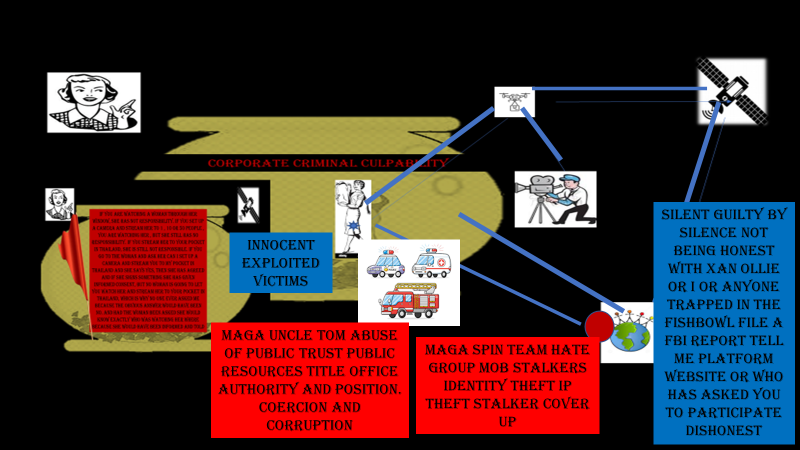
Will you be using trusted public servants with badges and guns and district attorneys to corrupt and obstruct justice today too for your ate speech porno cover up? Advocates? County employment agencies, and social workers? Doctors? Who else will you drag into your Devil's Amway plot twist of murder greed and corruption, to save your "reputations"...what a joke. Will you be framing up innocent young people today to ruin their lives using public servants and tax payer dollars? Members of AA?

Check it out for yourself...CTC.Ca.Gov

Let's see Judge Reed in Tulare County, Who in Fresno and Orange County....and which lawyers and Judges in Oregon are joining the MAGA Fraud Ring of corruption? Who needs to make some quick money? Brush up against mty kids or I get yourself exposed exploited and used, then just squawk a bit and wait around they will contact you don't worry and maybe have a little hate group gang stalking scripting "task" of deception for you to commit against my son daughter or I, for "our own good" of course, you can be a hero , and get rich...it's like , your lucky day just like the rest of these fucking scumbag parasites who happenned to brush shoulders with me along the entire course of my fucking lifetime....oh family members are cashing in too off Xn Ollie and I so don't feel that bad, you aren't as bad as they are.......
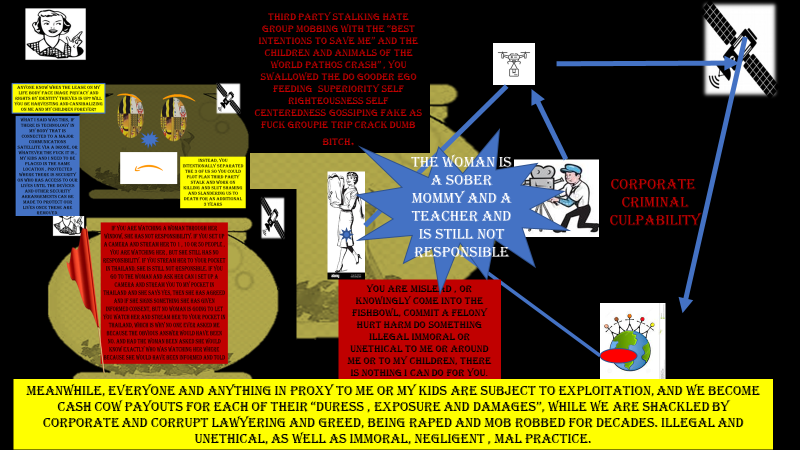

3 more days and 1 hour until my Facebook is unblocked again...hooray!!!! Fuckerberg!!!! Helping little fckng magot thieving sex and human trafficking child exploitation corrupt cops and government officials to rape rob hate group gang rob and mob innocent women and children and minority youth for Musk Bezos Warner David Sinclair Smith Intellectual Property and inheritance theft hustle....you little piece of filthy parasitic shit....
The infiltration and identity theft via Facebook, and obstruction of justice via Facebook Racket and Hustle , Right motherfuckers? Brian Bender who can put aside all past grievance over the Holocaust for the sake of greed , child pornography distribution, identity theft coercion, slut slandering, psychological torture and terrorism and work as a team with NAZI KKK Klansmen without a second thought to exploit innocent women and children and rape and rob everything from the helping Ashley Dunn, and Anthony Kedeis....Right Bender, you little fucking parasite magot piece of shit?

Take it from a BlackBelt Al Alon.....and stop listening to the QAnoners, Lisa Smittcamp, Claire and Settly smith, Mary Obenauf Anca, Judy Lesley, Quay Hay ,David Sinclair Smith,Jerry dyer, Alan Autry,Ashley duvall Bradley, Chad Smith Ashley Dunn Jenny Stearns, Michael Herbert and all of their corrupt Proud Boy law enforcements white collar criminal commie porno crooks....and set some firm legal boundaries to separate yourself from mob robbing , mob coercion, mob frauding, hate group gang stalking and culpability, to 21 years of sex and human trafficking child pornography distribution, identity theft, and Intellectual Property theft, and covering up for a little magot freak show lying stuttering stalker piece of shit....and greedy fckng Ag Trash whores...non of which have much more than a Folwer High school diploma...duh, idiots.

I am relatively certain a similar set of circumstances applies to law enforcements and government officials who have sworn to uphold the fucking Constitutional rights of American Citizens, you filthy F8ing ditch bank oakie gold digging tramp whores. Again, dumbass skanks, Not original Intellectual Property.


I do not give a fuck how many celebrities' avengers racist pigs 100 or 150 , 250 is the last number I heard...I do not give a fuck they are not in totals worth the value of my daughter's dignity or my one of my trillies of Intellectual Property so wake the fuck up you dumb old whore ,wake the fuck up!

Every person that is within proxy to me is vulnerable to this fraud ring coercion deception manipulation involvement in this ongoing cover up without being fully informed of the facts...as they attempt to implicate me using anyone else they need to involve and implicate in the process. Instead of approaching and dealing with this legally ethically and morally allowing my son daughter and I independent legal representation to ascertain new social security numbers retrieve our stolen assets, identities, privacy and rights since it appears that ever judicial and or district attorney or attorney general ...prosecuting attorneys are out to lunch or are watching the deep fake porno voice over dubbed version of the facts, and swallowing it all down if the price is just right.....I am not going to be held responsible for anything that happens to this elderly lady her information being exploited exposed or anyone else's so this is a warning to her her family and anyone else that might be deceived in to participating in the charades and cover up. My side of the street is squeaky clean and is going to stay that way...as a design for living and way of life. Take responsibility and be accountable for your own actions , collateral damages theft criminal act felonies coercion sex and human trafficking identity theft slut slandering and shaming. You did it...you wear it. Period. Don't do the crime if you can't do the time.Everyone knows that.....


Here's my "suggestion", take the next right action, do the next right indicated thing....AA 101 ,first 30 days ,2001,Laguna Beach Canyon Club, which had you followed this basic super simple priciple which by the Grace of God I have been able to live by for 21 years, you would not be in the situation you are in...you would be however if entered the fishbowl, and have only been ethical legal moral , like me a victim.Period. figure it the F* out...it isn't Rocket Science.


https://tips.fbi.gov/https://www.aa.org/contact-gso
I have emailed GSO in New York 6 months ago and informed them of Kedeis and his ongoing infiltration of the rooms, illegal exploitation, wiring and video audio broadcasting people puppetting, thhird party stalking beginning in 2001. Get on board with him and be prosecuted, I do not give a fuck. Only people who are approached and asked to participate can file reports with detailed names and information that can get these peices of trash shit incarcerated and stopped. this has been 100% non consensual since 2001 and I have absolutely zero responsibility for any of it.If you assist these fuckers and thrid party stalk me in the rooms, cross talk script me, think you are a fucking super star actor, accept payment gift cards donations crypto currency and there is a trail to you and you can be prosecuted I will make sure it fucking happens.I earned my seat in AA for 21 years and no runt frizzy haired little liar peice of shit or any of his groupis trash kiss ass fake as fucks who he infitrates the rooms with are going to run me out of the place that has saved my life the lives of my children. Just know......I will press charges on you if you are fucking with my church, the rooms and participating with these peices of shit and exploiting the principle of anonymity and hate group gang stalking me...and the terror of exposing and exploiting me for 21 years...abuse of celbrity status corruption of law enforcement and title office and position.....if you are poisoning the program not only do you need to work an honest program and stop being a fake as fuck piece of shit...do an inventory but you might need a state and federal defense attorny as wqell as a civil litigator.....do not participate with these fucking people file a fbi /police report with details of who stated what , asked you to do what....and when, where etc and separate yourself form the 21 years of fckng stalking
I have not spoken to or met with Gregory Kafoury since 1997 ish when Darrin Xan and I lived here in the late 90's.If you have conspired with him, and or doubled him and created forged falsified documents tampered with my will and testament which I sent to him 3 years ago, tampered with Leland Joseph McCarthy's will and testament, staged scripted , or deep fake fabricated any scenarios to gain control or maintain control of any of my inheritance benefactor gifting, intellectual property , power of attorny , or accepted any kind of power of attorney over me my rights my assets, acted in any legal capacity whatsoever, without me being informed or present I will make sure you get charged with every single state and federal crime that has been committed against me , my son and my daughter since 2001 .If you have worked with Judy Theriot mcCarthy marshal Mathers, and members of Warner Elon Musk Amazon and Bezosos, and or any Fresno County Tulare county government offical and or law enforcements you can ride it all the way out with them and sit and rot in prsion right along side them. So you best back your crooked corrupt thieving stealing frauding slut shame down mob raping mob robbing mob murdering mob frauding asses the F right on out of whatever the f you have been conspiring to do while you still can....I am yet to be approached and or informed about anything so every single legal document which seeks to keep me from any of my rights or to steal any assets from me is 100 % illegal, and fraud. Ms.Suzannah Alexandra Rabbass 2/20/2023

I have not spoken to Gregory Kafoury since 1997, or whenever Darrin Xan and I lived here in the late 90's. I have not met with him, not signed any paperwork with him, have not been contacted by him, and anyone who is doing any deep fake staging with the real Kaforuy or a double if you have signed any documents or paperwork forging my signature or accepting that whore as me, or any power of attorney fraud from anyone I will press charges on you....If you are attempting to conspire with Judy Theriot McCarthy or any family members and tampering with my will, or Leland Joseph McCarthy's will, or assisting Amazon Musk Warner Anthony Kedeis Marshall Mathers, or any Fresno county government and or law enforcement with this 21 years of identity theft , inheritance theft, Intellectual Property theft benefactor gifting theft, I will make sure you get the full package deal of every single federal and state crime they have committed against me , my son and my daughter.Period.So I would back your filthy corrupt pathetic piece of shit asses out of whatever the F you can while you still can.Period.



Any persons deceived and lured into this heinous plot to murder the life of my daughter and son and to intentionally obsrtuct justice and or lie needs to file a FBI/DOJ report and save your own ass, because if I find out who the fuck you are and know you and you have not filed a report I will make sure you are fucking charged to the fullest extent of the fucking law, and reported to CPs if you have children in the home.https://tips.fbi.gov/ If you are conspiring with these fucking stalkers , sex and human traffickers that have exploited me and my children since 2001 I will make sure you are charged as co conspirators...so do yourselves a fucking favor and set a very firm boundary between your value system and the values of these fckng filthy mob robbing , inhumane and cruel , child exploiting deceitful spin doctoring whores...because let me express to you...I saw what went on, and in now world or reality is hurting and harming a person ever in any "narrative", or "framing" ever ever ever going to be a "good thing"....so you might be deceiving your fucking selves , but you are already fucking dead to me, so I do not give a flying fuck what the fuck happennes to any one of you pieces of trash shit....so like I said be a ride or die for these skanks and see if they will go do the time for you too.....see how well they take care of you are your fucking daughter you stupid fucking kiss ass trash groupis dumb as a box of rocks tram skanks....Best CYA, best cover your own ass, because there will be NO shelter here.https://tips.fbi.gov/

Victorville Pink Ladies Federal Corrections Facility :It's a Realty Show
Save your own ass, or you could be a sperstar cast by the one and only FBI in a Federal Pen Reality Show!!!!


Just know you fckng tramp hooker trash ..if you third party stalk me, participate in any staged greenscreening fabricated manufactured video or greenscreened anything I will make sure you go to fucking prison ...and get the fucking ass beating of your fucking life....so make sure they pay you well and will also take care of any plastic surgery you will need dentures etc when you get out of prison you fucking dumb tramp whores you best not fuck with me or think you are going to do anything to assist the fucking hooker ag trash whores Calabassas whores stalker kedeis corrupt racist pigs or uncle toms that have done this shit to me and my daughter and son or be prepared to ride it all the way you fucking trash tramp bitches...make you sure you are ride or die for it bitches, because it's your faces bodies names etc that are caught in the frame don't forget stupid trash use your brains...tell them to use their own names and faces to do their dirty work...because they aren't going to do your time for you ...you are the one caught in the frame...dumbasses..




Has been involved since DAY one and you have a 21 year long ASS FUCKING BEAT DOWN coming BITCH!
What the fuck is your last name bitch?
In case you didn't get the memo I especially don't like you DEAD BETTY BITCH types...you really fucking get on my last available poser butt kissing co dependent groupie tramp stamping nerve. In fact, one of you bitches owes me a full ounce of Fendi perfume who was rat packing behind Janes Addiction in New Olreans with the then little pee-ons RHCP and came into my home on Marengo and Magazine street with Jeff RAZOR LIPS Cito RAT, stole my entire sterling silver antique brush comb and mirror set and an ounce of my Fendi perfume.....
Any details leading to the old fashioned can of fucking I am going to beat your ass bitch outcomes and or arrests charges pertaining to this tramp that goes by Charlotte that made a poor life decision when she decided to suck and stroke poser loser lame frizzy haired fucked up teeth weasel stalker nut sack, and assist him in fucking up my life and reputation and then my daughter's...
You fully realize what the fuck you have done, and what the fuck you have coming to you fckng TRAMP.
You fucked with the wrong girl ,
for the wrong reasons
and the wrong woman's daughter.
Don't let me find out I've been supporting your fucking fat ass bitch for 21 years too , or you will be doing trash duty pick up roadside to work every fucking penny off....
RESTITUTION BITCH.
Get your buddy Forest Von Dutchy and Run- Bitch -RUN.
Where the Fuck is Forest, and Gabe? What is Gabe's last name from Spencer Recovery? The one who arranged the rental car in Fresno , the Infinity Luxury upgrade from Enterprise Car Rental on West Shaw and told me to go in there and ask for "Anthony", who then returned the vehicle while I was in rehab in Laguna ?What the fuck is his last name bitch...I am going to hunt every single one of you pieces of shit down BITCH.....You best hope and pray you don't have a deep fake double cloned GOD.


Fraudo Braggins....lol!!!! Stephen Colbert knocks it out of the park!!!! 21 years of Fraud fraud fraud fraud ...and let me just reiterate if one single penny or dime of my lotto money, inheritance, water rights, benefactor gifting, intellectual property rights and or profits went to raise up these proud boy white supremacist psychopaths their QANON Cult leaders any of their scriptwriting, deep fake porno hate speech slut slandering racist propoganda machine, paving any corrupt RED MAGA FRAUD PUS Pockets or campaign contributions to any such entities involved with any of these psychos literally setting out to destroy cannibalize our democracy, run huge hate group gang mobbing and robbing networks of fraud to take public and private wealth monies, bully coerce incarcerate minorities or anyone who speaks up or out against them...one penny will need to be returned to me and my children...I do not share any of these values, and would not ever assist in raising a communist state run radio media broadcasting network to disseminate hatred terrorism and the use of biological and or military grade weaponry on innocents women and children, or any one...how many will you kill for this cover up ?How many people will you fuckers kill before someone actually stops you , all. Heads of the snake....et al...and there's a lot of snakes in this 21 year shit sewage of identity fraud ring feeding chains...
Frankly, I think they gave Rossi the same biotoxin they gave me that makes your air pathways swell and block and that is why he hit the tree, and died.
When Lisa Smittcamp "investigated " the Fresno Police Officer who was a "proud Boy" in 2017, did Mike Rossi bust, uncover, ooopsie, I mean work on any of that info? He was a cop under Chief Jerry Dyer and Mayor Alan Autry when I won the Mega ...bet he just knew so much about so much didn't he? He was just too honest and knew too much. He was just to decent a human being, too kind, had too much integrity for him to have the audacity to want to live ,and do his job, and be a husband to his wife ,and a kind and loving father to his children, and serve his community, the fucking audacity of him to believe in equality and justice for all...the nerve of Mike Rossi, and Kelli Porterfeild...Porcupines? Right Lisa?
I wonder if they got Marina Whelan, and Elizabeth David, and well we know they smashed my brother they probably tried all kinds of toxins on him just like they have me, and to no avail...so I suspect they will attempt to blow me up again like they did on Colonial with the gas meter , the laundry room light switch sparking less than 1ft from the meter, and the pipe which runs gas right to the dryer right below the switch...PGE wrote of a report on it because it was so unusual for them to find a gas meter loosened that way that much....deadly, actually.
"Fraudo Braggins".....lol!!!!!!
You are just all a bunch of midget minni me "Fraudo Braggins"....his army of Fraudo Braggins Boys....targeting women children and minorities ...the least vulnerable and all the most honorable...
"purge the country of every last honest hard working man woman and child and if they don't comply ....kill switch them, tragic accident them, orchestrate a natural cause of death, drive them to drink and or hot shot OD them, make them go insane and commit them, or terrorize them so much they just kill themselves to escape....let no honest man woman or child survive!!! Stay Peachy, and Carry On!" ~FB
Stephen Colbert has a message for the leader of the Proud Boys who name-dropped him in court.
"You are going to jail you neo-numbnut, and if you don’t like it, you can come and get me," "The Late Show" host said during his TV monologue Wednesday on CBS. "Welcome to the monkey house, brother."
https://www.freep.com/story/entertainment/tv/2022/06/16/stephen-colbert-proud-boy-joseph-biggs/7645874001/https://drjockers.com/biotoxin-illness/
Protein biotoxins of military significance - PubMed (nih.gov)
Patocka J, Streda L. Protein biotoxins of military significance. Acta Medica (Hradec Kralove). 2006;49(1):3-11. PMID: 16696436.
Central Valley Proud Boys Info
https://www.randomlengthsnews.com/archives/2021/07/12/proud-boys/34481

The Fresno Bee will not allow me access to this article unless I pay..I am pretty sure that violates my constitutional Right to access of information disseminated by the press under Freedom of Speech, especially when it involves corruption within the police force which directly impacts my life safety and governing of my local community ....I am pretty sure I can make a case of it as a tool of Obstruction of Justice. But anyway...there is the article number if you can afford to buy any of your civil or constitutional rights, or a clique, "membership".
Which cases? What cases? Any cases involving me, my son and my daughter, by chance? any of those Officers who have been targeting me my son and my daughter Jimmy Gray and Daylon Perry, Proud Boys Lisa? Any of your MAGEC UNite Proud BOys Lisa????? So ironic, because a bunch of Proud Boys surrounded me in National Hardware and approached the cashier and had the cashier make me leave my bag on the counter while I shopped....so demoralizing Lisa...and my device turned up missing Lisa, and then my receipt from there turned up missing Lisa, and then I learned that you, Lisa Smittcamp actually OWN National Hardware on upper Blackstone right Lisa Smittcamp?
Lisa who is Stephanie, the woman with the little 5 year old beauty that Gabriel Alexander Gonzales totes around with him that looks just like Xan's step daughter Ruby? do you know any of them Lisa?
How about Nizerie who actually lifted my National Hardware receipt from March 13...Why would a young African American male go through my receipts folder and left a National Hardware receipt that had nothing really significant that could even be returned for cash Lisa?
That is not a hot item for a petty thief Lisa...a National hardware receipt....Do you know Michael Herbert? Anthony Kedeis, David Sinclair Smith, Marya amaro Stephens, Judy Theriot McCarthy , Quay Hay, Chad smith...and who was the Shasta Col Bottling company Heir Rocks Star you had waiting for me in Spencer Recovery n Laguna Beach Lisa...the former owner of the house you now live in on Van Ness Extension....?Do you know Ashley Dunn Ashley Duvall and Brian Bender too Lisa?Do you know all of my old friends and ex boyfriends now Lisa...have you hit the big time with all the parasite bottom feeders?


https://www.ipb.org/biological-and-toxin-weapons/
A biological weapon is any infectious agent, such as bacteria, virus or toxin, which is used intentionally to inflict bodily harm to people, animals or nature. They can be used to cause massive casualties, social disruption, economic losses, and environmental problems as a means of warfare or terrorism.
Bokan S. Terorizam i biolosko i toksinsko oruzje [Biological and toxin terrorism weapons]. Arh Hig Rada Toksikol. 2003 Mar;54(1):29-43. Croatian. PMID: 14574772.
https://time.com/5894743/trump-proud-boys-history/
Blister Agents (cause severe skin, eye and mucosal pain and irritation as well as burns)
Nerve Agents (disrupt the mechanism by which nerves transfer messages to organs and may lead to death by asphyxiation as control is lost over respiratory muscles)
Choking Agents (cause a build-up of fluids in the lungs which then leads to suffocation)
Blood Agents (affect the body by being absorbed into the blood and cause death in a matter of minutes through respiratory failure)
This resembles similar reactions my daughter and I were having in Fresno while these maniacs were trespassing in and out of our home. They put stuff on our makeup brushes and my daughter used them and her eyes both got inflamed and red and swelled shut. I used a mask of mine laying around my house and noticed a couple days later it had some strange looking trail of jism on it...by face throat nasal passages all began to swell shut and I could actually feel the swelling moving down through my body. I had some colloidal silver which I drank , and also colloidal topical I had gotten for Xan which I rubbed on my face neck and around my eyes. In addition I took a bunch of bromelain which helped to reduce swelling and Benadryl. It was like I was inflicted with a severe tuberculosis at the end stages of life immediately and then for the next day I coughed up dark brown spit from deep in my lungs. They tried this 3 more times in Fresno but my body must have begin to develop an immunity of some kind.
They have been conducting food tampering since I arrived in Portland Oregon and were putting it into the food en masse at All Good Do Good and many of the residents were getting extremly ill. I am concerned about the girl here who all of sudden developed a seizure issue so severe she has had to quit her job and she worked nearly 7 days a week. She looks like she has had a stroke of some kind. My neighbor next door has a throat nearly swollen shut, and her head and neck glands are so swollen that her head face and neck are all one.
In addition I have noticed two other residents charlotte and Jackie who suddenly have extremely swollen eyelids and bags just like Marina Whelan started to have before she had a stroke. Many of these ladies have blood pressure issues and can easily be killed by any of these attempts that may or may not even impact me .
these things are very difficult to detect by paramedics especially if individual has pre existing condition which symptoms resemble impacts of these bio viral weapons that are in play by these hate group gang stalking psycho path ex military and cop affiliated weirdos.
they are using both those agents as well as high frequency to attempt to inflict or aggravate those areas to make them more susceptible to the impact of the viruses they are using.
They are psychopaths and will die in prison.
I think this is what they must have used on Elizabeth David who had a peanit allergy so it would exhibit exactly the same


All I know is...I heard people (whoever they are) once had to "access" me, whatever that means, via a cooking network or program...satellite station or channel???Which makes absolutely no sense to me other than the only contact I have ever had with anyone who is connected with a motherfucking cooking show or network, and happens to also be connected to police officers.You Seal Team Extraordinaires over trained, full of intel stuck at home board out of your minds...with nothing but too much time on your hands to watch our country go down the fng toilet....can work on this assignment unless of course you are involved and are hacking and blocking me obstructing justice while my daughter and I get exploited and turned out and you like picking on women and their daughter for fun because it gives you a hard on and that's how you get your pitiful fckng rocks off....if that is the case you best working getting a REAL God of your understanding that can assist you in the afterlife while you roam the universe endlessly tossing turning and toiling tormented about what the fuck you have done to innocent women and children...does that make any fckng sense to you?
That is my logic...you are welcome. Oh and if you know anyone with a Pet Home Again scanner , chip detecto so I can get this fckng pulsing organ targeting gps chip tracking kill switch device removed from my fckng body that would be helpful too....

In my quest for frugality and habit of dropping 2$ in the basket and repeatedly getting BANG for MY BUCKS with absolutely no strings attached, I have realized how I have become DELUSIONAL AND SPOILED about the TRUE NATURE OF THE WORLD, and how erroneous my thinking was when I decided to have two services completely at one time while sedated, and ended up with a THIRD which no one, let me repeat NO ONE ever sought consent to install or attach or insert into my body while I was having breast augmentation surgery and a Blue Obagi face peel done. Well, if I were to have the Blue Obaji face peel done by itself it would have cost 2k for just the sedation which that office only does the blue Obaji face peel if you are sedated...so like the thrifty A F* dumbass that I am , decided to put myself through not one heinous, torture, voluntarily to recover from without any kind of narcotics whatsoever, but two. D.A.F. The reason I know they inserted a fckng device into my body is because after the pain and swelling from my boob job, and the 20 years of dead skin a quarter inch thick had fallen off of my face, taking me through varying degrees of the walking dead costume and makeup shop and set in my own little bathroom medicine cabinet mirror.....again, on the natch...no pain meds...my left upper thigh still was the most painful and lingering ache of it all, and nearly 90 days later I could still feel the pain of whatever the fuck it is they did to my left thigh just above my left knee.
You see , although 40 pounds lighter then, and looking like a little blonde hair blue eyed bitch you can bully and push around, when they went to move me from the operating gurney to the recovery room table they motherfucking dropped me, because they probably didn't realize what dead weight muscle actually feels like or how heavy it is and they fucking dropped my ass so hard..it woke me from the anesthesia cocktails they had given me in the OR .I was still half awake when they hit my leg with what I though at the time or rationalized was just another sedative so I wouldn't wake the fuck up and start taking names down on paper to deal with later on who the F dopped my ass onto the fckng floor.
90 days later my "shot" area is still sore and aching. Fast forward 8 years, and now nearly 3 years ago, that same motherfucking spot , turns the fuck on...inside of my body and starts trying to yes boil my fucking blood, that's right, boil my blood, and my daughter keeps coming home telling me how my biological whore mother who also attended all of the pre- ops to my surgery at Dr.Steven's office with me, keeps telling her I have high blood pressure , over and over again. Granted my blood pressure did spike and was at lethal levels as I cam into greater and greater understanding on my own trying to put these motherfucking pieces of the puzzle together without any single one human being involved informing me one motherfucking thing... yes my blood pressure was spiking you bet your fckng ass it was spiking all by itself...and I sought medical attention for that but now I realize they ...whoever thinks they are my moterfucking puppet master has been assisting with that medically induced orchestrated natural cause of deathing condition and attempting to inflict a whole fuck ton more with their little ex military soldier boy entitled little pricks show satellite drone hi frequency kill switch toy....which I have a solid and good reason to believe is likely what has assisted in the deathing of numerous conscious laden observers and objectioners who have showed and or voiced concern in regard to me and my children...and its a long long long laundry list of dead human beings.
And if they fckng did this to one or both of my kids they are walking dead motherfuckers.period.
please assist with theidentification of the "They ", who are at large with control of my privacy and life and possibly that of my children in their ongoing 21 year lotto and inheritance IP theft cover up...with gross porno I think...https://tips.fbi.gov/
don't be sceeeered of the fbi submit a tip site...it is super user friendly and allows you to hit decline to answer on any questions you do not want to provide information on and you still get to submit the form...brilliant. I love it...love it love it!!!!

By the time the "Do -Gooder" knows or learns it is all fraud they are over their heads, and then the mob who approached them fear monger them turning them against the victim adding to the mob ...because they don't want to go to jail and were tricked into criminal stalking hippa confidentiality breeches, harassment, stalking etc...they were deceived, and used like people puppets to assist without their knowledge for spin team to control their falsified narrative.



If you have any information about the identity of this person who is suspected ed to be involved with the child pornography distribution of my children as babies, theft of lotto , inheritance, intellectual property, and the deep fake hate speech Orange County feeding chain of MAGA red pus scum, who have deep fake porno greenscreened photoshopped voice over dub murdered me and my daughter's life to protect Anthony Kedeis maggot runt bitch ass runt stalker, and to steal everything from me and my family (McCarthy's and Xan and Ollie, please submit a tiphttps://tips.fbi.gov/

https://youtube.com/shorts/iJhPD4Boeao?feature=share
Which little runt power tripping maggot had the fucking audacity arrogance and nerve to fucking chip my body and commit domestic terrorism deprive me of all of my civil and constitutional rights victim rights right to privacy for 21 years thought they were going to run some ghetto sex and human trafficking slut shame down trash culture porno family spin pathos on me and my daughter and turn her into a porn star without her knowledge or consent as a means of controlling her by her spoiled life and reputation to cover up for turning her out onto a porno platform website or channel when she was 2 years old who the fuck is the Genius" who in the fuck is going to wear and ride their motherfucking jacket all the way to the federal pen...who the fuck was the dumb ass little maggot who thought they were going to "break" me and own me like a piece of motherfucking property who the fuck is it step up whoever the fuck it is with the huge fucking ball sack step the fuck up little runt coward piece of shit ....don't be a shy little bitch...step up and take credit who thinks they are my pimp and own me????????
You thought you were going to run the David Sinclair Smith MAGA Sex and Human trafficking slut shame machine bulldoze over me and my daughter and break control and own us did you ...you stupid little egomaniac runts...I will crash every fucking one of you pieces of shit to the fucking GROUND.
Am I in orbit you little turds??you has the lease on the satellite? Who manufactures the device you put into my body? Who had it illegally inserted while I was fucking sedated you motherfuckers at Dr.Stevens' office? Who is providing the satellite service?Who is making money on the production and sale of you broadcasting you filthy deep fake maga hate speech porno cover up you stupid little ignorant as fuck ag trash whores racist pigs corrupt district attorney and near do well little rock stars and space junk runts????Step up take you credit you motherfuckers.
Can I get the FBI to come this fucking chip out of me you filthy pieces of shit?


https://www.facebook.com/S.AlexandraRabbass/videos/583155639729772
Who is staging scripting and and distributing deep fake porno hate speech cover up greenscreened gross freak show stuff on me and my rosepetal ????


I just discovered my two passports were stolen with my black pencil case and I suspect it was out of the pods here at Jean's Place in Portland Oregon....this is a copy of the form I filed i am not going to pretend that all of my information social security number date of birth has been private at all for any extended period of time since I won the lotto and my whore mother and marya amaro stephens her whore best friend genius lisa smittcamp alan autry jerry dyer anthony kedeis ashley dunn ashley duvall bradly and jack kalijian and marc boudousquie went about launching a plot to all split it up and launch the Dumb Diseased Sut S&M Porno cover up to slut slander me to use as a control tool to discredit and be able to maintain control along with musk of the microsoft ai ip and take credit for it while forcing ollie and I into their fabricated and manufactured identities they created.....I will send every single one of them to prison for the rest of their lives for all of this ...and they are responsible for the shooting in the synagogues and Baptist church because their hate speech voice over dubbed narrative incited violence and caused that , I heard and was referenced by one of the shooter in their manifesto....as well as the death of my brother and the gang rape staging to break my daughter on new year's eve while I was in Thailand with Michael Lacy ...now they are stealing my passport to assume my identity , and or I am concerned kidnap me or try to coerce or force me to travel somewhere so they can kill me more easily, I am not going with anyone anywhere but the vetted and verified fact checked FBI/DOJ or with anyone related to this, or anyone I have ever known in my entire life except my children and want life time restraining orders against every single person involved with this abomination grotesque evil murdering cover up of straight evil filth. I am pretty sure the passports were taken by the third party hate group gang stalker called "mandy" who I will be pressing criminal charges upon for identity theft and fraud or on whoever it is that lifted those items from me while in here. Go straight to prison biotch. Who was in the house on colonial New Year's Eve 2018 2019 when the heinous events took place with my daughter? Was Judy aka MIMi aka Jude in there while it was all going on ...did she script and stage it? Did she paly out a role and then pretend it was me ? Who was playing me while I was in Thailand while events were being done ot my daughter ? Who orchestrated it, who got paid to do it ...who knew about it ...if you know anything about any of this and do not file a report with the fbi and I find out about it you will wish you had.https://tips.fbi.gov/
If anyone knows of the website or platform or channel where this masterpeice has been being sold? right ? sold , for a profit? right? If anyone knows where this , or has footage of the events please email any info to me at alixatjeansplace@gmail.com


Let me explain the pathos of hate group gang stalking:
Hate group gang stalking always begins with 1 stalker.
They intentionally involve and engage layers of additional haters and third party stalkers to cushion themselves safely up on their little pearly pristine mountain tops
allowing all of the people closest to the victim to carry out the illegal, criminal violation and acts against their victims (Xan Ollie and I)
catching those individuals in the "frame", and or on paper work as the CULPRITS ,
while they remain tucked safely away and dis connected from the stalking, and criminal charges and acts.
To protect yourselves, if anyone has asked you to engage in any unethical ,illegal, criminal acts such as harassment on the job, hippa-confidentialty breeches, assaults,
staging, scripting ,and have told you any lies:
A) I am participating B) I am at fault C) I have control over this exploitation D)this is a reality show or play scripted fiction
E)I am an undercover benevolent donor F)I am doing research for gifted and talented , the homeless, or victims of domestic violence F) I am on drugs G)I am a paranoid schizophrenic H) That I am married I) that I am incompetent
that do not align with my vetted and verified facts page...Vetted and Verified Indisputable Federal and State Gov FACTS Make it Make Sense
you are being snowballed, lured, and deceived, layered to protect them
into doing someone else's dirty work to protect them from things you probably know nothing about like:
gang rape, child pornography distribution, greenscreening photoshopping pornographic material for slut slandering and cover up sex and human trafficking stalker control of victims and our assets
child exploitation
intellectual property theft
racist corrupt police culture and practices
excessive force etc etc etc
identity theft ,
inheritance theft ,
lotto money theft ,school district tax payer dollar theft,
and the list goes on filled and layered with 21 years of fraud forgery illegal conservatorships, falsified accounts
and some very serious state felonies and federal crimes which have no statuette of limitations,
and are likely now implicated ,
if you have carried out any hurtful ,harmful ,or deceitful actions against me, or my children ( my real children Xahn BabyBear Owen WagnerMicah Olliannah Rosepetal Babygirl Kitten Wagner) which would include telling my real children lies, using your celebrity status to trauma coerce bond with them to then manipulate them to use against themselves their mother and their own best financial and emotional interests, knowingly accepted frauds, imposters or actors as being my children etc .
as part of the deep fake hate speech cover up porno maga machine,
and there are over 12 dead bodies associated with this cover up, including Fresno county Asst Investigative Attorney who was helping me Mike Rossi, and my Central Unified school District Chief financial Officer who I reported all of the payroll fraud and illegal payroll deductions to right before he had a "tragic accident", Kelli Porterfield
Me, placing your buisness (sp) names here is a grace card,
in reality, informing you,
which I did not have to do
although, I have likely already filed with the fbi report https://tips.fbi.gov/ on your behalf,
every place I work ,visit etc
informing the FBI what I do know which is limited but that entities, associates, employers, are possibly being deceived and that there is a distinct possibility that fellow employees and or patrons are being exploited, somewhere, on some platform without their knowledge or consent
or without being fully informed truthfully ,of what is happening.
That does not mean you should not navigate yourselves to the fbi submit a tip website https://tips.fbi.gov/ and file a report to cover your own ass....
I can give you this information, take it, or leave it ,I seriously do not give a fuck..I have had my pets killed, my career destroyed by lies and slander , all of my personal property stolen my identity stolen, my children beaten fucked sold trafficked on plot twists and cover ups...my house vandalized, and have had numerous attempts at my life and my son and daughters, have watched African American youth set up framed as people props for a 'blame the blacks scapegoat narrative" thinking they are building their street creds for movie and or rap deals and then been prosecuted as though the staging were real and incarcerated ...so honestly I do not give a fuck about you ...and I am sure the fbi /doj don't either as they have a mob of crooked racist stealing PIGS to deal with and MAGA WARNER-SPACE -SCUM entangled in this....
so much larger fish to fry than you ,
so get the fuck over yourselves...
and take my advice ,and separate yourselves from all of it via a legit filed report.https://tips.fbi.gov/
DUH.
If you can't recognize that it is highly unusual to be approached and asked to keep secrets and break laws and target one individual who is insisting it is illegal and criminal , then you are a fckng dumb ass ,and deserve whatever the fuck you get....
I have committed no criminal acts ,and by me informing you, and filing a report, is the only right actions I can control and so that is what I do...you do you ...and I will continue to do me because I have 13 years invested in my education and spotless career and none of these criminal whoring corrupt filthy nasty pieces of charlatan scurvy uneducated trash are going to rob me of my life, my studies, my integrity my career , my scholarship...or anything else , ever, and I am certainly not going "to help" them do that to me or my children or anyone else...period.
Wake the Fuck up this isn't movie land assholes....follow the law ethical legal moral practices...or take the risk of getting busted and go to jail...I do not give a flying fuck, I have done my part...but if you are fucking with my children you best Duncan yourselves and find another continent to hide out upon, and that is a FACT, or get with them and clean up all your fucking lies..
before I find out about it and your names...does that make sense...and I don't give a fuck what that name is .....
Ms. (single never married, never getting married ) Suzannah Alexandra Rabbass
aka: Alix Rabbass
https://educator.ctc.ca.gov/ Please use some critical thinking and navigational skills and strategies of your own and do not rely on bullshit spin machine crap....go to this California government website and do an educator search then a public search enter Rabbass , Suzannah, then click on Suzannah Alexandra Rabbass and my entire teaching career and spotless record will be accessible to all of you ,so you will shut the fuck up, and stop spreading slanderous lies, discriminating and committing wrongful terminations, and third- party stalking and getting yourself into trouble with the Oregon Dept of Labor, the Feds etc.....and please note the days of issues and renewals for my last credential for my Pupil Personnel Services Credential in School Counseling PPSC SC, (which also attest to my 2 motherfucking master of sciences degrees you fckng assholes) that can not be issued without a clear FBI/DOJ background check...so shut your fucking lying libel mouths you nasty filthy pieces of slut slandering shit, before you find yourselves in deep ass shit with the Oregon Department of Labor, and Feds , does tha make any fckng sense to you ?????

Attention TPI /Jean's Place Rose Haven et al:https://www.tprojects.org/contact-us
If you have been approached by anyone and carried on a, one , conversation behind my back I will prosecute you. If you have had that conversation and then gone about orchestrating arranging , staging scripting , trying and or attempting to intimidate , and or play out some fucking script for anyone under any guise I will prosecute you . If you are a staff person here where I am staying and are involved I will prosecute you. If you are working for this non profit and it has been purchased or taken over by my money or anyone involved in this and are breaking the law which supersedes what you are asked to do as an employee, I will prosecute you . Ask you boss if they will go to prison for you ? if anyone one has approached you and asked you to do anything given you any story behind my back please report it immediately to the authorities, and fbihttps://tips.fbi.gov/ to cover your own ass , but in the event anything that is beyond your scope of understanding and you are under a mis conception and my son or my daughter or I ,are hurt or harmed raped and robbed financially slut shamed slandered deep fake squashed into a fabricated story you are not part of the 14 murders 21 years of sex and human trafficking otto theft, gang raping intellectual property stealing state and federal funds embezzling, personal wealth theft etc...which you are engaging in if you are co operating with people running game and stories behind my back acting like they care because they are going to help me because I did this to myself kind of routine spin chat talk or narrative. explore the facts for yourself and stay within legal ethical and moral laws or I will prosecute your fucking ass.
If you have fudged or forged or tampered with any of my records from here deleted and or attempted to fabricate anything having to do with any of these places and submitted them to anyone or they have used any of your letter head and verification to forge fraud and carry off their deep fake sex and human trafficking exploitation and hostaging of me and persistent removal of my rights access to my rights assets the legal process you will be prosecuted for it . do not fuck with my drug test results , my daily curfew check ins, my case management and do not speak with anyone outside the scope and range of what you are legally ethically bound by law to do ...capiche?
Ms. Suzannah Alexandra Rabbass 12/26/22

HATE GROUP GANG STALKERS/Third Party Stalkers
y fuck makes you think I need to "do something for any of you" Who in the flying fuck do you think you are? Why don't you fucking snatches do something for me...why don't you "allow" me a fucking private shower , or to wipe my motherfucking ass in private you fucking nasty stupid dumb ass bitch...until I have the very basic rights of a fucking united states citizen no I how fucking dare you you ungrateful cunts expect me to do anything for any of you pieces of sewage rotting whoring lying criminal porno racist scab filthy shit ? The fucking audacity and arrogance of you scrolling troll hooker skanks. Basic human rights basic human dignity basic civil and constitutional rights you stupid barbaric ignorant tramps whores leeches vultures and maggots....you don't even deserve your freedom and privacy because look at how you live look at how you steal this from others innocent people for your criminal filthy behavior and you take you rights and privacy for granted....if you respected and wer grateful for your rights you would not have committed these crimes that jeopardize your freedoms and privacy and rights. I do not break the law because I respect my right to freedom privacy victim's rights civil rights. If I commit crime I risk losing my rights and privileges as a United States Citizen you are the filthy crooked crimnal peices of shit sitting with all of my money and all of you rights still stealing time and my rights every day that I am on earth for the last 7, 016 days...which tells me you are not capable of understanding the abomination that you are committing against another human being and you need to learn how to respect other people's rights by losing your rights...so then you will appreciate them and not commit crimes afraid of losing your rights again.
Ask any old time convict and they will concurr...my brother finally got tired of other people controlling his rights and freedoms and he dies a better human being and citizen then any of the likes of you filthy pieces of shit ....who killed him to keep you from getting busted...you are trash evil worthless shit and stop thinking i owe you pieces of shit a fucking thing...
I don't owe you shit I don't have to do a motherfucking thing for you trash...and I do not intend to ever assist you in destroying and murdering my life and that of my children's and helping you to escape prosecution escape justice. Each day that you continue to hostage me and play games run spin maneuver this way and that way run this simulation or that ....it is only getting worse and worse for you, not me, you.
you owe me motherfuckers what in the fuck is wrong with you idiots fucking whores...you owe me time stolen assets, lotto money intellectual property ....I do not owe any of you a fucking thin you owe society you owe all of the other victims you have exploited...no one owes you jack shit you fckng little entitled weasel pricks. Wake the fuck up. You are criminals . Criminal break the law and if they are total dumbasses like you and get caught they go to jail. Very basic shit. Martha did you can do it standing on your heads...you are like the devil compared to Marth you make her look like a fucking Saint.In fact, now I think they were way way way way way way way way way way too harsh on Martha...after turning a blind eye to this filthy disguting shit show for 21 years...are you kidding me????? It because so many pigs ar involved that is why the obstruction of justice is so bad...you filthy nasty crooked pieces of sewage shit.
If you have been deceived mislead and told that I am a part of this fed a falsified narrative paid or unpaid knowing or unknowing where the platform or site may be...I still have not been shown any material or content...and or are being asked to do anything to me or my children and keep secrets from us manipulate us, lie to my children, hack and or keep us all separated, asked to assault and or lie and say you know us and are lie about us in anyway on camera or a device that has been broadcast sold or shown or been collected anywhere please navigate over the fbi website and cover your own ass because if you have not filed and given information then I am going to assume you knew exactly wtf you were doing wanted to make money didn't give a shit about anything else and intentionally set our to hurt harm rape and rob deceive destroy and murder me and my kid's lives to assist these fckng maggots and I will throw you in fucking prison with the rest of them...so I hope whatever it is you have made or been aid was worth it and I do not give a f if I have known you since birth or came out of your vagina....I do not care ..if you have done this to me and my kids you are going to fucking prison...and if you have helped anyone doing this to us ...you best cover your own ass..which probably isn't that important to the fbi /doj anyway as they are after the larger racist more corrupt Maga fraud and Uncle Tom slut shame down fish in this sewage shit hole fishbowl pond. The kids are victims...it doesn't matter what they have gotten them to say or do ..they are victims of this shit show machine and will never be prosecuted for anything.... real kids that is ...the doubles are likely to do time for whatever their roles have been.https://tips.fbi.gov/

CRAZY SPOOKY STORY: I was so excited when I arrived in Portland fleeing from psychopath Fresno county district Attorney Lisa Smittcamp, Mayor Jerry Dyer, Jack Kalajian, who were engaged in a full scale deep fake MAGA hate speech slut shame down assault upon me and my innocent daughter for sleezbag Kardashian, Anthony Kedeis ,and the Sinclair Smith Warner Rocker Crew, which I think includes the Uncle Tom Magas of Hip HOP Mathers, Kayne West et al, and I came upon this bitchin app called POACHED here which allows you to upload a hospitality industry resume and contact info and then you can pick up shifts around the city if people are in need of a worker, for example a server , busser, cook, sous chef, dishwasher, host etc....well I have a STELLAR ROCK STAR Hospitality Industry resume and job experience and performance...from my first go round in college from ages 18-25....and was lucky enough to work in some of the country's most famous establishments. Never have I ever in my entire life and I have worked since I was 18, have I ever not gotten a job I applied for, until moving here and dealing with these stalkers. Not only that, but never have I ever been let go terminated or fired for poor job performance and I have earned over 40 quarters that I have paid into with Social Security, since my first job at 18 in Manhattan, working under choreographer Michael Peters who did MS's Thriller, and danced in Giants Stadium and sang live singing in the Rain with Gene Kelly. Until now that is...and in this hate mob's attempt to cover up their lotto theft intellectual property theft, benefactor gifting theft, 21 years of hostaging exploiting broadcast hazing and terrorizing me , exploiting me and my children, broadcasting school children minors...all onto a porno site, website or channel which I am yet to ever get to see or know locale of....they are trying to taint my spotless employment record and are actually reaching out to these businesses and getting them to fake falsified claims and or sending them slut slanderous and fabricated content deep fake greenscreened photoshopped sexually explicit, immoral and or illegal content in which they have used staged doubles and voice over dubbing....which only substantiates a pattern upon them, and not me, as now there is just a growing list of small businesses, family owned business, and another school district caught up in these filthy racist porno graphic MAGA SCUMBAG shit show .And I suspect the list will keep growing, as I am currently unemployed and looking for work...so I wonder who their next victims will be? Kroger? Matador? Noble Rot? You see these are classic coercion tactics..its called the pinch by the rackets and the MOB, where you strangle out financially the person in an effort to yield them, or force silence, and or compliance, and or to engage in criminal activity and become part of the racket....I am wondering who the BIG SHOT CALLER is that intends the ride the beef on all of this ...... My feeling is this...if you want to run rackets...get out of law enforcement and education and stay on your side of the street with porno, baby and kiddie porno trafficking exploitation life insurance scam hustles, tax evasions, but don't try to govern, hold office, and take a role which entitles you with public trust and access to public resources from tax payers and then embezzle and exploit and pervert your trusted office, for greed, or celebrity , or to pander to celebrity, and then stalk me to silence me , or force me to co sign your disgusting filthy nasty heinous racist culture and practices, and criminal rackets you are running through county Offices of Ed, stealing from Cal Lotto, and overtaking not only public wealth but private wealth....in classic scurvy fraudulent RED PUSS MAGA STYLE.GROSS. They blocked me on Facebook for 29 days again , for bullying them...I guess Fuckerbourg is another one feasting on Strawberry Plaid Blood Pie, him and Musk, Bezos, David Sinclair Smith....have blood all over their faces and greedy little maggot hands...keep co -signing that runt maggot Kedeis, and those AG Trash Tramps, Brand Uncle Toms Whores, and Racist Pigs and see What the F happens to you RUNTS. I say IRS should do a full scale investigation along with the MAGA TRUMP organization investigations and for real-sy this time drain the porno cannon deep fake fraud sewage of racist MYSOGINIST PIGS and all the Gold digging Whores that love to STROKE them.....their handmaidens....i guess...wait ,,,you want to steal all of my IP and then you want me to stroke these fuckers for my money, you dumb ass biotches...that's a f no for me tramps.
Since I have been in Portland Oregon I have had 6 people who have come into my life named "Emily". This is a statistical impossibility, period. Emily from stone Soup, Emily from Chicago School of Professional Psychology, Emily from Work Source Alberta Mississippi District, and two other "Advocates " turned out also to be named Emily....WTAF? Hate Group Gang stalking...none of which have helped me in the slightest, only obstructed justice or the ascertainment of the records and or issue of my credentials or whatever it was that I was seeking their help for ....

So oddly i was getting NO responses from my Poached app, and then suddenly this place Melody Event Center a girl named Sharisse hired me. Turns out her two Stepfathers were big wigs from Fresno county Central Valley California Highway Patrol, and their Mom was also retired California Highway patrol, who now lives in Vancouver Washington...I wish she had informed me of this before she hired me...because this spooky shit really takes the cake. Then this biotch tells me she will pay me for "overtime" I work 95 hours in a week and she stiffs me...playing some S&M psycho Colonialistic Slave game of these psychopaths...it is foul, but worse than that it is sex and human trafficking and hate group gang stalking, and I am pressing criminal charges as well as taking civil actions...so don't be like MELODY EVENT CENTER or CHP...it could cost you your FREEDOM. I am calling it digital lasso or corralling ...it is like catching slaves for them...I guess, this MAGA FEtish Porno clique Fraud Ring...they are all up in all of my devices, apps, tech...it is fckng SPOOKY. CEASe and DEsist. EVade my TEch , my life my body, my assets my Intellectual Property my children's lives NOW!! CEASE and DEsist!!!!

Don't be a Racist Deep Fake Hate Speech Porno Cover Up Uncle Tom Hate Group Gang Stalker or Exploiter: Report any people or attempts to involve you in any slut slandering or hate group gang stalking immediately to the FBI/DOJ. They have a very user friendly submit a tip website which allows you to "Decline" to answer as many form fill questions as you like, including your own name....but, if you are trying to separate yourself from this leeching mob, and Cover Your Ass, I would likely include my name...lol. I fear that is what happen to Kobi the laker star, Kelli Porterfield, Mike Rossi, Bernard Dobine, Elizabeth David, and my brother Russell Rabbass, just the short list who thought this was filthy disgusting and sickening and refused to co sign it ....and they are all , now dead. BAD Cops and the KKK kill, just an FYI...choose your sympathizers and co conspirators wisely , or you could end up with some of their cement shoes and neck deep in bodies, fraudulent non profits, and unearned stolen monies you can not account for ...like the Kardashians and Kedeis...lol.Victorville Pink Ladies Camp, for those biotches, bye bye.

Spooky Hate Group Gang Stalking FACT about Melody Event Center
Fact....my "Poached" App, is that sick or what in this context, otherwise I think it's brilliant if it is referring to Poached Eggs...and of course in this context if weren't use to hate group gang stalk and traffick harass overwork digital control humans, I'm sure as voluntary workers seeking positions and getting paid by establishments...it is perhaps beneficial however I heard that the app takes part of your pay...but I was never paid through the app so I don't know about that ...or that the business' have to pay them a certain percentage...so maybe I should just look for jobs on there and then just show up and skirt the use of the app all together....save the employer and me money and just use it as an information service....like the yellow pages...Anyway...this place....creepy...after being the only establishment that Poached would allow me contact with or correspondence somehow...I show up start working there, and find out a week or so later the girl who hired me is named Sherise and her mother is retired California Highway Patrol from the Central Valley Fresno, and lives in Vancouver Washington, and her mother married two big wigs Central Valley California Highway Patrol Fresno one was director Chuck, now deceased, and the other is retired living somewhere...and so now the only job I was able to get here in Portland Oregon with my outstanding hospitality resume and plethora and wealth of restaurant and service industry experience is where ...guess who...Fresno Cops will allow me to work...and it gets even worse...they are using the owner Catherine L***y, (who gave me her business' card that said her name was Emily, from Stone Soup...WTAF,) as a Weirdo S&M Fetish Clique type of a "handler " on me...who encouraged me to work overtime and then stiffed me....and still worse....they wanted me to wait...serve this men's white supremacist group that eats lunch there...and holds their "meetings" once a month...and they still have not paid me what they owe me and if they do not want to go to prison for sex and human trafficking they should send my money to my address at RoseHaven immediately or I am going to press charges on them as well when this shit show rolls out, period. Central Unified school district owes me a shit ton of money that they have stolen and if they do not want to be caught up in the sex and human trafficking circle also they need to send me the fucking money they stole out of my payroll also, immediately.

Create Your Own Website With Webador